
Plan backup power around what you actually need to run.
Compare power stations, solar generators, home batteries, fuel generators, UPS systems and inverters—then size the system before you buy it.
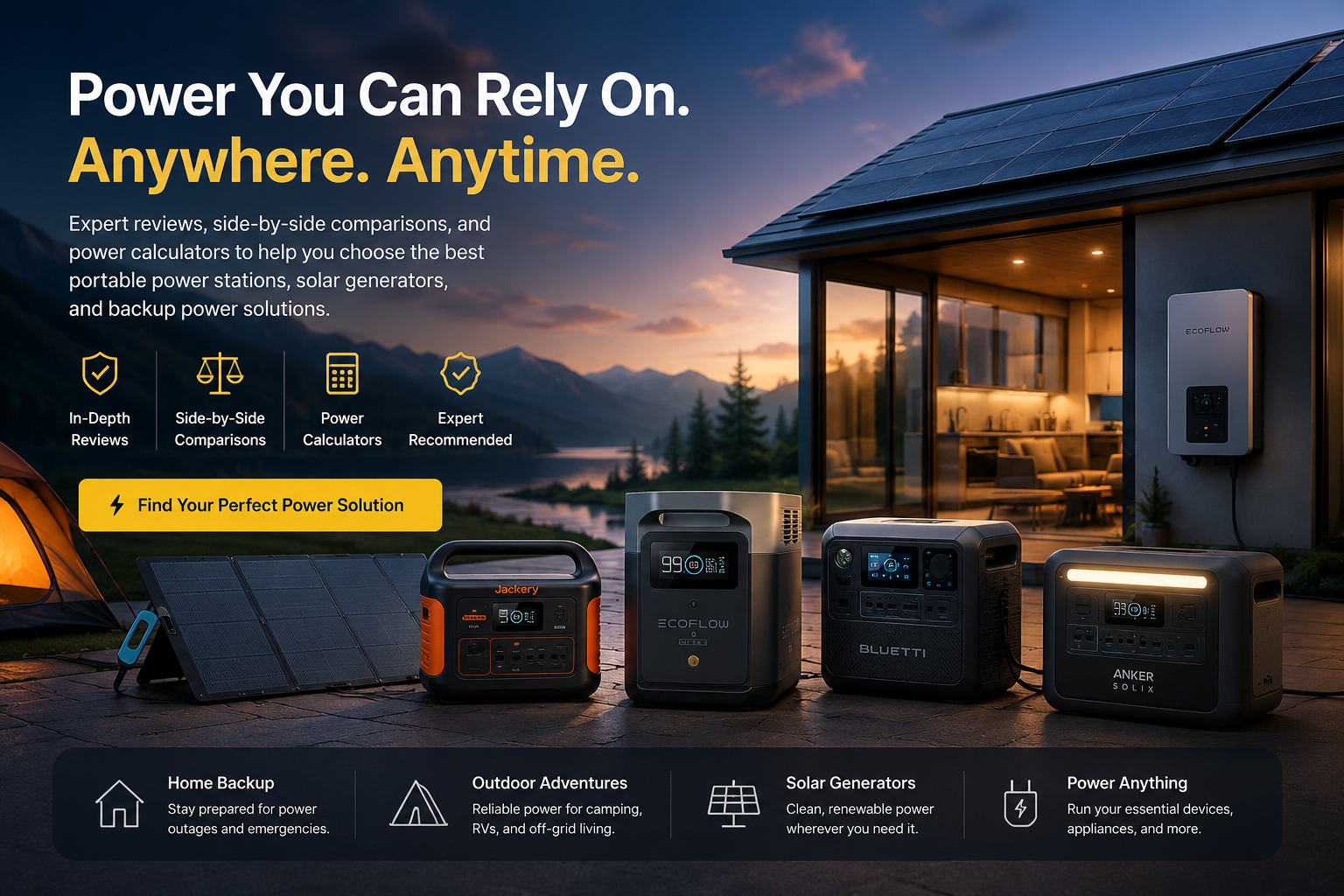
What kind of backup power fits the job?
Start with the system type. Then narrow by load, runtime, charging, portability, installation and expansion.
Portable Power Stations
Quiet battery backup for outages, travel, work and everyday use.
Explore → ☀Solar Generators
Battery systems paired with solar charging for extended off-grid use.
Explore → ⌂Home Backup Systems
Higher-capacity backup for circuits, appliances and residential planning.
Explore → GFuel Generators
High-output backup for demanding loads and longer outages.
Explore → UPSUPS Battery Backup
Fast-transfer protection for computers, networking and electronics.
Explore → DCPower Inverters
Convert battery or vehicle DC power into usable AC power.
Explore → PVSolar Panels
Panel sizing, compatibility, input limits and charging expectations.
Explore → +Power Accessories
Expansion batteries, cables, monitors and backup-power essentials.
Explore →A better route than browsing hundreds of products.
Choose the situation first. The hardware comes second.
I need to keep specific equipment running.
Start with the actual load: refrigerator, sump pump, CPAP, networking, tools or other essential equipment.
I’m preparing for an outage.
Build the plan around essential loads, expected outage length, safe operation and realistic recharge options.
Calculate first. Buy second.
Estimate load, capacity, runtime, solar input and charging time before choosing hardware.
Open All CalculatorsSystem and ecosystem comparisons.
Capacity alone rarely tells the whole story. Compare charging, expansion, portability, installation, transfer behavior and ecosystem lock-in.
EcoFlow vs Jackery
Charging, expansion, portability and ecosystem differences.
Compare → VSBLUETTI vs EcoFlow
Capacity, platform flexibility and solar input.
Compare → VSJackery vs BLUETTI
Portability, batteries, expansion and intended use.
Compare → VSAnker SOLIX vs EcoFlow
Fast charging, home integration and portable ecosystems.
Compare → VSHome Battery vs Power Station
Installation, capacity, portability and outage coverage.
Compare → VSUPS vs Power Station
Transfer behavior, runtime and electronics protection.
Compare →Understand the numbers before trusting the marketing.
Learn watts, watt-hours, surge power, battery chemistry, inverter behavior and charging limits so you can judge what a system can actually do.
Enter the AcademyBackup power is also a safety decision.
Never operate fuel-burning generators indoors, in garages or near openings. Home-panel, transfer-switch and 240V installations should follow manufacturer requirements and applicable electrical rules, with qualified electrical work where required.
Start with the load. Then choose the system.
Use the buying guides to understand your options and the calculators to right-size the equipment.