
Best Jackery Portable Power Stations
From lightweight camping batteries to expandable home-backup systems, Jackery offers several different approaches to portable electricity. Compare the models that make sense for your actual power needs—not just their headline watts.
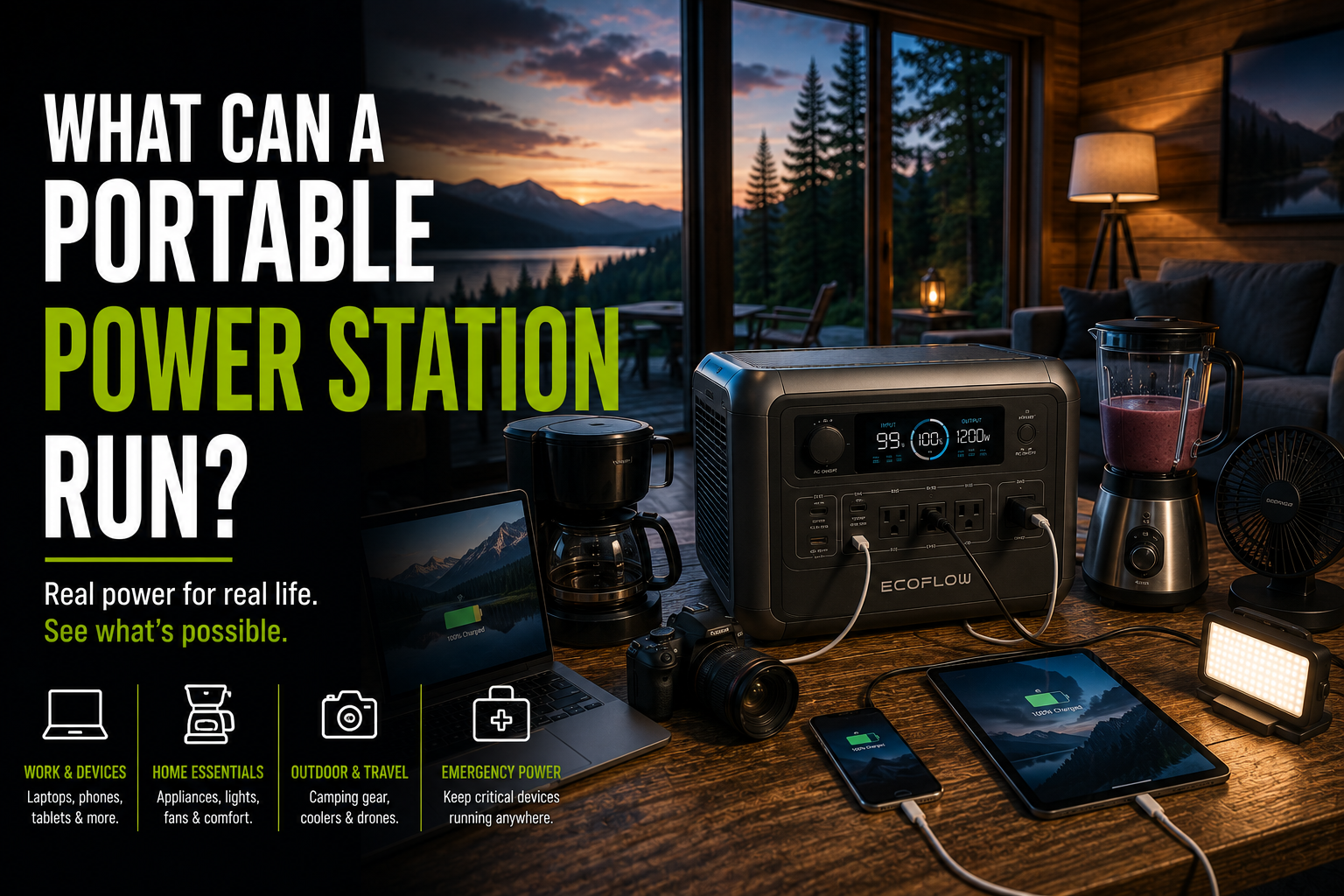
The best Jackery power station depends on what you want to power and how often you need to move it. The Explorer 2000 v2 is a strong all-around choice for portable backup, while the Explorer 1000 v2 is more convenient to carry. Small Explorer models are better suited to electronics, and the Explorer 5000 Plus belongs in a different category: expandable residential backup.
There is also an important distinction between Jackery's integrated Explorer models and its expandable Plus systems. A lighter station may be easier to live with, but it cannot necessarily accept additional batteries later. This guide compares both approaches, including their limitations and practical ownership costs.
Quick Answer: Which Jackery Should You Buy?
Best overall portable choice: Explorer 2000 v2, for buyers who want approximately 2kWh of storage without the weight of a large expandable system.
Best for frequent carrying: Explorer 1000 v2, offering 1,070Wh and 1,500W rated AC output in a roughly 23.8-pound unit.
Best for small electronics: Explorer 300, for laptops, phones and other modest loads where a large inverter is unnecessary.
Best for expandable home backup: Explorer 5000 Plus, when its 120/240V capability and expansion ecosystem are actually needed.
Top Jackery Power Station Picks
Explorer 2000 v2
2,042Wh battery, 2,200W rated AC output, and approximately 39.5 pounds.
Choose for: portable home backup, RV trips and medium-duration outages.
Read the model reviewExplorer 1000 v2
1,070Wh battery and 1,500W AC output in a more manageable portable format.
Choose for: camping, apartments and lighter backup needs.
Read the model reviewExplorer 300
Approximately 293Wh of storage and 300W rated output.
Choose for: laptops, mobile devices and light camping.
Read the model reviewExplorer 5000 Plus
5,040Wh base capacity with 7,200W 120/240V output and expansion capability.
Choose for: more substantial residential backup.
Read the model reviewJackery Portable Power Station Comparison
Battery capacity determines how much energy is stored. Rated AC output determines the continuous electrical load the station can support. Both are important, but they answer different questions.
| Model | Battery | Rated AC Output | Approx. Weight | Primary Use |
|---|---|---|---|---|
| Explorer 300 | 293Wh class | 300W | 7.5 lb | Small electronics |
| Explorer 1000 v2 | 1,070Wh | 1,500W | 23.8 lb | Camping and light backup |
| Explorer 2000 v2 | 2,042Wh | 2,200W | 39.5 lb | Portable home backup |
| Explorer 5000 Plus | 5,040Wh | 7,200W | 134.5 lb | Expandable 120/240V backup |
Detailed Jackery Power Station Reviews
The recommendations below are based on published specifications and practical suitability. They are not presented as hands-on test results.
Jackery Explorer 2000 v2
A compelling balance of 2kWh-class storage, useful inverter output and manageable weight.
The Explorer 2000 v2 stands out because it provides a substantial amount of stored energy without requiring a wheeled or permanently positioned battery system. Its published 2,200W rated AC output supports a broad range of household and recreational loads, provided their startup requirements are also within the station's capabilities.
Jackery specifies LiFePO4 battery chemistry, three AC outlets, and a rated 4,000-cycle battery-life figure to at least 70% remaining capacity. It also publishes an emergency AC charging mode, although charging time depends on the selected mode and operating conditions.
Its biggest trade-off is expandability. The 2000 v2 is a fixed-capacity portable station rather than a modular battery platform. Buyers who expect to add several kilowatt-hours later should consider an expandable Jackery system.
Advantages
- 2,042Wh nominal storage.
- 2,200W rated AC output.
- LiFePO4 battery chemistry.
- Relatively portable for its capacity.
- AC and USB charging options.
What to Consider
- No large modular expansion path.
- Three AC outlets.
- No native 240V output.
- Solar panels increase total system cost.
Best for: Refrigerators, communications equipment, camping, RV trips and selected home essentials whose electrical requirements fit the unit.
Skip it if: You need 240V circuits, major future expansion, or something light enough for hiking.
Check PriceJackery Explorer 1000 v2
A practical choice when portability matters as much as backup capacity.
The Explorer 1000 v2 is easier to carry than a 2kWh-class station while retaining enough capacity for a range of useful camping and emergency applications.
Jackery specifies three 120V AC outlets, one 100W USB-C port, a second 30W USB-C port, and LiFePO4 cells. The 100W port is particularly useful for compatible laptops that can charge directly from USB-C Power Delivery.
Its 1,500W continuous output is lower than the Explorer 2000 v2's 2,200W. That difference matters for higher-draw appliances even if both stations have enough stored energy for the intended operating period.
Advantages
- Manageable 23.8-pound weight.
- 1,070Wh nominal capacity.
- 100W USB-C output.
- LiFePO4 chemistry.
- Suitable for frequent transport.
What to Consider
- Lower AC output than larger models.
- Fixed battery capacity.
- Limited energy for extended outages.
- Solar charging accessories are separate.
Best for: Camping, apartment backup, portable workstations and essential electronics.
Skip it if: You need long-duration refrigerator backup or expect to expand storage significantly.
Check PriceJackery Explorer 300
A small portable power station for everyday electronics and light outdoor use.
A small power station makes more sense than a large battery when the primary goal is charging phones, tablets, cameras and compatible laptops.
The current Explorer 300 product listing describes approximately 293Wh of capacity, 300W rated output, and a 100W USB-C Power Delivery port. It is designed for lighter electrical loads rather than high-demand household appliances.
The main advantage is portability. The main limitation is runtime: a small battery can recharge electronics several times, but it cannot deliver the same duration of backup as a 1kWh or 2kWh station.
Advantages
- Compact and relatively lightweight.
- Useful for phones and laptops.
- 100W USB-C output.
- AC outlets for compatible small devices.
What to Consider
- Limited stored energy.
- Only 300W rated AC output.
- Not intended for large appliances.
- Model generations have different specifications.
Best for: Day trips, laptops, camera equipment and emergency communications.
Skip it if: Your primary goal is running refrigerators, heaters or other demanding equipment.
Check PriceJackery Explorer 5000 Plus
A substantially larger system intended for residential backup and expansion.
The Explorer 5000 Plus is not simply a larger camping battery. It is designed for higher-capacity backup, including compatible 120V and 240V electrical loads.
Its base 5,040Wh capacity is expandable with compatible batteries. This can make it more suitable for homeowners who expect their backup requirements to grow over time.
However, a system at this scale introduces additional considerations: installation, electrical compatibility, expansion battery costs and transfer equipment. A portable station should never be connected to household wiring through an improvised or unsafe arrangement.
Advantages
- 5,040Wh base battery capacity.
- 7,200W rated output.
- 120/240V capability.
- Expandable battery platform.
- Designed for larger backup applications.
What to Consider
- Much heavier than portable Explorer models.
- Higher total ownership cost.
- Expansion batteries cost extra.
- Home integration may require professional installation.
Best for: Homeowners considering a larger, expandable backup system.
Skip it if: You only need electricity for camping, laptop charging or a few small appliances.
Check PriceJackery Explorer v2 vs. Plus: The Important Difference
Jackery's product names can be confusing because battery capacity, output power and expansion support are not always obvious from the model number.
Explorer v2 Models
Models such as the Explorer 1000 v2 and Explorer 2000 v2 emphasize relatively compact integrated batteries.
They are useful when portability and simplicity matter more than adding several expansion packs.
Expandable Plus Models
Certain Plus-series products support compatible external battery packs, making it possible to increase total stored energy.
Expansion capability varies by model and generation. Verify the exact approved battery before purchasing.
What About Newer HomePower Models?
Jackery also sells HomePower-branded models, including fixed-capacity and expandable options. They should be compared using their actual specifications rather than assuming that every newer model replaces an Explorer model directly.
For example, buyers comparing a 1kWh station should check the current HomePower 1000 v2 alongside the Explorer 1000 v2. The battery capacity, AC output and expansion features are not necessarily identical.
How Long Can a Jackery Power Station Run Your Devices?
Runtime depends on the battery's nominal watt-hour capacity and the device's average electrical consumption.
For illustration, the examples below assume 85% of nominal energy is delivered to the connected AC load.
| Jackery Model | 50W Load | 100W Load | 500W Load |
|---|---|---|---|
| Explorer 300 (293Wh) | 5.0 hours | 2.5 hours | Not supported by 300W inverter |
| Explorer 1000 v2 | 18.2 hours | 9.1 hours | 1.8 hours |
| Explorer 2000 v2 | 34.7 hours | 17.4 hours | 3.5 hours |
| Explorer 5000 Plus | 85.7 hours | 42.8 hours | 8.6 hours |
These are calculated examples, not manufacturer-guaranteed runtimes. Actual results depend on inverter consumption, temperature, battery condition and the behavior of the load.
Refrigerators and other cycling appliances do not normally consume their rated running watts continuously. Measuring actual energy consumption provides a more useful estimate than using a nameplate wattage alone.
How to Choose the Right Jackery Power Station
List the Devices You Actually Need
Separate essential loads from optional ones. A router, laptop and lights require a very different battery than a refrigerator, pump or microwave.
Check Continuous and Startup Watts
The station must support both sustained power consumption and the startup requirements of connected motors or compressors.
Estimate Daily Energy Consumption
Calculate watt-hours for each device. A 100W average load operating for eight hours consumes approximately 800Wh before conversion losses.
Decide Whether Expansion Matters
If your energy requirements may grow substantially, investigate a compatible expandable platform before buying a fixed-capacity model.
Compare Charging Options
Check AC charging, solar input, vehicle charging and supported accessories. Confirm the exact solar voltage and current limits.
Compare the Complete System Cost
Include solar panels, cables, expansion batteries, transfer equipment and installation where applicable.
Jackery Solar Charging: What Buyers Should Know
Jackery's SolarSaga panels are designed to work with compatible power stations, but panel and connector compatibility must be checked for each model.
Solar charging performance depends on available sunlight, panel orientation, temperature, shading and the station's solar-input limits.
Small Camping Setup
A compact station and compatible portable solar panel may be enough for phones, lighting and a laptop.
Prioritize portability and charging compatibility rather than maximizing theoretical panel wattage.
Home Backup Setup
A larger station may accept more solar input, but a high-capacity battery can still take substantial time to recharge under weak sunlight.
Compare expected daily solar energy against actual daily consumption.
When a Jackery Power Station Is Not the Best Choice
Jackery stations are useful portable electricity sources, but they are not universal substitutes for every backup power system.
Whole-House Backup on a Small Budget
A portable station may support selected essentials, but powering numerous household circuits for several days requires much more stored energy.
High-Demand Heating Loads
Electric heaters and similar continuous high-wattage devices can deplete portable batteries rapidly.
Uninterruptible Power Requirements
Some Jackery models advertise fast transfer behavior, but this does not guarantee uninterrupted operation for every computer, server or medical device.
Permanent Home Electrical Integration
Connecting backup power to household circuits requires appropriate transfer equipment, electrical compatibility and qualified installation.
Frequently Asked Questions
Which Jackery power station is best for a refrigerator?
The Explorer 2000 v2 is a reasonable starting point for portable refrigerator backup because of its 2,042Wh battery and 2,200W rated output. However, compatibility depends on the refrigerator's startup surge and running power, while runtime depends on its actual energy consumption.
Can the Explorer 2000 v2 use expansion batteries?
The Explorer 2000 v2 is a fixed-capacity model and should not be confused with the expandable Explorer 2000 Plus. If future expansion is important, compare the supported Plus systems and their exact compatible battery packs.
What is the difference between Explorer 1000 v2 and HomePower 1000 v2?
They are different Jackery products. The Explorer 1000 v2 is specified at 1,070Wh and 1,500W rated AC output. Jackery lists HomePower 1000 v2 at 1,024Wh and 1,500W output. Compare ports, charging, dimensions and warranty for the exact version rather than treating them as identical.
Is the Explorer 5000 Plus suitable for camping?
It can supply electricity for supported loads, but its size, weight and home-backup features make it excessive for ordinary camping. A smaller Explorer station is usually more practical.
Can I use non-Jackery solar panels?
Potentially, if the panels and connecting equipment meet the station's published voltage, current, polarity and connector requirements. Check the exact model's documentation first.
Does Jackery's fast transfer mode replace a dedicated UPS?
Not automatically. Transfer behavior varies by model, and sensitive electronics may require a dedicated UPS with a suitable transfer time and output characteristics. Confirm compatibility for critical equipment.
Final Verdict: The Best Jackery Depends on Your Load
For most buyers seeking substantial portable backup without committing to a modular home system, the Explorer 2000 v2 offers a useful balance of capacity, output and portability.
Choose the Explorer 1000 v2 when lower weight matters more, or the Explorer 300 for small electronics and travel. The Explorer 5000 Plus makes more sense for homeowners who need expandable 120/240V backup and are prepared for the additional system costs.
Before purchasing, confirm the exact model generation, appliance requirements, warranty terms and total system cost.
Compare Current OptionsSources and Editorial Methodology
Recommendations are based on published manufacturer specifications, product compatibility information and practical use-case comparisons. No firsthand testing or ownership is claimed.
- Jackery Explorer 1000 v2 — Official Specifications
- Jackery Explorer 2000 v2 — Official Specifications
- Jackery Explorer 300 — Official Product Information
- Jackery — 5000 Plus and Other Backup Systems Compared
- Jackery — Current Product Lineup
Runtime examples use a stated 85% usable-energy assumption. They are estimates, not measured performance guarantees.
Specifications, availability, included accessories and warranty conditions may vary by product generation and sales region.