
Home Battery vs Portable Power Station
Home batteries provide automatic circuit-level backup; portable power stations provide movable plug-in energy at a lower entry cost.
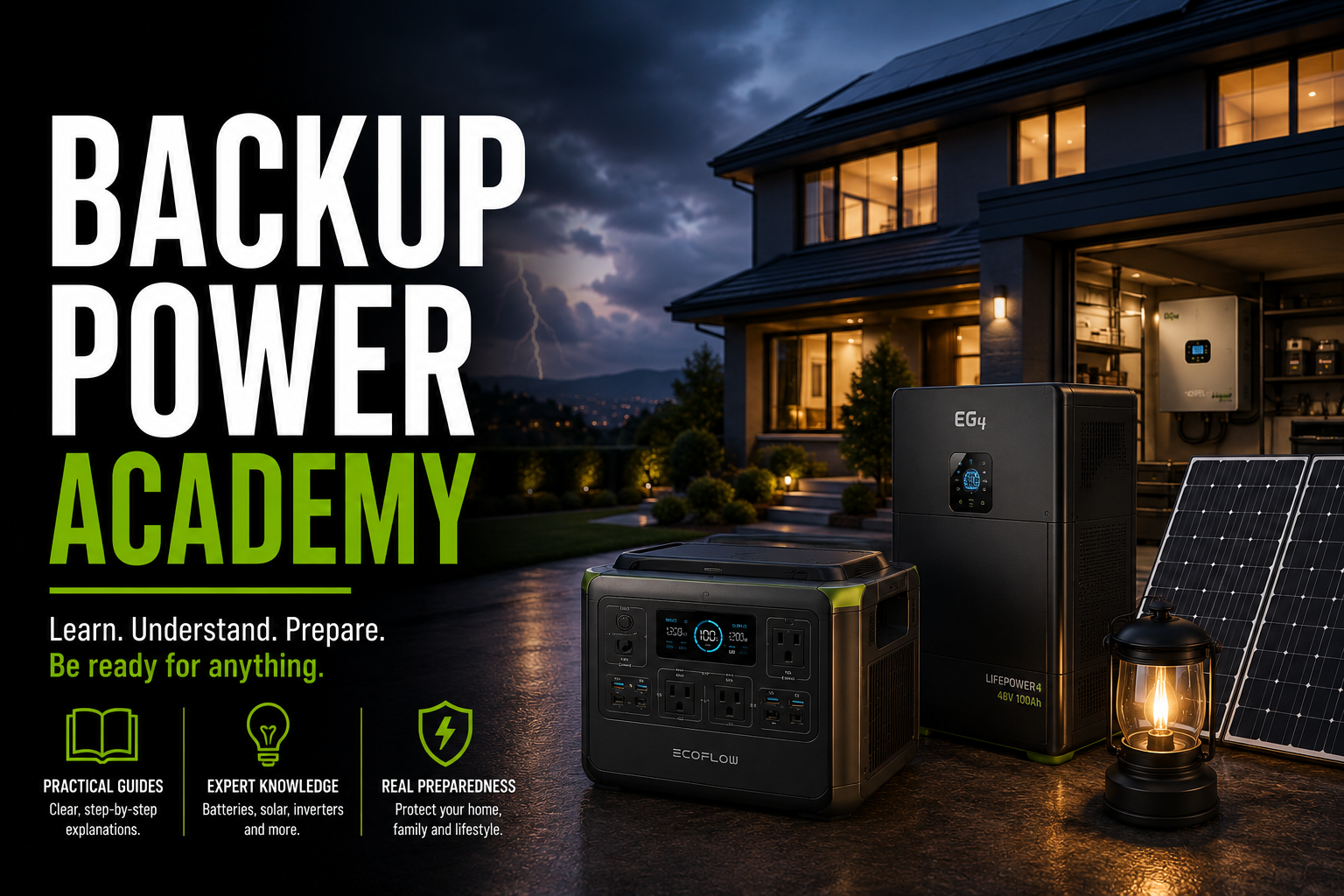
Home batteries provide automatic circuit-level backup; portable power stations provide movable plug-in energy at a lower entry cost.
Both store electricity, but they solve different backup problems.
A home battery is permanently installed and integrated with household circuits. A portable power station is self-contained and intended for movable loads.
Choose a Home Battery for Automatic Whole-Home Backup
Choose a home battery for automatic transfer, solar integration and large circuit loads. Choose a portable power station for lower cost, portability, camping and selected appliances.
Comparison Verdict
Home batteries are better for seamless household backup; portable power stations are better for flexibility, lower commitment and mobile use.
The Main Difference
A home battery connects to household electrical equipment and can automatically power selected circuits. A portable power station normally powers devices through built-in outlets and must be moved or connected manually.
Home Battery vs Portable Power Station
| Factor | Home Battery | Portable Power Station |
|---|---|---|
| Typical capacity | 5–30kWh+ | 250Wh–5kWh+ per unit |
| Typical output | Several kW to whole-home class | 300W–4kW+ portable |
| Transfer | Automatic gateway | Model-dependent UPS mode or manual |
| Installation | Professional | Plug-and-play |
| Portability | Fixed | Portable or wheeled |
| Solar integration | Permanent rooftop system | Portable panels |
| Best use | Home circuits and long outages | Camping, apartments and selected loads |
Performance
Tesla Powerwall 3 provides 13.5kWh of energy and up to 11.5kW continuous output in supported configurations, illustrating the much higher household-load capability of installed systems. Portable stations generally provide less energy and output but are easier to deploy.
Cost and Ownership
Portable power stations cost less upfront and require no electrical installation. Home batteries involve hardware, gateways, permits and labor, but can provide automatic outage response and time-of-use energy management.
Which One Fits Best?
Choose Home Battery
You want automatic circuit backup.
Choose Portable Power
You rent, camp or need mobility.
Choose Home Battery With Solar
You want permanent solar self-consumption.
Choose Portable Solar
You need temporary off-grid charging.
Use Both
A portable station can cover travel while the home battery protects the house.
Measure Actual Loads
Capacity and output must be sized separately.
Limitations
Home Battery Cost
High installed expense.
Portable Runtime
Limited storage for whole-home loads.
Fixed Location
Home batteries cannot travel.
Manual Connections
Portable units require load-by-load planning.
Heavy Loads
Electric heat and HVAC drain either system quickly.
Battery Aging
Both lose capacity over time.
Frequently Asked Questions
Is a home battery more powerful?
Usually, because installed systems are designed for household circuits and larger loads.
Can a portable station power a house?
Large systems can support selected circuits, but integration and capacity remain limiting.
Which is cheaper?
Portable power stations have a much lower entry cost.
Which is better for renters?
Portable power stations.
Can both use solar?
Yes, but home systems use permanent arrays while portable units use compatible panels.
Do home batteries replace UPS devices?
Not always; sensitive electronics may still benefit from a dedicated UPS.