
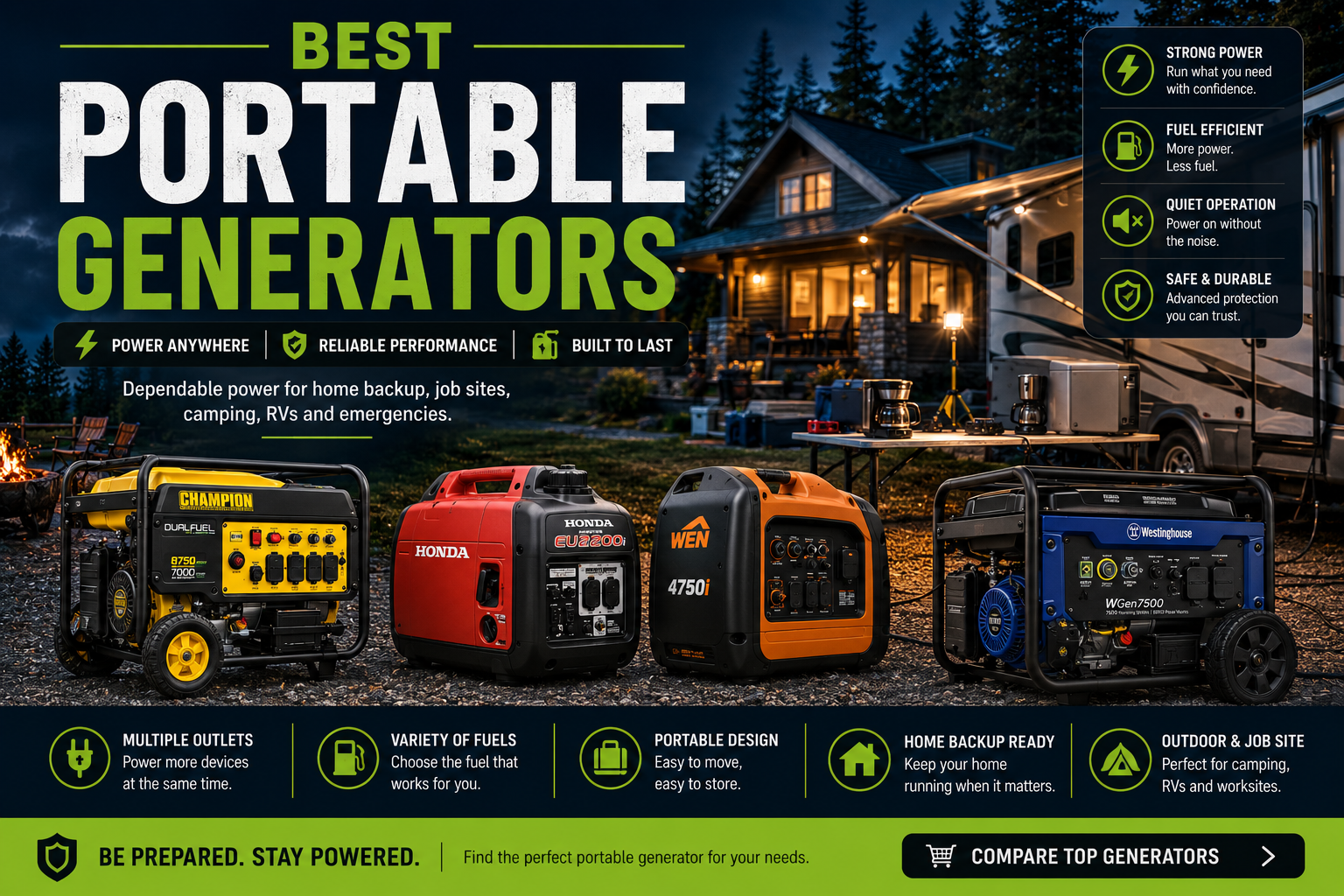
Best Portable Generators
Reliable Backup Power for Home, Work, Camping & Emergency Outages
PowerGearGuide may earn a commission from qualifying purchases made through links on this page at no additional cost to you.
Reliable Backup Power for Home, Work, Camping & Emergency Outages
A portable generator remains one of the fastest and most dependable ways to restore electricity during an outage. The right model can keep essential appliances running, support an RV, power tools at a jobsite or provide electricity during emergencies.
Modern options range from quiet inverter generators for electronics and recreational use to high-output dual-fuel models designed for transfer-switch home backup. The best choice depends on the loads you need to run, where you will operate the generator and how you plan to store fuel.
This guide compares leading portable generators using manufacturer-published output, runtime, fuel options, portability, electrical quality, safety features, warranty coverage and overall value. Scores reflect structured editorial evaluation rather than a claim that every model was physically laboratory-tested by PowerGearGuide.
The Best Portable Generator Overall
Honda EU7000iS is the premium all-around choice for buyers prioritizing reliability, quiet inverter operation and clean electrical output. For higher-output home backup, the Westinghouse WGen11500TFc offers stronger capacity and fuel flexibility, while the Champion 4500 Dual Fuel Inverter is better suited to RV and recreational use.
Compare Portable GeneratorsBest Portable Generators at a Glance
Honda EU7000iS
Premium inverter generator with excellent reliability, clean output and quiet operation.
Westinghouse WGen11500TFc
High-output fuel-flexible generator for demanding residential backup.
Champion 4500 Dual Fuel Inverter
Quiet, RV-ready portable power with dual-fuel flexibility.
Generac GP6500
Conventional emergency power from an established generator brand.
Best Portable Generators Compared
| Generator | Best For | Rated Output | Maximum Output | Fuel | PowerGear Score |
|---|---|---|---|---|---|
| Honda EU7000iS | Premium all-around use | 5,500W | 7,000W | Gasoline | 9.8 |
| Westinghouse WGen11500TFc | Large-home backup | Varies by fuel | Varies by fuel | Gas / propane / natural gas | 9.5 |
| Champion 4500 Dual Fuel Inverter | RV and camping | Varies by fuel | Up to 4,500W | Gas / propane | 9.3 |
| Generac GP6500 | Budget backup | 6,500W | 8,125W | Gasoline | 8.9 |
| DuroMax XP13000HX | Heavy-duty loads | Varies by fuel | Up to 13,000W | Gas / propane | 9.2 |
| Yamaha EF2200iS | Compact recreation | 1,800W | 2,200W | Gasoline | 9.0 |
Output and runtime can vary by fuel, load, altitude, temperature and exact model configuration. Confirm current manufacturer specifications before purchase.
Best Portable Generators Reviewed
Honda EU7000iS
A premium inverter generator for buyers prioritizing refinement, reliability and clean power.
Pros
- Premium inverter output
- Quiet for its capacity class
- Strong reliability reputation
- Electric start
- Suitable for sensitive electronics
Cons
- High purchase price
- Heavy
- Gasoline only
Westinghouse WGen11500TFc
High-output tri-fuel backup power for homeowners who want more fuel options.
Pros
- Tri-fuel flexibility
- Strong home-backup capability
- Remote and electric start
- Transfer-switch compatible
Cons
- Large and heavy
- Louder than inverter models
- Output changes by fuel
Champion 4500 Dual Fuel Inverter
A practical balance of portability, RV compatibility and quiet inverter performance.
Pros
- RV-ready connection
- Dual-fuel operation
- Clean inverter output
- More portable than large home-backup units
Cons
- Not intended for whole-home loads
- Output is lower on propane
Generac GP6500
Straightforward conventional backup power for essential household loads.
Pros
- Useful surge capacity
- Established generator brand
- Lower cost than premium inverter units
Cons
- Louder conventional design
- Gasoline only
- Less refined electrical output
DuroMax XP13000HX
Heavy-duty dual-fuel power for larger homes, workshops and demanding equipment.
Pros
- Very high output
- Dual-fuel flexibility
- Electric start
- Suitable for demanding loads
Cons
- Heavy
- High fuel consumption under load
- Loud compared with inverter generators
Yamaha EF2200iS
Compact inverter power for camping, tailgating and light emergency needs.
Pros
- Compact
- Clean inverter output
- Good for electronics
- Suitable for camping and tailgating
Cons
- Limited output
- Gasoline only
- Not suitable for whole-home backup
How We Chose These Generators
We compared manufacturer-published rated and surge output, fuel flexibility, inverter quality, portability, connection options, safety systems, warranty coverage, brand support and practical usefulness.
Useful OutputWhether the generator can start and sustain realistic home, RV or jobsite loads. Fuel StrategyGasoline, propane and natural-gas compatibility, storage practicality and runtime flexibility. Electrical QualityWhether the unit provides inverter-grade power for sensitive electronics. OwnershipMobility, controls, maintenance, warranty support and long-term value.How to Choose a Portable Generator
Calculate Running Loads
Add the running watts of everything you intend to operate simultaneously.
Allow for Startup Surge
Refrigerators, pumps, compressors and air conditioners can require substantially more power when starting.
Choose the Fuel System
Gasoline delivers broad availability, propane stores longer and natural gas can simplify extended home use where a connection exists.
Decide Whether You Need Inverter Power
Inverter generators are usually quieter and better suited to electronics, while conventional models typically offer more watts per dollar.
About 2,000–3,000W can suit light recreation; 3,500–4,500W is common for many RV applications; 5,000–7,500W can cover selected home essentials; and 8,000W or more may be appropriate for larger backup plans.
Critical Safety RuleNever operate a fuel-powered generator indoors, in a garage or near doors, windows or vents. Carbon monoxide is invisible and deadly. Follow the manufacturer's placement instructions, use working carbon-monoxide alarms and never backfeed household wiring without approved transfer equipment installed by a qualified electrician.
Which Portable Generator Should You Buy?
Choose the Honda EU7000iS for premium refinement and inverter quality, the Westinghouse WGen11500TFc for high-output fuel-flexible home backup, the Champion 4500 Dual Fuel Inverter for RV use, or the Generac GP6500 when affordability matters most.
Review the ComparisonFrequently Asked Questions
What size portable generator do I need for my house?
Many essential-load plans fall between 5,000 and 7,500 running watts, but homes with pumps, electric water heating, large air conditioners or multiple major appliances may need substantially more. Add running loads and the largest startup surge before choosing.
Are inverter generators better?
They are generally better for quiet operation, fuel efficiency and sensitive electronics. Conventional generators may provide higher output at a lower price per watt.
Is propane or gasoline better?
Gasoline often provides the highest output, while propane stores longer and burns more cleanly. Dual- or tri-fuel models provide the most flexibility.
Can a portable generator run an entire house?
Some high-output models can support many home circuits through approved transfer equipment, but total capability depends on the generator, fuel, wiring and household loads.
Can a generator be used in a garage with the door open?
No. A garage is not a safe generator location, even with the door open. Operate it outdoors at the distance and orientation required by the manufacturer, away from openings and occupied spaces.
Related Power Guides
About PowerGearGuide
PowerGearGuide publishes structured buying guides and educational resources covering portable power, solar generators and home backup equipment.
Compare current options and availability on Amazon.