
Best Emergency Power Kits
The best emergency kit combines a properly sized battery station with charging, lighting, communications, cords and a tested household load plan.
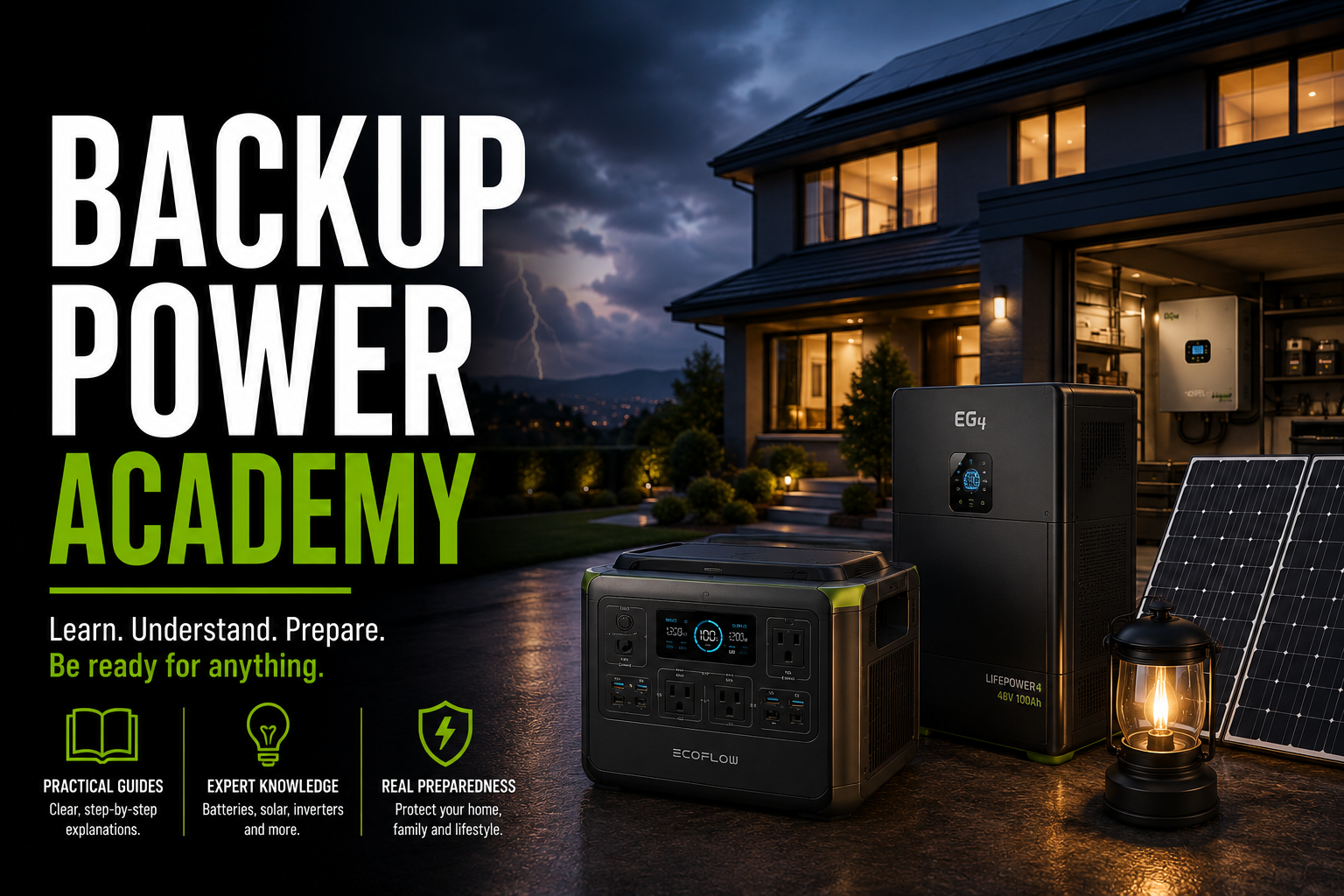
The best emergency kit combines a properly sized battery station with charging, lighting, communications, cords and a tested household load plan.
An emergency power kit is more than a battery: it must include the equipment and procedures needed to use stored energy safely.
This guide compares current portable power station foundations and explains how to complete the kit for real outages.
Start With a 1kWh LFP Power Station and Add the Missing Essentials
For many households, a 1,000–1,200Wh LFP station with 1,500–1,800W output is a strong starting point. Add compatible solar, LED lighting, a weather radio, correct cords, charging cables and a written critical-load plan.
Editor's Verdict
EcoFlow DELTA 3 Plus is the best all-around foundation, Anker SOLIX C1000 offers strong value, Jackery 1000 v2 is easiest to move and BLUETTI AC180 provides the largest base capacity in this group.
Best Emergency Power Kits
EcoFlow DELTA 3 Plus Kit
1,024Wh, 1,800W and fast solar charging potential.
Anker SOLIX C1000 Kit
1,056Wh, 1,800W and up to 600W solar input.
Jackery Solar Generator 1000 v2
1,070Wh, 1,500W and compact LFP design.
BLUETTI AC180 Kit
1,152Wh, 1,800W and 500W solar input.
Build-Your-Own Emergency Kit
Power station plus radio, lights, cords and storage.
Emergency Kit Comparison
| Kit | Capacity | Output | Solar Input | Best For |
|---|---|---|---|---|
| EcoFlow DELTA 3 Plus | 1,024Wh | 1,800W | Up to 1,000W class | Balanced essentials |
| Anker SOLIX C1000 | 1,056Wh | 1,800W | 600W | Value and fast recharge |
| Jackery 1000 v2 | 1,070Wh | 1,500W | 400W class | Portable kit |
| BLUETTI AC180 | 1,152Wh | 1,800W | 500W | Longer base runtime |
| Custom kit | Varies | Varies | Optional | Household-specific needs |
1. EcoFlow DELTA 3 Plus Emergency Kit
A fast-charging 1kWh-class system with strong output and flexible solar input.
The DELTA 3 Plus is a strong foundation for refrigeration, networking, lighting, phones and office electronics. Pair it with compatible solar panels, LED lanterns, a weather radio and properly rated cords.
Why It Stands Out
- Fast AC charging
- Strong 1,800W inverter
- LFP chemistry
- Useful UPS function
- Dual solar inputs
What to Consider
- Finite 1kWh runtime
- Heavy heating loads are impractical
- Solar depends on weather
- Accessories increase total cost
Best for: balanced home emergency kits.
2. Anker SOLIX C1000 Emergency Kit
A practical 1,056Wh system with strong output and expandable storage.
The C1000 works well for essential appliances and offers an expansion path when more runtime is required. It is especially attractive where fast recharge and app monitoring matter.
Why It Stands Out
- Good value
- Fast charging
- Expandable capacity
- Strong output
- App controls
What to Consider
- Base capacity remains limited
- Not for 240V loads
- Expansion adds weight
- Transfer time is not zero
Best for: budget-conscious emergency preparedness.
3. Jackery Solar Generator 1000 v2
A compact 1,070Wh solar-generator kit for portable emergency use.
The Explorer 1000 v2 is easier to move than many rivals and can support phones, laptops, networking, lighting and moderate appliances. Its 1,500W ceiling provides less headroom for larger kitchen loads.
Why It Stands Out
- Portable
- Fast emergency charging
- Direct USB-C output
- LFP battery
- Simple setup
What to Consider
- Lower output than 1,800W rivals
- No 240V output
- Limited for large compressors
- Solar panel size affects recharge
Best for: mobile emergency kits and apartments.
4. BLUETTI AC180 Emergency Kit
A 1,152Wh system with 1,800W output and strong appliance compatibility.
The AC180 provides slightly more base energy than most 1kWh competitors and enough inverter power for many refrigerators, microwaves and coffee makers when surge limits are respected.
Why It Stands Out
- Larger base capacity
- Strong output
- Fast AC charging
- UPS operation
- Good port selection
What to Consider
- Heavier than some rivals
- No 240V output
- Solar recharge remains weather-dependent
- Power-lifting modes do not increase true inverter capacity
Best for: households prioritizing base runtime.
5. Build-Your-Own Emergency Power Kit
A power system assembled around the household’s actual risks and critical loads.
A custom kit can outperform a prepackaged bundle because it includes the exact cords, adapters, lighting, medical backups and charging equipment the household uses.
Why It Stands Out
- Tailored to real needs
- Easy to update
- Supports medical planning
- Avoids unnecessary accessories
- Better organization
What to Consider
- Requires planning
- Compatibility checks are essential
- Can become expensive
- Must be tested
Best for: households with specific medical, pump, office or communication needs.
What Every Emergency Power Kit Should Include
Battery Power Station
Sized for refrigeration, communications, lights and medical priorities.
Compatible Solar Panel
Useful for extended outages when conditions are safe.
LED Lighting
Lanterns and headlamps use far less energy than incandescent lighting.
Weather Radio
Maintains access to official alerts when internet service fails.
Correct Cords and Adapters
Use grounded, outdoor-rated or appliance-specific cables as required.
Charging Cables
Include phone, USB-C, DC and specialty medical-device cables.
Printed Load Plan
List what can run, in what order and for how long.
Dry Storage
Keep the kit labeled, accessible and protected from water and heat.
How Much Runtime Should a Kit Provide?
A 1kWh system can often support a refrigerator, router, phones and LED lighting for part of a day, but exact runtime depends on compressor cycling and total load. Multi-day outages require solar recharge, generator recharge, expansion batteries or aggressive load reduction.
Frequently Asked Questions
What should an emergency power kit include?
A battery station, charging method, LED lighting, communications, correct cords, device cables, safe storage and a written load plan.
How much battery capacity do I need?
Around 1kWh is a practical starting point for communications, lighting and selected appliances, but refrigerators and medical devices may require more.
Should I include solar panels?
Yes when safe outdoor charging is practical, but solar production depends on weather and panel placement.
Can a power station replace a generator?
For short and moderate outages it may, but long outages and heavy loads may still require generator support.
How often should I test the kit?
Test it several times per year and before forecast hazards.
Can the kit power medical equipment?
Only after confirming device requirements and maintaining a medically appropriate backup plan.