
Pure Sine Wave UPS vs Simulated Sine Wave UPS
Pure sine-wave UPS systems provide broader compatibility; simulated sine wave lowers cost for simple loads.
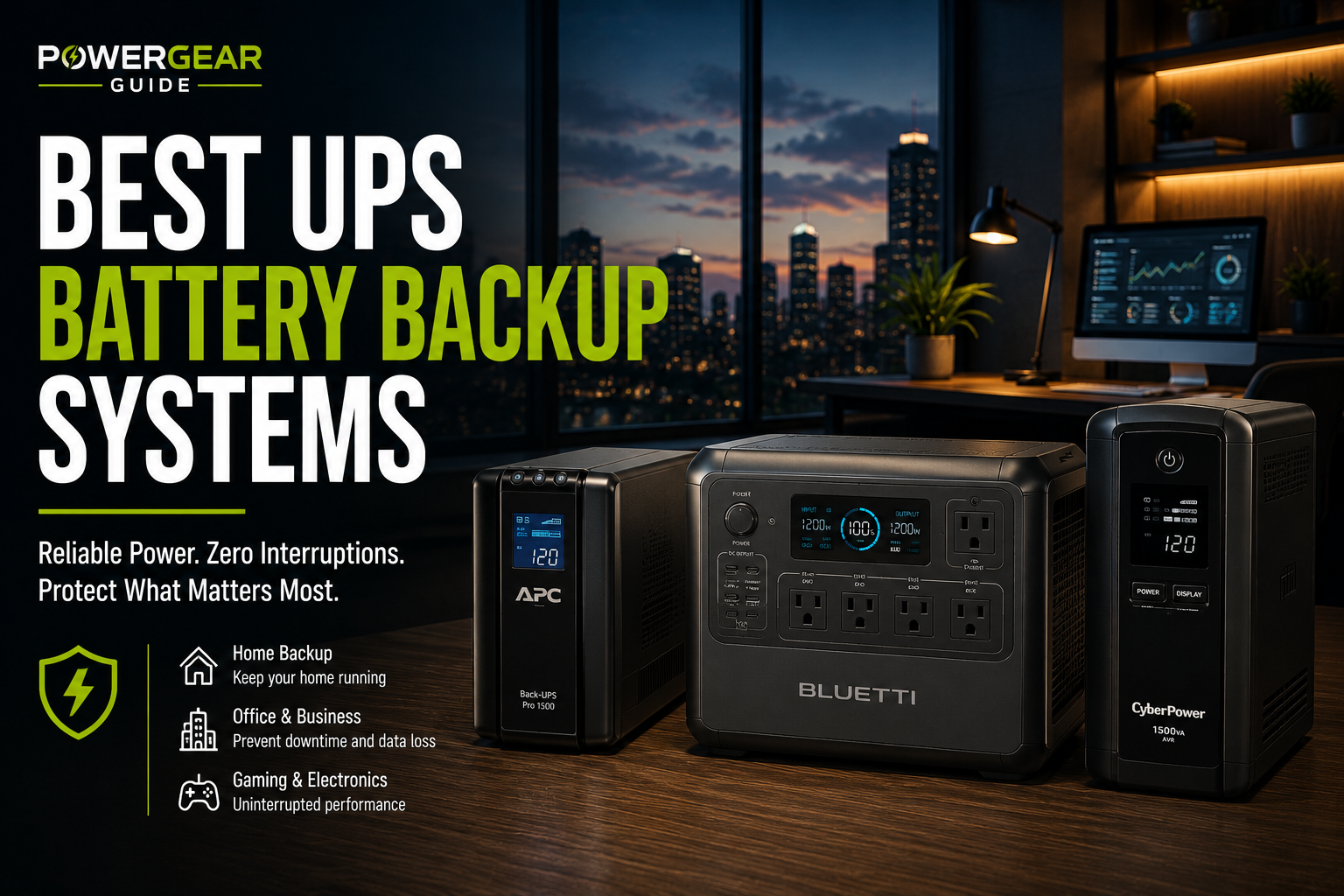
Pure sine-wave UPS systems provide broader compatibility; simulated sine wave lowers cost for simple loads.
Waveform matters during battery operation, when protected equipment must remain stable.
This comparison explains which systems need pure sine wave and where simulated sine wave remains acceptable.
Choose Pure Sine Wave for Modern PCs, Servers and Sensitive Electronics
Pure sine wave is the safer default for active-PFC computers, NAS devices, servers, audio equipment and critical systems.
Comparison Verdict
Pure sine-wave UPS models cost more but remove a major compatibility risk. Simulated sine wave remains a budget option for simple, known-compatible loads.
The Main Difference
Pure sine-wave output closely follows utility AC power. Simulated sine wave approximates it in steps and is less expensive to produce.
Pure vs Simulated Sine Wave UPS
| Factor | Pure Sine Wave | Simulated Sine Wave |
|---|---|---|
| Waveform | Smooth sinusoid | Stepped approximation |
| Active-PFC compatibility | Preferred | Can be problematic |
| Price | Higher | Lower |
| Best use | Gaming PCs, servers, workstations and sensitive electronics | Routers and simple known-compatible loads |
| Battery-mode risk | Lower compatibility risk | Possible buzzing, instability or shutdown |
Why Active PFC Matters
Many modern PC power supplies use active power factor correction and are generally better matched to pure sine-wave battery output.
Devices That Benefit Most
Gaming PCs
High-wattage active-PFC power supplies.
Servers
Critical workloads and switching supplies.
NAS Devices
Predictable shutdown and storage protection.
Audio Equipment
Reduced buzz and transformer noise.
Workstations
High-value systems with complex power supplies.
Medical Equipment
Only where approved by the device manufacturer.
When Simulated Sine Wave Is Acceptable
It can be reasonable for routers, modems and low-power peripherals that explicitly tolerate it.
How to Choose
Check the Power Supply
Look for active-PFC requirements.
Measure Real Watts
Waveform does not replace correct sizing.
Review Transfer Time
Critical systems may need online topology.
Test Under Load
Simulate an outage before relying on it.
Use Pure Sine for High-Value Systems
Reduce compatibility risk.
Separate Waveform From Topology
They are different specifications.
Frequently Asked Questions
What is pure sine-wave UPS output?
A smooth AC waveform designed to resemble utility power.
What is simulated sine wave?
A stepped approximation used in lower-cost UPS systems.
Does active PFC need pure sine wave?
It is generally better matched to pure sine-wave output.
Can simulated sine wave damage a PC?
It may cause instability or shutdown in some systems.
Is pure sine wave needed for routers?
Usually not, though it remains compatible.
Is online UPS the same as pure sine wave?
No. Online describes topology; waveform is separate.