Best Goal Zero Accessories
Nomad and Boulder panels add solar independence, Tank PRO adds the most runtime and HPP accessories add the most installation flexibility.
Goal Zero’s accessory ecosystem is one of its greatest strengths—and one of its biggest compatibility risks.
The right accessory depends on whether you own a current compact Yeti, a new sixth-generation model, a legacy X-line unit or Yeti PRO 4000.
Best Accessory Depends on the Yeti Generation
Choose solar for portable recovery, Tank PRO for PRO 4000 runtime and Link V3 only for compatible 1500X-and-larger legacy systems.
Editor's Verdict
A matched solar panel is the safest first upgrade. Expansion hardware is worthwhile only after confirming long-term commitment to the correct Yeti platform.
Best Goal Zero Accessories
| Accessory | Purpose | Best For |
|---|---|---|
| Nomad 200/400 | Portable solar charging | Camping and RVs |
| Boulder 200 Briefcase | Rugged glass solar | Basecamps and backup |
| Tank PRO 4000 | Adds 3993.6Wh class storage | Yeti PRO systems |
| Yeti Link V3 | Connects Tank expansion | 1500X and larger X line |
| Home Integration Kit | Selected circuit backup | Homeowners |
| HPP cables and wall plates | High-current solar/DC connection | Vehicle and home installs |
Solar Panels
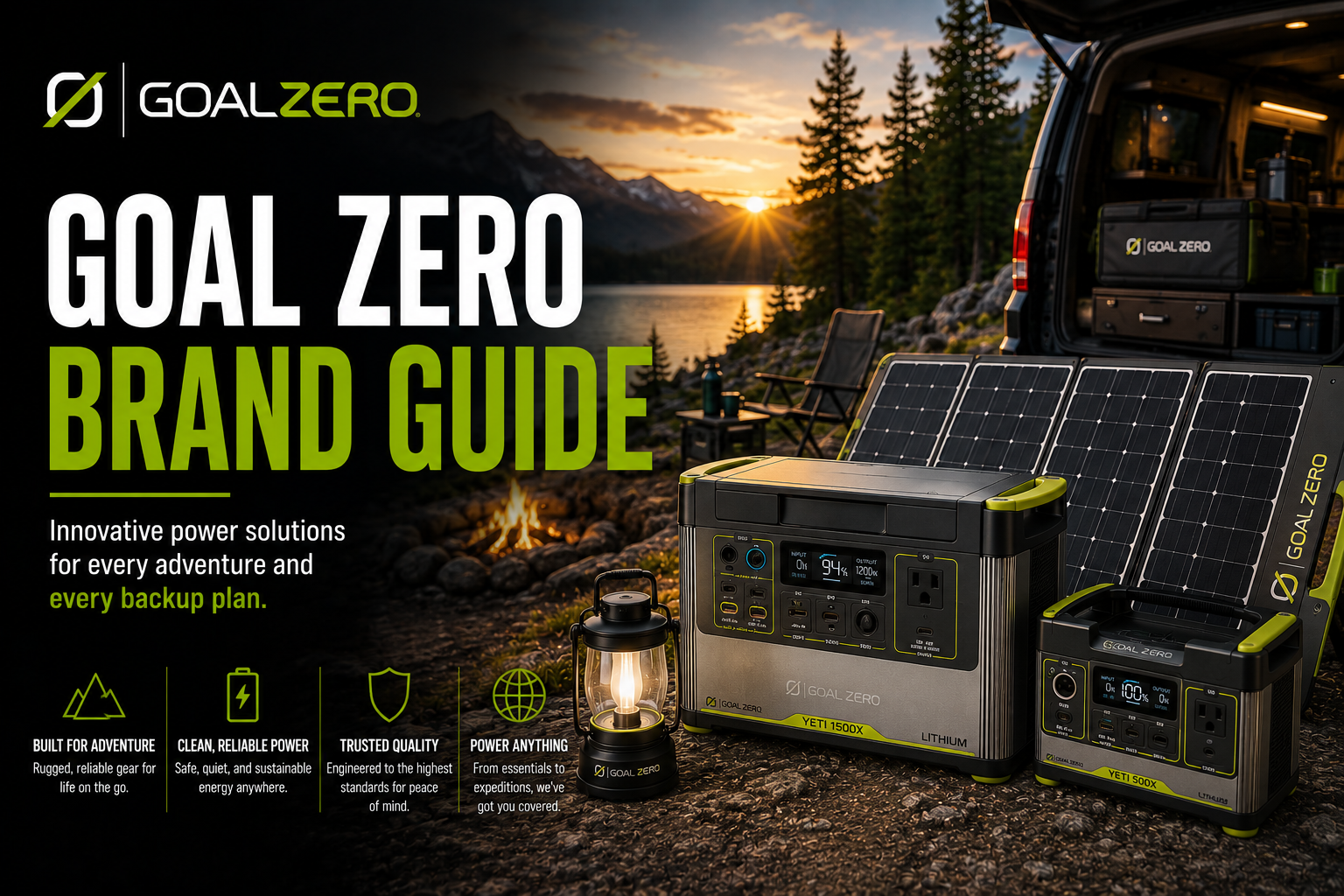
Nomad panels prioritize portability, while Boulder briefcases prioritize durable glass construction. Match wattage and connector type to the exact Yeti.
Expansion Systems
Tank PRO belongs to Yeti PRO systems. Legacy Yeti Link/Tank equipment serves selected 1500X-and-larger X-line stations and is not compatible with Yeti 1000X.
Home and Vehicle Integration
Home Integration Kits and HPP accessories can make Goal Zero more useful than a standalone station, but installation and compatibility should be planned before buying.
What to Buy First
Buy Solar First
For off-grid recovery.
Buy Expansion First
For multi-day home backup.
Buy HPP Cables
For vehicle and high-current setups.
Buy a Roll Cart
For heavy legacy Yetis.
Avoid Cross-Generation Assumptions
PRO and X accessories differ.
Compare Bundles
Panel bundles can reduce total cost.
Frequently Asked Questions
Who should buy Goal Zero accessories?
Buy it when rugged construction, Goal Zero solar compatibility, DC outputs and the model’s capacity class match your real use.
Who should skip Goal Zero accessories?
Skip it when lowest cost per watt-hour, very light weight, native 240V output or deep modern app-controlled expansion is more important.
How should runtime be estimated?
Multiply rated watt-hours by roughly 0.80 to 0.90 for usable AC energy, then divide by average load watts.
Can it run a refrigerator?
Most Yeti 1000-class and larger models can run a refrigerator if startup surge remains inside inverter limits.
Can it charge from solar panels?
Yes, when voltage, current, connector and array wattage stay inside the Yeti input limits.
Can it work as a UPS?
Pass-through and backup behavior varies by generation; verify transfer performance for sensitive electronics.
How should it be stored?
Store cool and dry, avoid extreme temperatures and maintain charge according to the exact battery chemistry and manual.
How long will the battery last?
New LFP Yetis are rated for thousands of cycles, while older X-line NMC models commonly carried much lower cycle ratings.
Are Goal Zero expansion accessories universal?
No. Link, Tank, Tank PRO and model-generation compatibility must be verified carefully.
What is the most common buying mistake?
Assuming every Yeti belongs to one compatible ecosystem despite major differences between X-line, 6th-generation and PRO products.
Is Yeti Link V3 compatible with Yeti 1000X?
No. Goal Zero explicitly states that Link V3 is not compatible with Yeti 1000X.
Can third-party solar panels work?
Often yes when voltage, current, polarity and connectors match, though adapters may be required.