Are Goal Zero Power Stations Worth It?
Goal Zero is worth considering for buyers who value rugged outdoor construction, weather resistance, strong DC outputs and an established solar ecosystem.
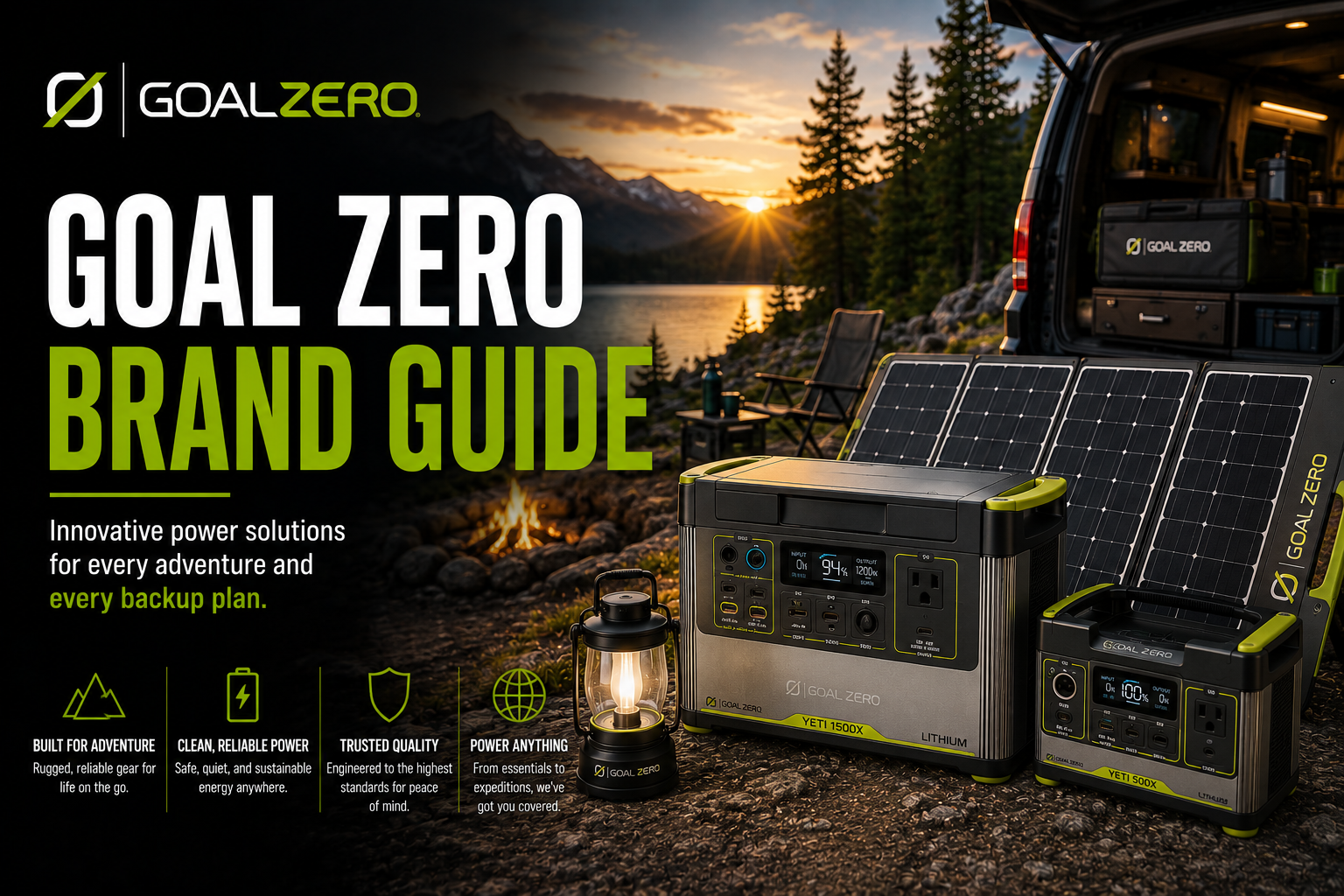
Goal Zero is worth considering for buyers who value rugged outdoor construction, weather resistance, strong DC outputs and an established solar ecosystem.
Goal Zero rarely wins purely on price per watt-hour, but current LFP models correct many of the lifespan and charging weaknesses of the older X line.
The value is highest for users who treat a power station as outdoor gear rather than a stationary commodity battery.
Worth It for Rugged Outdoor and Existing Ecosystem Buyers
New Yeti 1000 and 1500 are compelling current choices; old X models are worthwhile only at steep discounts or with owned accessories.
Editor's Verdict
Goal Zero is worth the premium when ruggedness, weather resistance and DC/solar hardware matter. Value-focused home users may get more capacity elsewhere.
Why Goal Zero Can Be Worth It
Rugged Hardware
Current Yetis are designed like outdoor gear.
Weather Resistance
Compact and new mid-size models emphasize IPX4 protection.
Strong DC Outputs
Useful for vans, coolers and 12V systems.
Solar Ecosystem
Nomad, Boulder and HPP hardware.
Established Support
Long product history and documentation.
Home Backup Options
PRO 4000 and legacy Link/Tank systems.
Reasons to Consider Alternatives
Premium Pricing
Capacity per dollar can be lower.
Legacy Confusion
Old X models remain visible.
Proprietary Accessories
HPP, Link and PRO systems vary.
Heavy Large Models
PRO 4000 exceeds 100 lb.
Limited Native 240V
Competitors offer more split-phase options.
Availability
Some current and legacy models show sold-out status.
Long-Term Ownership
Current LFP Yetis materially improve lifespan compared with older X-line models. Goal Zero is most worthwhile when ruggedness and its physical accessory ecosystem are actively used.
Best Buyers
Overlanders
Need durable DC power.
Campers
Use Nomad or Boulder solar.
RV Owners
Value HPP and 12V outputs.
Emergency Planners
Want simple appliance backup.
Existing Goal Zero Owners
Already own compatible panels and cables.
Home Backup Buyers
Need PRO 4000 rather than compact Yetis.
What Matters in Real-World Use
The right way to judge whether are goal zero power stations worth it are worth it is to compare the features you will actually use against a simpler system that can cover the same loads. Fast charging, expansion support, solar input, app controls and ecosystem accessories can add real value, but only when they solve a recurring problem rather than simply looking impressive on a specification sheet.
Start with the job. List the appliances or electronics that must run at the same time, note their continuous watts and startup surges, and estimate how many hours of runtime you need. That tells you whether the product family is appropriately sized before brand preference enters the decision.
Then price the complete setup. Expansion batteries, solar panels, proprietary cables, transfer hardware and accessories can materially change total ownership cost. A discounted base unit is not automatically the better value if the configuration needed for your use costs substantially more after add-ons.
Convenience should count too. Quiet operation, fast recharge, portability and automatic backup behavior can be worth paying for when they reduce real friction. For occasional emergency use, though, a less feature-rich system that meets the same output and runtime target may be the smarter purchase.
A Better Way to Decide
1. Define simultaneous loads
List the devices that need to run together. Use continuous watts for the base load and allow for motor/compressor startup surges.
2. Set a runtime target
Convert the planned hours of use into a watt-hour requirement, then leave reserve for inverter losses and real-world variation.
3. Compare the complete configuration
Include expansion batteries, solar panels, adapters, cables and other hardware required for the intended job.
4. Price convenience realistically
Weight, noise, recharge time, automation and ecosystem support are worth paying for only when they remove a real inconvenience.
Common Buying Mistakes to Avoid
Frequently Asked Questions
Who should buy a Goal Zero power station?
Buy it when rugged construction, Goal Zero solar compatibility, DC outputs and the model’s capacity class match your real use.
Who should skip a Goal Zero power station?
Skip it when lowest cost per watt-hour, very light weight, native 240V output or deep modern app-controlled expansion is more important.
How should runtime be estimated?
Multiply rated watt-hours by roughly 0.80 to 0.90 for usable AC energy, then divide by average load watts.
Can it run a refrigerator?
Most Yeti 1000-class and larger models can run a refrigerator if startup surge remains inside inverter limits.
Can it charge from solar panels?
Yes, when voltage, current, connector and array wattage stay inside the Yeti input limits.
Can it work as a UPS?
Pass-through and backup behavior varies by generation; verify transfer performance for sensitive electronics.
How should it be stored?
Store cool and dry, avoid extreme temperatures and maintain charge according to the exact battery chemistry and manual.
How long will the battery last?
New LFP Yetis are rated for thousands of cycles, while older X-line NMC models commonly carried much lower cycle ratings.
Are Goal Zero expansion accessories universal?
No. Link, Tank, Tank PRO and model-generation compatibility must be verified carefully.
What is the most common buying mistake?
Assuming every Yeti belongs to one compatible ecosystem despite major differences between X-line, 6th-generation and PRO products.
Are Goal Zero solar panels worth it?
They simplify HPP and 8mm compatibility and are rugged, but third-party panels can cost less when electrical limits match.
Should I buy a used Yeti X?
Only after checking battery health, cycle history and replacement economics.