
Goal Zero Portable Power Stations and Backup Power
Goal Zero now combines rugged compact LFP Yetis, new 1–1.5kWh sixth-generation stations and the large Yeti PRO 4000 home-backup platform.
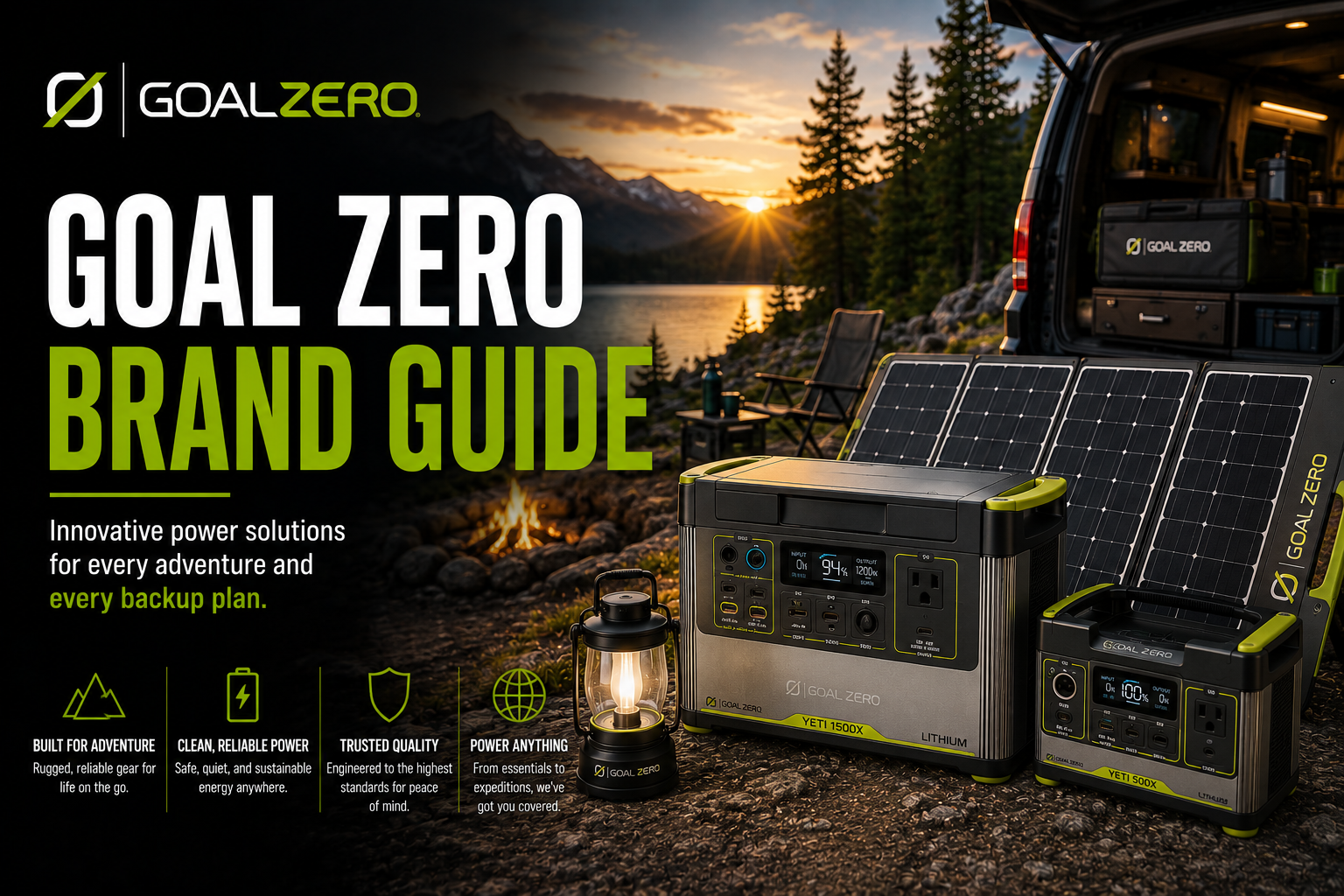
Goal Zero now combines rugged compact LFP Yetis, new 1–1.5kWh sixth-generation stations and the large Yeti PRO 4000 home-backup platform.
The most important Goal Zero buying decision is not only capacity—it is choosing the correct product generation and compatible accessory ecosystem.
This hub explains the current lineup, legacy X-series ownership and where Goal Zero fits against newer value-focused brands.
Choose Current LFP Models Unless You Already Own X-Line Accessories
Yeti 700 is best compact, new Yeti 1000 is best overall, new Yeti 1500 adds runtime and Yeti PRO 4000 serves home backup.
Hub Verdict
Goal Zero makes the most sense for buyers who value rugged outdoor construction, strong DC outputs, solar accessories and established support.
Goal Zero Backup Power Lineup
| Category | Models | Capacity | Best Use |
|---|---|---|---|
| Compact | Yeti 300, 500, 700 | 297–677Wh | Camping and electronics |
| Mid-size current | Yeti 1000, Yeti 1500 | 998–1505Wh | RV and essentials |
| Large current | Yeti PRO 4000 | 3993.6Wh | Home backup |
| Legacy X line | 1000X, 1500X, 3000X, 6000X | Approx. 1–6kWh | Existing ecosystems |
Three Goal Zero Ecosystems
6th-Generation Yetis
Modern LFP, faster charging and rugged outdoor design.
Yeti X Line
Older NMC platform with Link/Tank options on selected models.
Yeti PRO
Large LFP platform with Tank PRO and home integration.
Best Uses
Camping
Yeti 300–700.
RV and Van
Yeti 1000 or 1500.
Home Essentials
Yeti 1500 or PRO 4000.
Long Outages
PRO 4000 with Tank PRO.
Legacy Expansion
1500X and larger with compatible Link/Tank gear.
Solar Charging
Nomad and Boulder panels matched to input limits.
How to Choose
Separate Current From Legacy
Do not compare cycle life without chemistry context.
Choose Output
600W, 2000W and 3600W classes serve different loads.
Plan Solar
Compact Yetis accept less solar than PRO models.
Check Weather Resistance
New rugged lines add IPX4-class protection.
Verify Expansion
Tank and Tank PRO are different systems.
Compare Value
Goal Zero often charges a ruggedness and support premium.
Practical System Planning
Electrical sizing works best when the entire system is considered together. Load watts, startup surge, battery energy, wiring, charging capability and protective devices all interact; optimizing one number while ignoring the others can create an unreliable setup.
Use manufacturer instructions as the controlling reference for installation, connection and service. Generic calculations are useful for understanding the design, but model-specific voltage limits, cable requirements, grounding instructions and safety procedures take priority.
Leave operating margin. Equipment that spends its life at maximum output has less room for startup events, temperature changes and unexpected loads. Sensible headroom generally improves reliability and makes future changes easier to accommodate.
For backup systems, test before the emergency. Verify the intended loads, charging method, cables and accessories while utility power and replacement parts are available. A documented, practiced setup is far more useful than a theoretically capable system that has never been assembled.
A Useful Design Margin
Avoid sizing a power system to the exact edge of a published rating. Real loads vary, batteries age, wiring introduces voltage drop and environmental conditions change. Leaving headroom in both power and energy capacity makes the system more tolerant of those differences.
For critical backup use, separate essential loads from optional ones. Reducing simultaneous demand can often improve reliability and runtime more effectively than simply buying the largest inverter or battery available.
Frequently Asked Questions
Who should buy Goal Zero backup power?
Buy it when rugged construction, Goal Zero solar compatibility, DC outputs and the model’s capacity class match your real use.
Who should skip Goal Zero backup power?
Skip it when lowest cost per watt-hour, very light weight, native 240V output or deep modern app-controlled expansion is more important.
How should runtime be estimated?
Multiply rated watt-hours by roughly 0.80 to 0.90 for usable AC energy, then divide by average load watts.
Can it run a refrigerator?
Most Yeti 1000-class and larger models can run a refrigerator if startup surge remains inside inverter limits.
Can it charge from solar panels?
Yes, when voltage, current, connector and array wattage stay inside the Yeti input limits.
Can it work as a UPS?
Pass-through and backup behavior varies by generation; verify transfer performance for sensitive electronics.
How should it be stored?
Store cool and dry, avoid extreme temperatures and maintain charge according to the exact battery chemistry and manual.
How long will the battery last?
New LFP Yetis are rated for thousands of cycles, while older X-line NMC models commonly carried much lower cycle ratings.
Are Goal Zero expansion accessories universal?
No. Link, Tank, Tank PRO and model-generation compatibility must be verified carefully.
What is the most common buying mistake?
Assuming every Yeti belongs to one compatible ecosystem despite major differences between X-line, 6th-generation and PRO products.
What is the current Goal Zero mid-size lineup?
The 6th-generation Yeti 1000 and new 2026 Yeti 1500.
Should I buy a legacy Yeti X model?
Only at a compelling discount or when you already own compatible X-line accessories.