
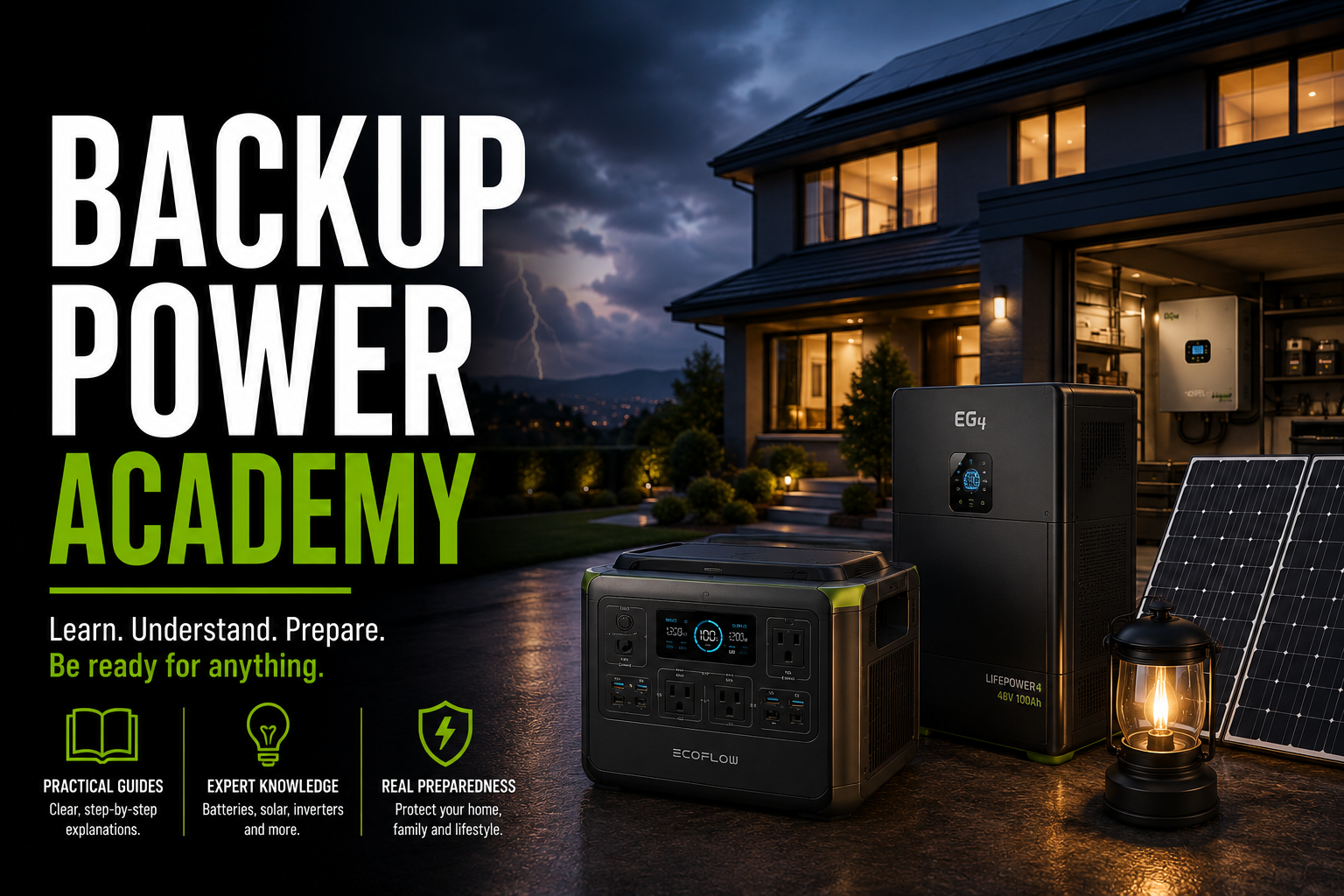
Are Solar Generators Worth It?
Solar generators are most valuable when quiet battery power, portability and off-grid recharge matter more than the lowest cost per kilowatt-hour.
A solar generator can be worth it even without a simple financial payback because resilience and portability have practical value.
The answer depends on outage frequency, load size, sunlight, generator restrictions and how often the system will be used away from the grid.
Worth It for Quiet Backup, Camping and Repeated Off-Grid Use
Solar generators are a strong buy for electronics, refrigeration, RVs and short outages. They are a weaker value for electric heating, unrestricted whole-home loads or buyers who rarely use solar panels.
Editor's Verdict
A solar generator is worth it when the same system serves multiple roles: outage backup, camping, travel and solar charging. It is less compelling when a low-cost generator already meets long-duration home needs.
When Solar Generators Are Worth It
Frequent Camping or RV Use
Solar offsets daily electronics and refrigeration loads.
Short and Medium Outages
Battery power is quiet and indoor-safe.
Remote Work
Laptops, routers and communication devices use relatively little energy.
Medical and Communication Backup
Properly sized systems can support essential low-power devices.
Generator Restrictions
Apartments, campgrounds and neighborhoods may limit combustion noise.
High Solar Availability
Good sun improves recharge and reduces grid dependence.
The Value Equation
A solar generator rarely has a simple financial payback if it is used only for occasional outages. Its value comes from resilience, portability, silent operation and the ability to recharge without fuel.
| Value Factor | Improves the Case | Weakens the Case |
|---|---|---|
| Outage frequency | Frequent interruptions | Rare short outages |
| Daily solar use | Regular off-grid charging | Panels stay stored |
| Load size | Electronics and refrigeration | Heating and whole-home loads |
| Fuel access | Limited or expensive fuel | Easy generator refueling |
| Noise restrictions | Quiet operation required | Noise is unimportant |
| Portability | Used in several locations | Permanent home use only |
Costs Buyers Underestimate
Adequate Panel Wattage
Small bundle panels may charge too slowly.
Expansion Batteries
Extra storage can cost as much as the original unit.
Adapters and Cables
Third-party panels may need correct conversion cables.
Cases and Mounting
Panels and batteries need safe transport and placement.
Replacement Timing
Battery capacity declines over years.
Opportunity Cost
A generator may deliver more long-duration energy for less upfront cost.
Solar Generator vs Alternatives
| Option | Main Strength | Main Limitation |
|---|---|---|
| Solar generator | Quiet, portable, renewable recharge | Finite battery and weather dependence |
| Gas generator | Refuelable high output | Noise, maintenance and carbon monoxide |
| Home battery | Automatic integrated backup | High installed cost |
| UPS | Fast continuity for electronics | Short runtime |
| Power bank | Very portable | No household AC appliances |
A Practical Buyer Test
Estimate your critical loads in watt-hours per day, then compare battery capacity and realistic daily solar generation. If the system cannot replace the energy you expect to use, it is a short-term battery backup rather than an indefinitely renewable solution.
Frequently Asked Questions
Do solar generators save money?
They may offset some grid charging or fuel use, but savings depend on how often solar is used.
Are they worth it for outages?
Yes for quiet indoor-safe backup and moderate loads.
Are they better than gas generators?
They are quieter and lower maintenance, while gas generators are better for long-duration high-energy use.
How long is the payback period?
There is no universal payback because resilience and off-grid use vary widely.
Do I need a large solar panel?
Daily panel energy should be sized to the battery and expected load.
What is the biggest mistake?
Buying too little panel wattage or too much high-draw appliance load.