
What Is a Solar Generator?
A solar generator combines battery storage, an inverter, charge electronics and solar panels into a rechargeable source of AC and DC power.
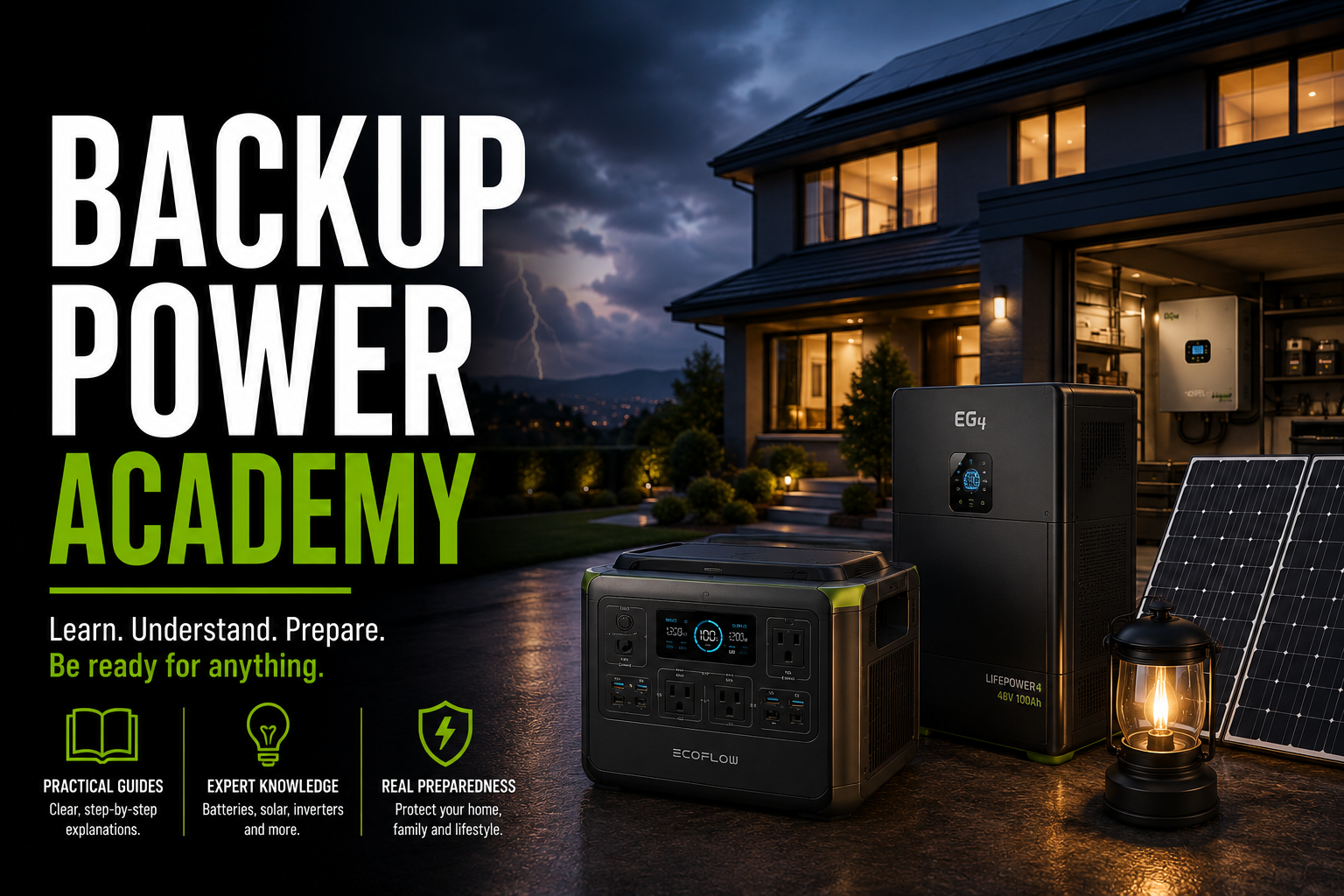
A solar generator combines battery storage, an inverter, charge electronics and solar panels into a rechargeable source of AC and DC power.
Solar generators store electricity and can recharge from sunlight; they do not generate continuous power without sufficient solar input.
The category ranges from small camping units to modular systems capable of powering household circuits.
It Is a Portable Power Station Paired With Solar Charging
The battery stores energy, the inverter powers AC appliances, the charge controller manages solar input and the panels convert sunlight into electricity.
Who Should Buy One
Solar generators are strongest for camping, RVs, electronics, refrigeration and short-to-medium outages. They are less suited to unrestricted heating or long outages without enough panel input.
What a Solar Generator Actually Is
A solar generator is a rechargeable battery power system paired with solar charging. It does not create electricity from nothing; solar panels convert sunlight into DC electricity, and the charge controller stores that energy in the battery.
Main Components
Battery Pack
Stores energy, commonly using LFP or NMC cells.
Battery Management System
Monitors voltage, temperature, current and cell balance.
Inverter
Converts DC battery energy into household AC power.
Solar Charge Controller
Regulates panel input, often using MPPT.
Output Ports
AC, USB, 12V DC and specialty connections.
Solar Panels
Provide renewable recharge during daylight.
How It Works
Solar panels feed DC power into the charge controller. The battery stores that energy. DC devices can use battery power directly, while AC appliances require the inverter. The display or app reports state of charge, input, output and estimated runtime.
Common Size Classes
| Class | Typical Capacity | Typical Output | Best Use |
|---|---|---|---|
| Compact | 200–500Wh | 300–700W | Electronics and lights |
| Mid-size | 700–1,500Wh | 1,000–2,000W | Refrigeration, camping and office backup |
| Large | 2–4kWh | 2,000–4,000W | RV use and major essentials |
| Expandable | 4kWh+ | 4,000W+ | Home circuits and extended backup |
Charging Methods
| Method | Strength | Limitation |
|---|---|---|
| Solar panels | Renewable and quiet | Weather dependent |
| AC wall charging | Fast and predictable | Requires grid or generator |
| Vehicle charging | Useful while driving | Often slow |
| Alternator charger | Higher mobile input | Requires compatible installation |
| Generator charging | Extends outage runtime | Adds fuel, noise and exhaust |
Best Uses
Camping and RVs
Quiet portable power and solar recharge.
Indoor Outage Backup
No combustion exhaust during battery operation.
Home Office
Supports routers, laptops and monitors.
Refrigeration
Mid-size systems can support compatible compressors.
Medical Equipment
Only with verified compatibility and backup planning.
Off-Grid Cabins
Solar can replace daily energy when properly sized.
Important Limitations
Finite Battery
Stored energy runs out without recharge.
Weather Dependence
Clouds and shade reduce solar production.
High-Heat Loads
Heaters and cooking appliances use energy rapidly.
Voltage Limits
Many units cannot run 240V appliances.
Motor Surge
Pumps and compressors can exceed startup capability.
Panel Setup
Portable arrays need space and correct orientation.
How to Choose One
Calculate Running Watts
Size the inverter for simultaneous loads.
Check Surge Demand
Account for motors and compressors.
Estimate Watt-Hours
Multiply average load by desired runtime.
Match Solar Input
Panel voltage and current must fit the controller.
Choose Battery Chemistry
Balance cycle life, weight and cost.
Review Expansion
Decide whether future battery growth matters.
Practical Planning and Ownership
The useful way to apply what is a solar generator is to connect the guidance to the actual equipment, environment and duty cycle. Power systems age and behave differently depending on load, temperature, storage, maintenance and how frequently they are cycled.
Follow the equipment manufacturer's limits for charging, ventilation, storage and service. Generic rules are useful for understanding the system, but model-specific instructions control when they are more restrictive.
Build margin into backup plans. Batteries lose capacity with age, engines can be harder to start after storage, and real loads can draw more than expected. A system designed with reserve is more dependable than one that works only at ideal ratings.
Periodic testing is part of ownership. An emergency is the wrong time to discover a weak battery, stale fuel, missing cable or incompatible load. Keep accessories together, document the basic operating procedure and test the setup on a sensible schedule.
Frequently Asked Questions
Does a solar generator use fuel?
No combustion fuel is used during battery operation; it stores electricity from solar, grid or vehicle charging.
Can it be used indoors?
Battery systems can generally operate indoors according to the manual because they produce no combustion exhaust.
Can it run a refrigerator?
Many mid-size models can if output and surge are adequate.
Can solar recharge it indefinitely?
Only if daily solar production reliably matches or exceeds daily consumption.
Is it the same as rooftop solar?
No. It is a portable or modular storage system, while rooftop solar is usually a permanent building installation.
What size should I buy?
Calculate simultaneous watts and desired watt-hours before choosing.