
Can a Solar Generator Power a House?
Yes, but whole-house backup requires enough inverter output, battery storage, 120/240V capability, transfer equipment and solar recharge.
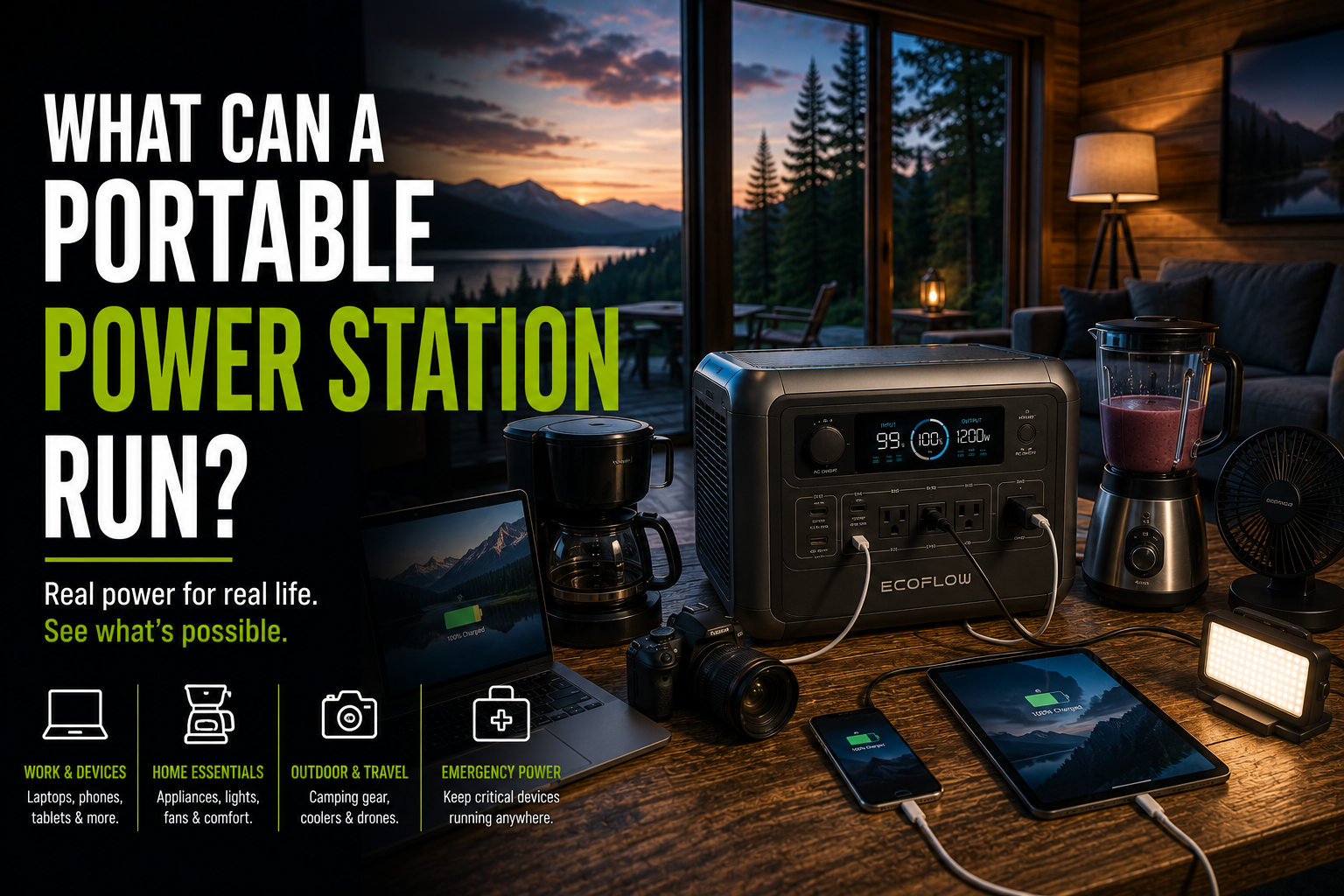
Yes, but whole-house backup requires enough inverter output, battery storage, 120/240V capability, transfer equipment and solar recharge.
A small portable solar generator can support selected appliances; a large modular system can support household circuits.
The practical question is not whether the panel can be energized, but how many loads can run at once and for how long.
Yes—With a Large 120/240V System and Load Management
Essential-load backup may use 5–15kWh and 3–7kW. Managed whole-home operation often requires 15–30kWh or more, 7–12kW+ output and enough solar to replace daily energy.
Bottom Line
A solar generator can power a house, but the cost-effective approach is usually essential or managed loads rather than unrestricted operation of electric heat, central air, water heating and EV charging.
What “Power a House” Means
A solar generator can power selected household circuits or, at the high end, an entire electrical panel. That does not mean every appliance can operate simultaneously or indefinitely.
Whole-House Requirements
| Requirement | Why It Matters | Typical Question |
|---|---|---|
| Inverter output | Controls simultaneous load | Can it start central air or a well pump? |
| Surge output | Covers motor startup | Will the compressor start? |
| Battery capacity | Controls runtime | Will essentials last overnight? |
| 120/240V support | Needed for many large appliances | Can it power the panel? |
| Solar input | Controls daily recovery | Can panels replace yesterday’s use? |
| Transfer equipment | Creates safe home connection | How are circuits energized? |
Three Practical Backup Levels
Essential Loads
Refrigeration, lights, internet and selected outlets may fit within 2–5kW and 5–15kWh.
Managed Whole Home
A 7–12kW system with 15–30kWh can support many homes when large loads are scheduled.
Near-Normal Operation
Electric heat, large HVAC, water heating and EV charging may require 30–60kWh or more.
How to Size a House-Capable Solar Generator
Review Utility Data
Find daily kWh and peak demand.
Separate Essentials
Do not size around every appliance by default.
Measure Motor Surge
Pumps and HVAC can dominate inverter sizing.
Choose Runtime
Define hours or days without grid power.
Size Solar for Recovery
Panels must replace expected daily use.
Include Weather Margin
Clouds and winter production reduce output.
Example Whole-House Calculation
A home averaging 24kWh per day uses about 1kW on average, but its peak can exceed 8kW when air conditioning, cooking and pumps overlap. A 20kWh battery might support essentials for a day, yet still fail if the inverter cannot start a large compressor.
Main Limitations
Electric Heat
Resistance heating depletes batteries rapidly.
Central Air
High surge and long runtime require large systems.
Well Pumps
Often 240V with substantial startup demand.
EV Charging
Can consume more energy than all essential household loads.
Cloudy Weather
Storms can reduce recharge when backup is needed most.
Installation
Panel integration requires approved equipment and qualified work.
When a Hybrid System Is Better
A solar generator or home battery can handle short outages quietly, while a generator supports multi-day events or recharges the battery when solar is inadequate. This can reduce fuel use without requiring enough battery capacity for the worst possible outage.
How to Size the Load in Real Use
For can a solar generator power a house, check continuous power, startup behavior and runtime separately. A station may contain enough battery energy for the job yet still overload when a motor, pump, heating element or tool demands more instantaneous power than the inverter can supply.
Use measured consumption when the decision matters. Appliance labels and published wattage ranges are useful starting points, but operating mode, temperature, duty cycle and motor load can change actual consumption. A plug-in energy meter gives a stronger runtime estimate for compatible 120V loads.
Estimate runtime from average watts and usable battery energy, then leave margin for inverter losses and system overhead. Loads that cycle—such as refrigerators and pumps—should not be assumed to draw their full running wattage every minute, while resistive heaters can remain near their rated draw continuously.
For outage planning, test the actual appliance and power station together before you depend on the combination. Confirm clean startup, stable operation and realistic runtime. Calculations narrow the choice; a real test catches surge and compatibility issues that paper specifications can miss.
Frequently Asked Questions
How many kWh are needed to power a house?
Essential backup may need 5–15kWh, while broader whole-home use can require 15–40kWh or more.
Can a solar generator run central air?
Some large systems can, but compressor surge and runtime require substantial output and capacity.
Can it run a well pump?
Only if it provides the required 240V and motor-starting surge.
How much solar is needed?
The array must replace expected daily energy under realistic weather conditions.
Do I need professional installation?
Yes for panel integration, transfer equipment and 120/240V household circuits.
Is a hybrid generator useful?
Yes, it can support long outages when solar is inadequate.