
ALLPOWERS vs EcoFlow
ALLPOWERS competes on direct-sale value and solar input; EcoFlow leads in software, alternator charging and ecosystem depth.
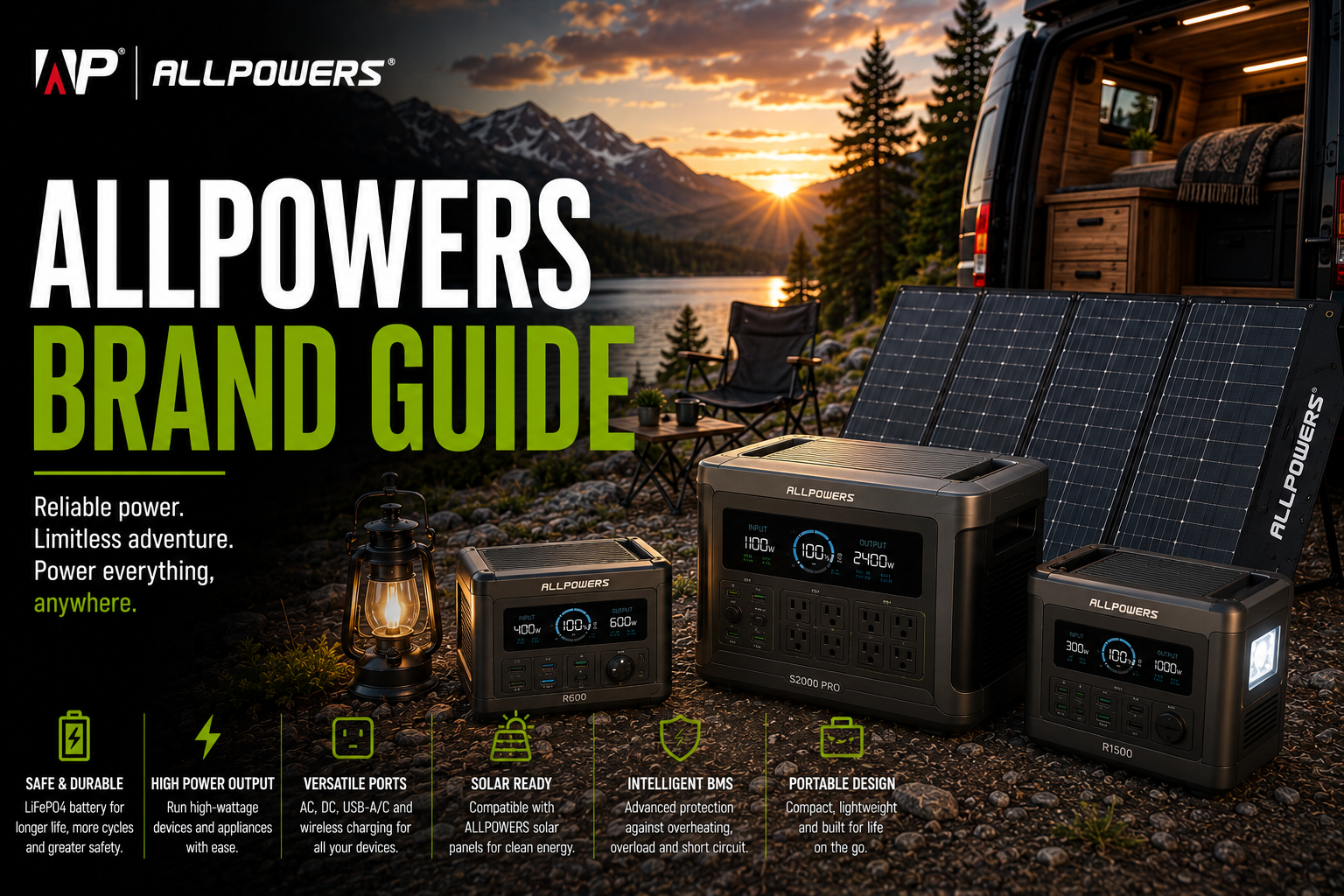
ALLPOWERS competes on direct-sale value and solar input; EcoFlow leads in software, alternator charging and ecosystem depth.
ALLPOWERS competes on direct-sale value and solar input; EcoFlow leads in software, alternator charging and ecosystem depth.
This comparison focuses on runtime, output, charging, expansion, portability and ownership.
Main Difference
ALLPOWERS competes on direct-sale value and solar input; EcoFlow leads in software, alternator charging and ecosystem depth.
Comparison Verdict
ALLPOWERS competes on direct-sale value and solar input; EcoFlow leads in software, alternator charging and ecosystem depth.
Quick Comparison
| Factor | ALLPOWERS | Competitor |
|---|---|---|
| 1kWh | R1500: 1152Wh/1800W | DELTA 3 Plus: 1024Wh/1800W |
| 2kWh | R2500: 2016Wh/2500W | DELTA 3 Max Plus: 2048Wh/3000W |
| App | Basic | Advanced |
| Expansion | Model-specific | Broad DELTA |
| Best for | Value | Integrated systems |
Performance
EcoFlow leads current 2kWh output; ALLPOWERS is competitive in capacity.
Charging
Both charge quickly, but EcoFlow offers more charging ecosystems.
Ownership
EcoFlow is easier to expand; ALLPOWERS can cost less.
Who Should Buy Each?
Choose ALLPOWERS
For charging speed, solar input or direct-sale value.
Choose the Competitor
For broader support, lower weight or deeper software.
Skip Both
When native 240V is required.
Check Expansion
Battery compatibility varies.
Compare Current Pricing
Promotions change value.
Use Continuous Watts
Do not size from surge alone.
What Matters in Real-World Use
The useful way to approach allpowers vs ecoflow portable power stations is to identify which differences change real appliance compatibility, runtime, recharge time or portability. A comparison table is a starting point, not the decision itself; the best choice is the one whose strengths overlap with the way you will actually use the system.
Calculate the load before comparing capacity. Add the continuous watts of devices that may operate at the same time, then allow separately for startup surges from refrigerators, pumps, compressors or tools. After that, estimate watt-hours from the expected runtime. This prevents paying for capacity when output is the limiting factor—or the reverse.
When both choices satisfy the electrical requirement, compare practical ownership: weight, physical size, AC and solar recharge options, expansion support, port selection, noise, app dependence and warranty/service. A small specification win can be irrelevant if the competing system is easier to move, recharge or support.
Finally, compare the current total-system price. Promotions can change the value equation quickly, especially among portable power stations. Include any battery modules, panels, adapters or cables needed for the intended setup rather than comparing base-unit prices in isolation.
A Better Way to Decide
1. Define the load
List simultaneous devices, continuous watts and startup surges before deciding what size station you need.
2. Define runtime
Estimate required watt-hours from actual hours of operation and leave reserve for conversion losses and changing loads.
3. Compare complete cost
Include solar, expansion batteries, adapters and other accessories required for the intended configuration.
4. Weight support and convenience
Recharge time, portability, noise, warranty handling and accessory availability can outweigh modest spec differences.
Common Buying Mistakes to Avoid
Frequently Asked Questions
Who should buy ALLPOWERS vs EcoFlow?
Buy it when ALLPOWERS capacity, charging speed, solar input and expansion pricing match your real loads.
Who should skip ALLPOWERS vs EcoFlow?
Skip it when the lowest weight, broad retail support or native 240V matters more.
How should runtime be estimated?
Multiply watt-hours by roughly 0.80 to 0.90 for practical AC energy, then divide by average load watts.
Can ALLPOWERS run a refrigerator?
R1500 and larger models can generally run refrigerators when compressor startup remains within surge limits.
Can third-party solar panels be used?
Yes, when voltage, current, polarity and connectors remain within the exact MPPT limits.
Does ALLPOWERS support UPS use?
Many R-series models advertise about 15ms transfer, but sensitive equipment should be verified by exact model.
How long do the batteries last?
Current LFP R-series models generally claim more than 3,500 cycles to about 80% capacity.
Are expansion batteries universal?
No. B1000 and B3000 serve different station families and model revisions.
How should the station be stored?
Keep it cool, dry and ventilated and follow manufacturer charge-maintenance guidance.
What is the most common buying mistake?
Assuming every R-series model has the same expansion, solar and charging limits.
Which is better for daily use?
EcoFlow.
Which may be cheaper?
ALLPOWERS.