
Are ALLPOWERS Power Stations Worth It?
ALLPOWERS is worth considering for buyers who prioritize fast charging, high solar input and strong capacity at direct-sale prices.
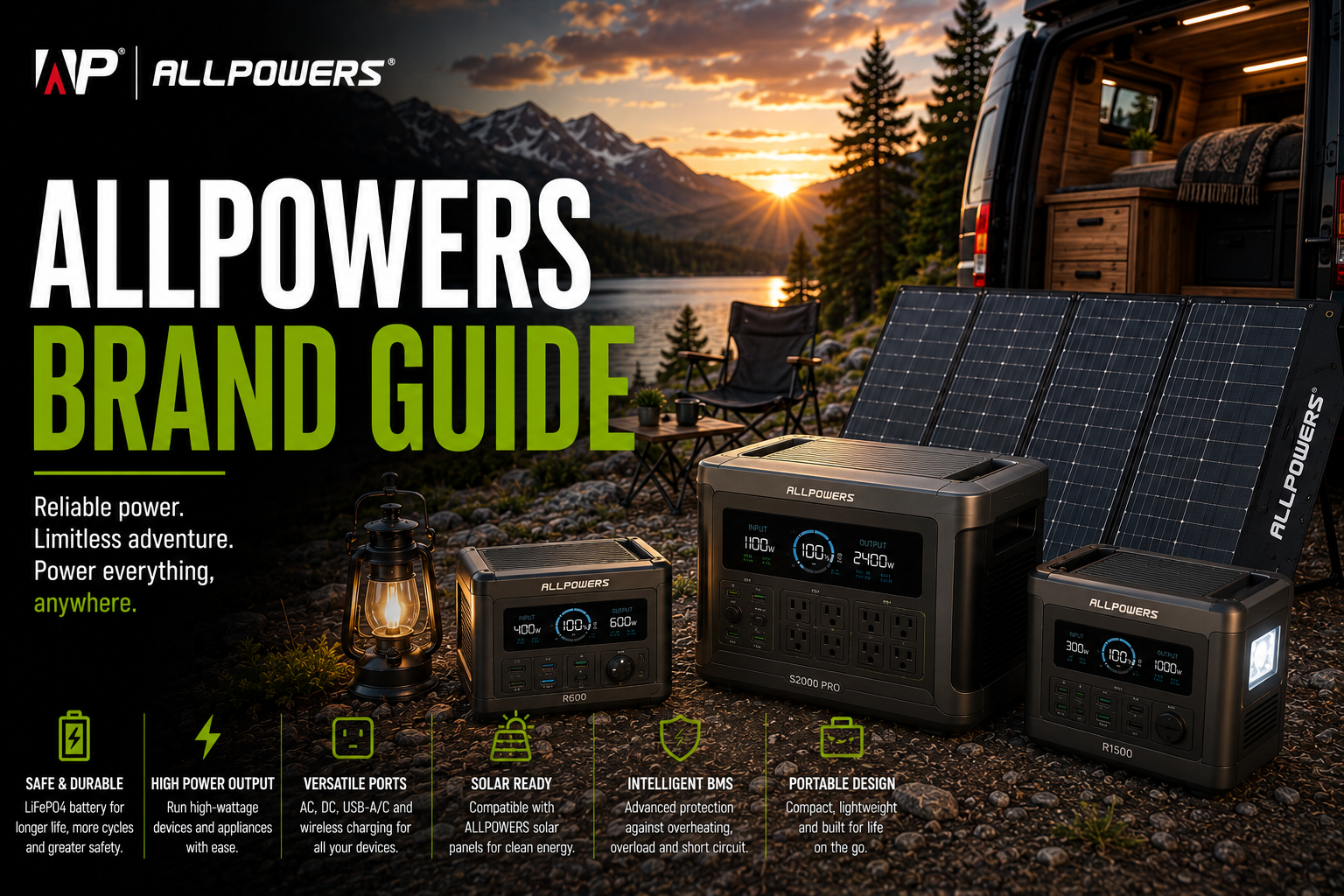
ALLPOWERS is worth considering for buyers who prioritize fast charging, high solar input and strong capacity at direct-sale prices.
The R series can deliver excellent hardware value, but ownership requires careful attention to model revision and expansion compatibility.
The brand is strongest when bought as a complete, verified system.
Worth It for Value-Focused Solar and Backup Buyers
R1500 and R2500 are the strongest mainstream choices.
Editor's Verdict
ALLPOWERS is worth buying when the complete bundle meaningfully undercuts larger competitors.
Why ALLPOWERS Can Be Worth It
Fast Charging
Strong AC and dual input.
Solar Input
Up to 2kW on large models.
LFP Batteries
Long cycle claims.
App Control
Remote monitoring.
UPS Support
15ms class on many models.
Direct Pricing
Frequent sales.
Reasons to Consider Alternatives
Revision Confusion
R2500 versions differ.
Heavy Large Models
R3500/R4000 exceed 90 lb.
Less Mature App
Software trails leaders.
Accessory Fragmentation
B1000/B3000 differ.
Retail Support
More direct-sale focused.
No Native 240V
Large US loads may require alternatives.
Best Buyers
Campers
R600/R1500.
RV Owners
R2500.
Home Backup
R2500/R3500.
Solar Users
Large MPPT inputs.
Deal Hunters
Direct promotions.
Not Frequent Movers
Large models are heavy.
What Matters in Real-World Use
Whether are allpowers power stations worth it are worth buying depends less on the logo and more on how closely the available models fit the electrical job. Start with the appliances or electronics you need to run, their simultaneous continuous wattage, any startup surge, and the number of hours of runtime you actually need.
Then compare the complete system rather than the base unit. Solar panels, expansion batteries, charging accessories, proprietary cables and adapters can materially change total cost. A low sale price is not automatically good value if the configuration required for your use needs several expensive additions.
Recharge behavior matters most when the station will be cycled frequently. Faster AC charging, useful solar input and vehicle-charging options can reduce downtime for camping, travel and repeated outages. For a unit that spends most of its life stored for emergencies, those advantages may be worth much less.
Support, warranty handling and accessory availability deserve extra weight with smaller power-station brands. A specification advantage is less compelling if replacement cables, expansion hardware or service are difficult to obtain later. Price the risk as well as the hardware.
A Better Way to Decide
1. Define the load
List simultaneous devices, continuous watts and startup surges before deciding what size station you need.
2. Define runtime
Estimate required watt-hours from actual hours of operation and leave reserve for conversion losses and changing loads.
3. Compare complete cost
Include solar, expansion batteries, adapters and other accessories required for the intended configuration.
4. Weight support and convenience
Recharge time, portability, noise, warranty handling and accessory availability can outweigh modest spec differences.
Common Buying Mistakes to Avoid
Long-Term Value and Ownership
Portable power stations are long-lived purchases, so value should include what happens after the first year. Check whether the brand still sells compatible charging cables, solar adapters and expansion hardware, and whether firmware or app features are required for functions you consider essential. A slightly cheaper unit can become frustrating if the surrounding ecosystem disappears or replacement accessories are difficult to source.
Battery longevity also changes the economics. Avoid treating the advertised cycle-life number as a guarantee of identical real-world service life: temperature, depth of discharge, storage state of charge and how heavily the inverter is loaded all matter. For occasional backup, sensible storage and periodic checks may be more important than chasing the highest theoretical cycle figure.
Frequently Asked Questions
Who should buy an ALLPOWERS station?
Buy it when ALLPOWERS capacity, charging speed, solar input and expansion pricing match your real loads.
Who should skip an ALLPOWERS station?
Skip it when the lowest weight, broad retail support or native 240V matters more.
How should runtime be estimated?
Multiply watt-hours by roughly 0.80 to 0.90 for practical AC energy, then divide by average load watts.
Can ALLPOWERS run a refrigerator?
R1500 and larger models can generally run refrigerators when compressor startup remains within surge limits.
Can third-party solar panels be used?
Yes, when voltage, current, polarity and connectors remain within the exact MPPT limits.
Does ALLPOWERS support UPS use?
Many R-series models advertise about 15ms transfer, but sensitive equipment should be verified by exact model.
How long do the batteries last?
Current LFP R-series models generally claim more than 3,500 cycles to about 80% capacity.
Are expansion batteries universal?
No. B1000 and B3000 serve different station families and model revisions.
How should the station be stored?
Keep it cool, dry and ventilated and follow manufacturer charge-maintenance guidance.
What is the most common buying mistake?
Assuming every R-series model has the same expansion, solar and charging limits.
Is ALLPOWERS a budget brand?
It often competes through aggressive pricing.
Should I buy during a sale?
Usually, because direct promotions materially improve value.