
Can a Portable Power Station Run a Well Pump?
Sometimes. Many deep-well pumps require 240V and very high startup power, so ordinary 120V portable stations cannot run them.
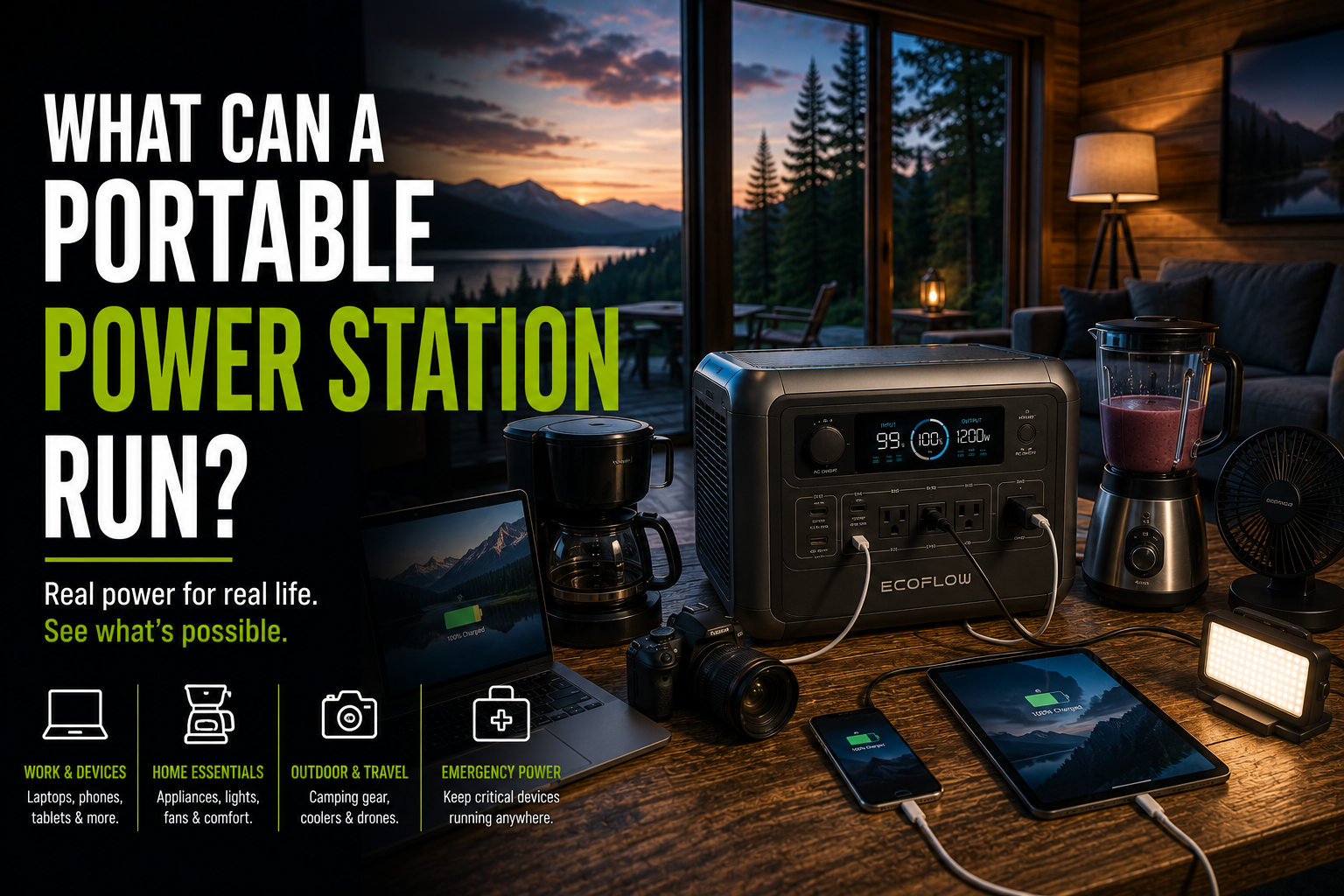
Sometimes. Many deep-well pumps require 240V and very high startup power, so ordinary 120V portable stations cannot run them.
A portable power station can run many well pump setups when output, surge and battery capacity are correctly matched.
This guide separates continuous watts, peak demand and total energy use so the battery is sized realistically.
Yes—With the Right Output and Battery Capacity
Sometimes. Many deep-well pumps require 240V and very high startup power, so ordinary 120V portable stations cannot run them.
Bottom Line
A portable power station can run a well pump when voltage, continuous output, startup demand and usable capacity all match the actual equipment.
Typical Well Pump Power Requirements
| Specification | Typical Range | Why It Matters |
|---|---|---|
| Running power | 1,000–2,000W common for many household pumps | Sets continuous inverter demand |
| Startup or peak demand | 3,000–6,000W or higher | Determines whether the source starts or supports the load |
| Recommended inverter | 4,000–7,200W native 120/240V for many systems | Provides practical headroom |
| Waveform | Pure sine wave preferred | Improves compatibility |
Estimated Runtime by Battery Size
| Battery Capacity | Estimated Practical Runtime | Best Use |
|---|---|---|
| 1,000Wh | Usually limited or unsuitable | Small 120V pumps only |
| 2,000Wh | Short intermittent pumping | Selected compatible pumps |
| 4,000Wh | Several cycles to moderate use | 240V high-output systems |
| 8,000Wh | Extended managed use | Large expandable systems |
How to Choose a Power Station for a Well Pump
Measure the Real Load
Use a plug-in power meter or manufacturer data.
Check Startup Demand
Motors and pumps can surge far above running power.
Leave Output Headroom
Avoid planning at the inverter’s absolute limit.
Size for Runtime
Use watt-hours, not only watts.
Use Pure Sine Wave
Preferred for electronics, motors and medical equipment.
Test Before an Outage
Verify startup and sustained operation safely.
Main Limitations
Limitation 1
Many pumps require 240V.
Limitation 2
Startup can be several times running power.
Limitation 3
Hardwired circuits require approved transfer equipment.
Limitation 4
Depth, pressure and motor design affect demand.
How to Extend Runtime
Use stored water and a large pressure tank to reduce pump cycles. Verify nameplate voltage, current and locked-rotor demand before choosing any system.
How to Size the Load in Real Use
For can a portable power station run a well pump, check continuous power, startup behavior and runtime separately. A station may contain enough battery energy for the job yet still overload when a motor, pump, heating element or tool demands more instantaneous power than the inverter can supply.
Use measured consumption when the decision matters. Appliance labels and published wattage ranges are useful starting points, but operating mode, temperature, duty cycle and motor load can change actual consumption. A plug-in energy meter gives a stronger runtime estimate for compatible 120V loads.
Estimate runtime from average watts and usable battery energy, then leave margin for inverter losses and system overhead. Loads that cycle—such as refrigerators and pumps—should not be assumed to draw their full running wattage every minute, while resistive heaters can remain near their rated draw continuously.
For outage planning, test the actual appliance and power station together before you depend on the combination. Confirm clean startup, stable operation and realistic runtime. Calculations narrow the choice; a real test catches surge and compatibility issues that paper specifications can miss.
Planning Margin That Actually Helps
Avoid designing a backup system around the exact edge of its ratings. Leave headroom in continuous output, surge capability and stored energy. That margin absorbs conversion losses, battery aging, temperature effects and loads that draw more than their nominal specification suggests.
Prioritize essential loads and consider rotating equipment instead of running everything simultaneously. Load management can extend runtime dramatically and may let a smaller, more portable system cover the real emergency requirement without sacrificing the devices that matter most.
Frequently Asked Questions
Can a normal 120V power station run a well pump?
Not if the pump requires 240V.
How many watts does a well pump need?
Many use 1,000–2,000W running with 3,000–6,000W or more at startup.
What size system is practical?
A native 120/240V system in the 4,000–7,200W class may be needed.
How long will a battery last?
Runtime depends on pump duty cycle, pressure tank size and water use.
Can I connect directly to the breaker?
Only through approved transfer equipment installed correctly.
Is a generator better?
For long outages, a properly sized generator may be more practical because it can be refueled.