
Can a Portable Power Station Run a Sump Pump?
Yes, but sump pumps are difficult loads because motor startup is high and outages often occur during storms when pumping demand is greatest.
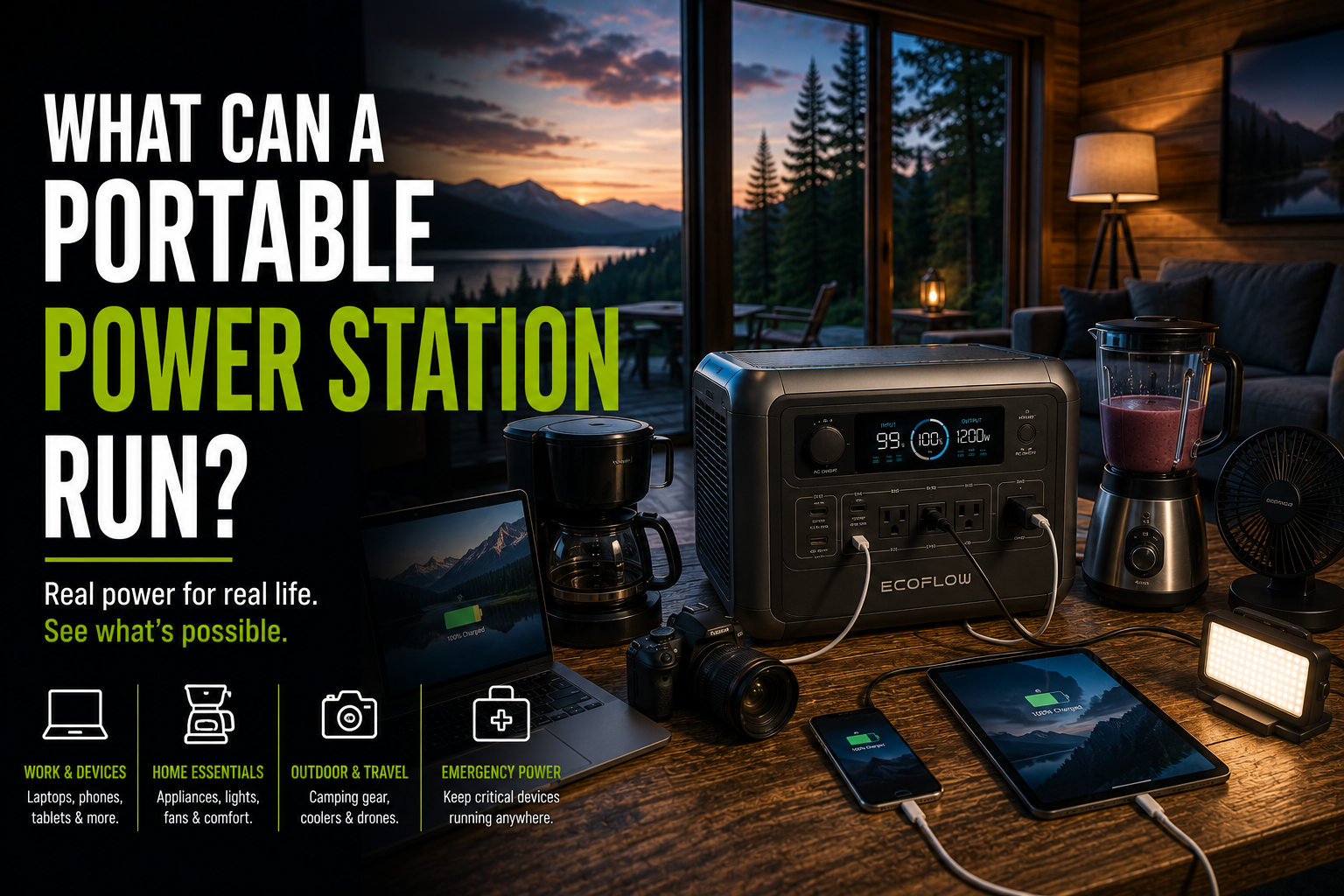
Yes, but sump pumps are difficult loads because motor startup is high and outages often occur during storms when pumping demand is greatest.
A portable power station can run many sump pump setups when output, surge and battery capacity are correctly matched.
This guide separates continuous watts, peak demand and total energy use so the battery is sized realistically.
Yes—With the Right Output and Battery Capacity
Yes, but sump pumps are difficult loads because motor startup is high and outages often occur during storms when pumping demand is greatest.
Bottom Line
A portable power station can run a sump pump when voltage, continuous output, startup demand and usable capacity all match the actual equipment.
Typical Sump Pump Power Requirements
| Specification | Typical Range | Why It Matters |
|---|---|---|
| Running power | 400–1,200W common residential range | Sets continuous inverter demand |
| Startup or peak demand | 800–2,500W or higher | Determines whether the source starts or supports the load |
| Recommended inverter | 1,500–3,000W with strong surge | Provides practical headroom |
| Waveform | Pure sine wave preferred | Improves compatibility |
Estimated Runtime by Battery Size
| Battery Capacity | Estimated Practical Runtime | Best Use |
|---|---|---|
| 500Wh | About 20–50 minutes cumulative pumping | Short emergency use |
| 1,000Wh | About 45–100 minutes cumulative pumping | Intermittent cycling |
| 2,000Wh | About 1.5–3.5 hours cumulative pumping | Long storm coverage |
| 3,000Wh | About 2.5–5 hours cumulative pumping | Extended cycling |
How to Choose a Power Station for a Sump Pump
Measure the Real Load
Use a plug-in power meter or manufacturer data.
Check Startup Demand
Motors and pumps can surge far above running power.
Leave Output Headroom
Avoid planning at the inverter’s absolute limit.
Size for Runtime
Use watt-hours, not only watts.
Use Pure Sine Wave
Preferred for electronics, motors and medical equipment.
Test Before an Outage
Verify startup and sustained operation safely.
Main Limitations
Limitation 1
Startup surge can exceed published estimates.
Limitation 2
Continuous inflow can drain batteries quickly.
Limitation 3
Water and electricity create added hazards.
Limitation 4
A single battery should not be the only flood-defense layer.
How to Extend Runtime
Test the actual pump from the power station, maintain a secondary battery or water-powered backup where appropriate, and keep all electrical connections dry and elevated.
How to Size the Load in Real Use
For can a portable power station run a sump pump, check continuous power, startup behavior and runtime separately. A station may contain enough battery energy for the job yet still overload when a motor, pump, heating element or tool demands more instantaneous power than the inverter can supply.
Use measured consumption when the decision matters. Appliance labels and published wattage ranges are useful starting points, but operating mode, temperature, duty cycle and motor load can change actual consumption. A plug-in energy meter gives a stronger runtime estimate for compatible 120V loads.
Estimate runtime from average watts and usable battery energy, then leave margin for inverter losses and system overhead. Loads that cycle—such as refrigerators and pumps—should not be assumed to draw their full running wattage every minute, while resistive heaters can remain near their rated draw continuously.
For outage planning, test the actual appliance and power station together before you depend on the combination. Confirm clean startup, stable operation and realistic runtime. Calculations narrow the choice; a real test catches surge and compatibility issues that paper specifications can miss.
Planning Margin That Actually Helps
Avoid designing a backup system around the exact edge of its ratings. Leave headroom in continuous output, surge capability and stored energy. That margin absorbs conversion losses, battery aging, temperature effects and loads that draw more than their nominal specification suggests.
Prioritize essential loads and consider rotating equipment instead of running everything simultaneously. Load management can extend runtime dramatically and may let a smaller, more portable system cover the real emergency requirement without sacrificing the devices that matter most.
Frequently Asked Questions
Can a 1,000W power station run a sump pump?
Maybe for a small pump, but startup surge often requires a much larger inverter.
What inverter size is practical?
Often 1,500–3,000W depending on pump horsepower and startup demand.
How long will 1kWh last?
It depends on duty cycle; roughly 45–100 minutes of cumulative pumping is a planning range.
Should I use an extension cord?
Avoid if possible; if permitted, use a short, properly rated grounded cord kept dry.
Is a battery backup sump pump better?
A dedicated backup pump can provide redundancy and may be more reliable than powering only the primary pump.
Should I test before a storm?
Yes. Real startup behavior must be verified.