
Can a Portable Power Station Run a CPAP Machine?
Yes. Many 500Wh stations can support a CPAP for one or more nights, but heated humidification and tubing can more than double energy use.
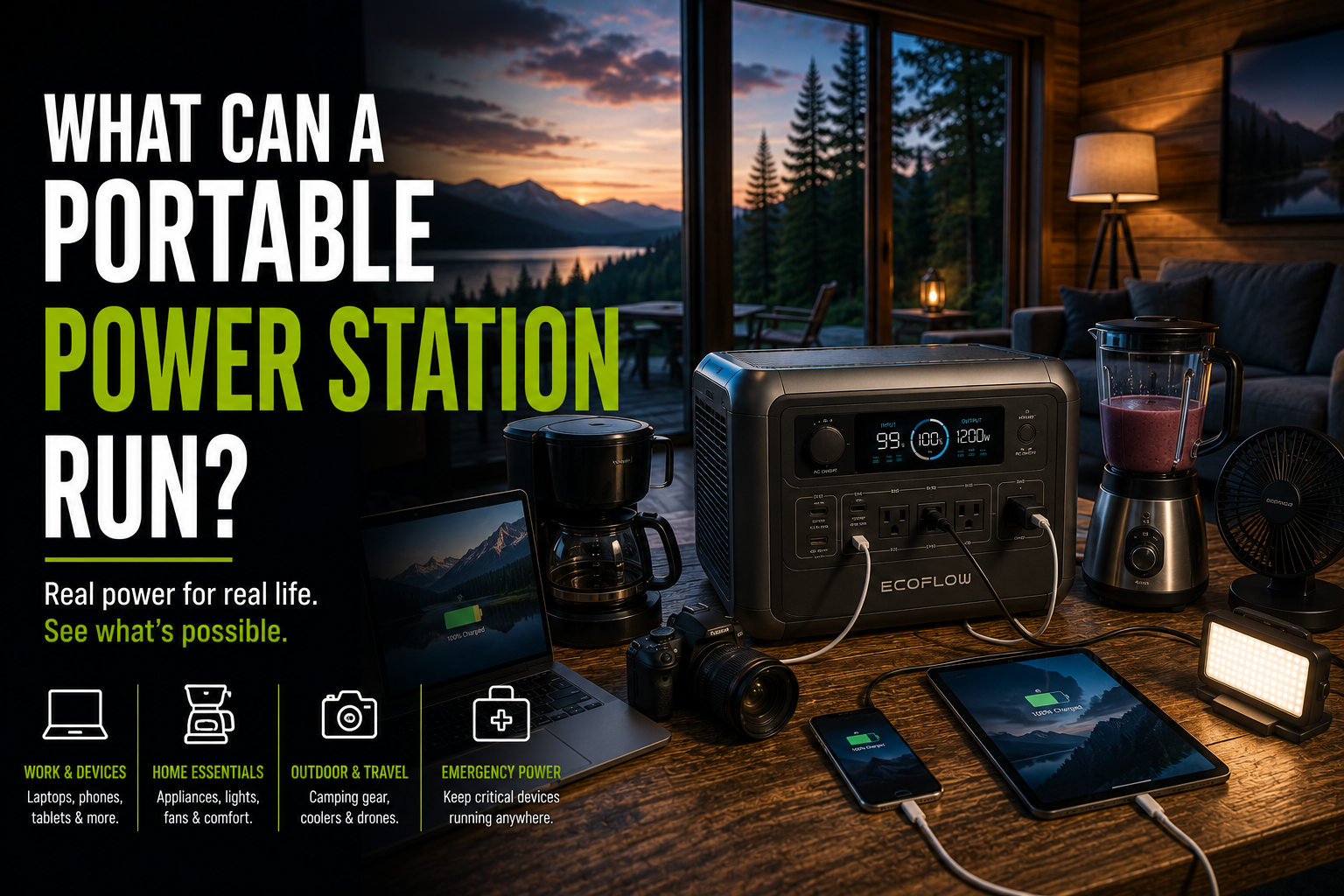
Yes. Many 500Wh stations can support a CPAP for one or more nights, but heated humidification and tubing can more than double energy use.
A portable power station can run many cpap machine setups when output, surge and battery capacity are correctly matched.
This guide separates continuous watts, peak demand and total energy use so the battery is sized realistically.
Yes—With the Right Output and Battery Capacity
Yes. Many 500Wh stations can support a CPAP for one or more nights, but heated humidification and tubing can more than double energy use.
Bottom Line
A portable power station can run a cpap machine when voltage, continuous output, startup demand and usable capacity all match the actual equipment.
Typical CPAP Machine Power Requirements
| Specification | Typical Range | Why It Matters |
|---|---|---|
| Running power | 20–60W without heat; 60–120W with humidifier or heated tubing | Sets continuous inverter demand |
| Startup or peak demand | Usually low | Determines whether the source starts or supports the load |
| Recommended inverter | 150–300W, device compatible | Provides practical headroom |
| Waveform | Pure sine wave preferred | Improves compatibility |
Estimated Runtime by Battery Size
| Battery Capacity | Estimated Practical Runtime | Best Use |
|---|---|---|
| 500Wh | About 1–3 nights | Typical travel backup |
| 1,000Wh | About 2–6 nights | Extended outage |
| 2,000Wh | About 4–12 nights | Long backup |
| 3,000Wh | About 6–18 nights | Large reserve |
How to Choose a Power Station for a CPAP Machine
Measure the Real Load
Use a plug-in power meter or manufacturer data.
Check Startup Demand
Motors and pumps can surge far above running power.
Leave Output Headroom
Avoid planning at the inverter’s absolute limit.
Size for Runtime
Use watt-hours, not only watts.
Use Pure Sine Wave
Preferred for electronics, motors and medical equipment.
Test Before an Outage
Verify startup and sustained operation safely.
Main Limitations
Limitation 1
Humidifiers and heated tubing greatly increase use.
Limitation 2
Medical-device backup requires redundancy.
Limitation 3
DC cables may be model specific.
Limitation 4
Battery estimates must include therapy hours and reserve.
How to Extend Runtime
Use a manufacturer-approved DC cable when available, disable heated features only if medically acceptable and maintain a medically appropriate backup plan.
How to Size This Load Correctly
For can a portable power station run a cpap machine, the first number to check is continuous wattage, but it is not the only one. Appliances with compressors, pumps, heating elements or motors can behave very differently at startup and during cycling. A power station needs enough inverter output for the operating load and enough surge headroom for startup events.
Runtime is an energy calculation. Multiply the appliance's average watts by the hours you need it to operate, then allow for inverter losses and the fact that real loads cycle. Nameplate watts can overstate or understate average consumption, so a plug-in power meter provides a better estimate when the decision is important.
Do not size a battery to exactly the theoretical requirement. Leaving reserve improves reliability when temperatures, duty cycles or other simultaneous loads change. For outage planning, reserve also gives you room for phone charging, lights, networking equipment or other small essentials that are easy to forget.
If the appliance is mission-critical, test the actual combination before an emergency. Confirm that the station starts the device cleanly, runs it without overload warnings and provides the expected runtime. Calculations narrow the range; a real test verifies compatibility.
A Simple Safety Margin
When sizing backup power, avoid planning around 100% of any rating. Continuous inverter output, battery capacity and solar input all benefit from headroom. The margin helps absorb startup events, conversion losses, temperature effects and loads that draw more than expected.
For outage preparation, decide in advance which loads are essential and which can be rotated. Running a refrigerator, freezer or medical device does not necessarily mean every appliance must operate simultaneously. Load management can extend runtime dramatically without buying a much larger battery.
Frequently Asked Questions
How much power does a CPAP use?
Often about 20–60W without heat and 60–120W with humidification or heated tubing.
Can 500Wh last all night?
Usually yes for many CPAP setups, but heated features may reduce runtime substantially.
Is DC more efficient than AC?
Often yes because it avoids inverter losses.
Can I turn off the humidifier?
Only if acceptable for your therapy and comfort; follow medical and manufacturer guidance.
Should I rely on one battery?
Medical backup planning should include redundancy and a way to recharge.
Does pure sine wave matter?
Use the waveform and power source specified by the CPAP manufacturer.