
How Long Do Home Backup Batteries Last?
Modern home batteries are commonly designed for years of service, but temperature, cycling, depth of discharge and system management determine real-world longevity.
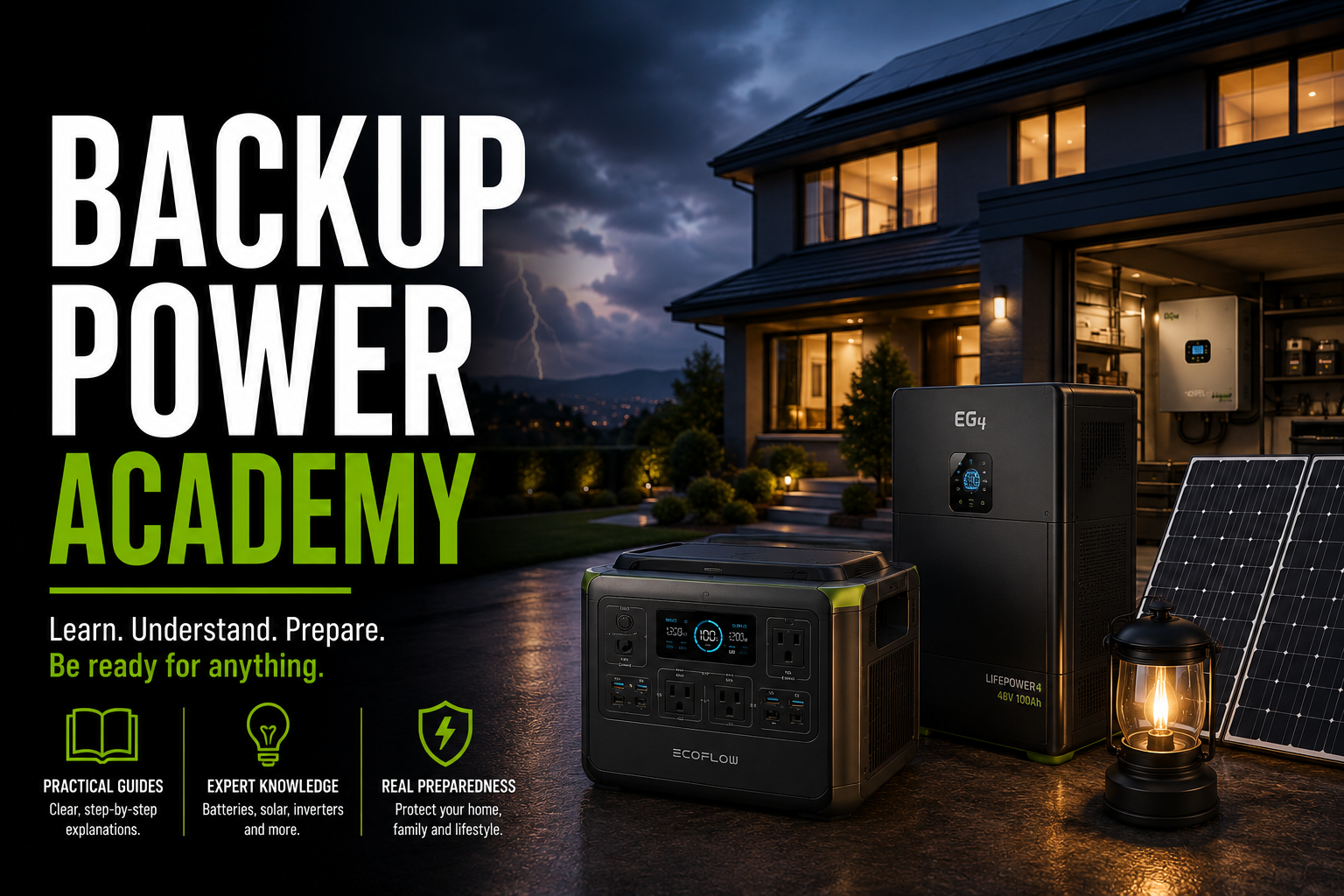
Modern home batteries are commonly designed for years of service, but temperature, cycling, depth of discharge and system management determine real-world longevity.
Home backup batteries gradually lose capacity rather than suddenly reaching a universal expiration date.
Understanding cycle life, calendar aging, retained capacity and warranty terms provides a more realistic picture than relying on a single advertised lifespan.
Expect Roughly a Decade or More From a Well-Managed Modern System
Many current LFP home batteries are designed around thousands of cycles and warranty periods near ten years. Actual service life may extend beyond the warranty, but usable outage runtime gradually declines as capacity ages.
Practical Lifespan Answer
A properly installed and well-managed home battery can often provide useful service for ten years or longer, although retained capacity, module availability and household needs determine when replacement becomes practical.
Battery Lifespan Has Two Meanings
Backup duration describes how many hours the system can power loads during one outage. Service life describes how many years the battery remains useful before its capacity falls substantially. The two are often confused.
A system may provide only eight hours of runtime per outage yet remain in service for more than a decade. Conversely, poor operating conditions can shorten long-term life even when outages are rare.
Cycle Life and Calendar Aging
Lithium iron phosphate systems are commonly specified for thousands of charge cycles before reaching a stated remaining capacity, often around 70% or 80%. A cycle means the equivalent of one full discharge and recharge, not necessarily one event.
Calendar aging occurs even when the battery is barely used. Time, temperature and state of charge gradually change cell performance. For lightly cycled home batteries, calendar aging may matter as much as cycle count.
What Affects Home-Battery Life
Temperature
Persistent heat accelerates degradation; extreme cold can limit charging and available power.
Depth of Discharge
Regularly using a smaller portion of capacity is generally easier on the battery than deep cycling.
State of Charge
Keeping lithium batteries at extreme high or low charge for long periods can increase stress.
Charge Rate
Frequent maximum-rate charging can produce more heat than moderate charging.
Cell Chemistry
LFP is favored for cycle life and thermal stability; other chemistries may prioritize energy density.
System Design
Thermal management, balancing software and inverter quality influence real-world longevity.
How to Read the Warranty
Do not look only at the number of warranty years. Check the covered energy throughput, retained-capacity guarantee, operating-temperature requirements, registration rules, labor coverage and whether internet connectivity is required for diagnostics.
A ten-year warranty does not necessarily promise full original capacity at year ten. It usually defines a minimum retained capacity or remedy under specified conditions.
How Runtime Changes as the Battery Ages
If a 10kWh system has 9kWh usable when new and later retains 80% of its original capacity, usable energy may fall toward 7.2kWh before considering reserve settings or conversion losses. The inverter output can remain unchanged even while outage runtime shortens.
This gradual decline is normal and should be included in long-term sizing. Buying with modest capacity margin can help preserve the desired runtime later in the system's life.
How to Extend Service Life
Keep It Cool
Follow installation clearances and temperature limits; avoid unconditioned hot spaces unless the system is designed for them.
Use Sensible Reserves
Avoid unnecessary full discharges and maintain an emergency reserve where practical.
Update Firmware
Install manufacturer-approved updates that improve battery management and safety.
Inspect Regularly
Watch for warnings, damaged conduits, water intrusion, corrosion or ventilation blockage.
Exercise the System
Perform periodic outage tests according to the manual so faults are discovered early.
Document Performance
Track capacity, error codes and major changes in runtime.
When Replacement Becomes Necessary
Replacement is usually considered when capacity no longer meets the household's needs, the system reports a persistent fault, modules become unsupported, or repair costs are disproportionate to remaining value.
Only approved modules and service procedures should be used. Home batteries contain hazardous energy even when the display appears off.
Practical Planning Notes
The most useful way to apply how long do home backup batteries last is to connect the concept to a real load and a real runtime target. Backup-power systems are easier to understand when watts, watt-hours, inverter limits and charging are treated as parts of the same system rather than isolated specifications.
Use measured consumption whenever possible. Appliance labels are useful for screening, but actual power can vary with operating mode, temperature and duty cycle. A plug-in energy meter can turn a rough estimate into a much stronger battery-sizing calculation.
Leave operating margin. Designing around the absolute maximum output or the exact theoretical battery capacity makes the plan fragile. Conversion losses, temperature, battery-management reserves and unexpected extra loads all reduce real-world headroom.
For emergency planning, simplicity matters. Label cables, keep charging accessories together, periodically test equipment and document which loads are priorities. A slightly smaller system that the household understands how to use can be more effective than a complex setup nobody has practiced with.
Frequently Asked Questions
How many years does a home backup battery last?
Many modern systems are designed for around ten years or more of useful service, but actual life depends on chemistry, temperature, cycling and operating conditions.
What does 3,000 battery cycles mean?
It means the battery can deliver the equivalent of 3,000 full charge-discharge cycles before reaching the manufacturer's specified remaining capacity under test conditions.
Do home batteries lose capacity over time?
Yes. Capacity gradually declines through cycle use and calendar aging, which shortens outage runtime even if inverter output remains unchanged.
Does heat shorten home-battery life?
Yes. Persistent high temperature generally accelerates lithium-battery degradation and can reduce long-term capacity.
Is LFP better for home backup?
LFP is widely used because it offers long cycle life and strong thermal stability, although complete system design remains important.
Can a home battery last twenty years?
Some systems may remain operational that long, but useful capacity, warranty coverage, electronics support and replacement-module availability may become limiting factors.
Should a home battery stay at 100 percent charge?
Backup settings vary. Keeping maximum reserve improves outage readiness, while lower average charge can reduce cell stress. Follow the manufacturer's recommended operating mode.
When should a home battery be replaced?
Replacement becomes practical when capacity no longer meets needs, faults persist, modules are unsupported or repair costs outweigh remaining value.