
Are Home Backup Batteries Worth It?
Home batteries are most valuable where outages, solar production, time-of-use rates or generator restrictions create clear resilience and energy-management benefits.
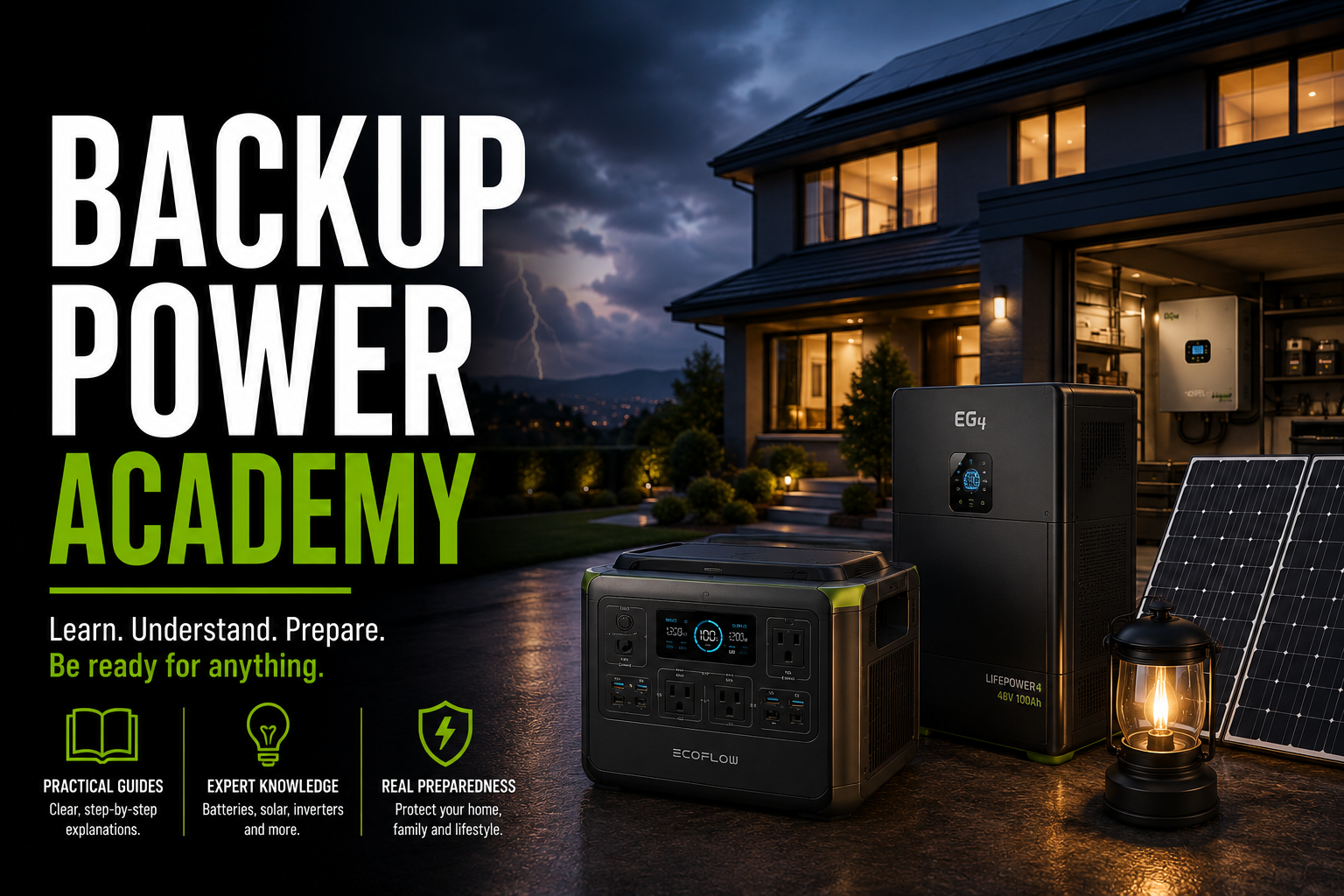
Home batteries are most valuable where outages, solar production, time-of-use rates or generator restrictions create clear resilience and energy-management benefits.
A home battery is rarely the cheapest source of raw backup energy, but it can be the most convenient, quiet and automatic.
Whether it is worth buying depends on the household's outage risk, essential loads, electricity rate design, solar production, installation cost and value placed on uninterrupted power.
Worth It for Resilience, Solar Shifting and Automatic Backup
A home battery is often worth it for frequent outages, critical home loads, time-of-use savings or solar self-consumption. It is less compelling where outages are rare, electricity rates are flat and a lower-cost generator already meets the need.
Editor's Verdict
Home batteries are worth considering when silent automatic backup and energy management matter more than the lowest upfront cost. Compare installed quotes against a generator and an essential-load-only battery before choosing.
When Home Batteries Deliver the Most Value
Frequent Outages
Silent automatic backup is valuable where short and medium outages are common.
Time-of-Use Rates
Stored off-peak or solar energy may reduce expensive peak-period grid purchases.
Solar Self-Consumption
A battery can shift daytime solar production into evening use.
Medical or Work Needs
Continuous refrigeration, communications or office power can justify resilience spending.
Generator Restrictions
Batteries work indoors and avoid combustion exhaust, fuel storage and neighborhood noise.
Grid Programs
Some utilities compensate enrolled batteries for demand response or virtual power plant participation.
Costs Beyond the Battery
Advertised package prices rarely equal installed project cost. Homes with older panels, limited wall space or complex service equipment can require substantial additional work.
| Cost Category | Examples | Why It Matters |
|---|---|---|
| Battery hardware | Modules, inverter, controls | Largest equipment expense |
| Electrical work | Gateway, panel changes, conductors | Varies greatly by home |
| Permits and inspection | Local approval | Required in many jurisdictions |
| Optional solar | Panels and balance of system | Improves recharge and economics |
| Maintenance and service | Diagnostics, eventual module replacement | Long-term ownership cost |
Backup Value vs Financial Payback
A home battery can be worthwhile even without a simple financial payback because resilience has personal value. Avoided food loss, hotel stays, business interruption and generator fuel are real benefits, but they vary by household.
For bill savings, compare the difference between peak and off-peak electricity prices, usable battery capacity, round-trip efficiency, expected cycles and program incentives. Flat-rate electricity markets generally produce weaker arbitrage economics.
Home Battery vs Generator
| Factor | Home Battery | Generator |
|---|---|---|
| Startup | Automatic and quiet | Automatic or manual |
| Indoor operation | Yes, if listed and installed correctly | No for portable combustion models |
| Long outages | Limited by stored energy/recharge | Continues with fuel |
| Maintenance | Generally low | Engine, fuel and periodic service |
| Upfront cost | Usually higher | Often lower |
| Solar integration | Strong | Indirect |
When a Battery May Not Be Worth It
Rare Outages
The resilience benefit may be difficult to justify if outages are extremely uncommon.
Very High Loads
Electric heating, large HVAC and EV charging can require an expensive system.
Low Rate Spread
Small differences between peak and off-peak prices reduce bill-saving potential.
No Installation Space
Clearance, temperature or code limitations may make placement difficult.
Short Ownership Horizon
A homeowner planning to move soon may not capture the long-term value.
Budget Priority
A transfer switch and generator may cover essential needs at lower upfront cost.
A Practical Decision Framework
List the circuits that truly need backup, estimate the value of avoiding one typical outage, compare installed quotes and verify available incentives. Then model at least three scenarios: essential-load backup, managed whole-home backup and a generator alternative.
The most economical system is often smaller than the system required to operate the home normally. Intentional load management can reduce cost dramatically.
Frequently Asked Questions
Are home batteries worth the cost?
They can be worth it where outages are frequent, critical loads need automatic backup, solar energy can be shifted or time-of-use savings are substantial.
Do home batteries save money on electricity?
They may reduce bills under time-of-use rates or demand programs, but savings depend on rate spread, efficiency, cycling and utility rules.
Is a battery cheaper than a generator?
Usually not upfront. A generator often costs less for long-duration backup, while a battery offers quiet operation, automatic transfer and lower routine maintenance.
Do I need solar panels for a home battery to be worthwhile?
No. A battery can charge from the grid for backup or rate shifting, although solar can improve resilience and self-consumption.
How long is the payback period for a home battery?
There is no universal payback period. Installed cost, incentives, utility rates, battery use and outage value all affect the result.
Does a home battery increase home value?
It may improve appeal in some markets, but resale value varies and should not be assumed to equal the system cost.
Can a battery replace a generator completely?
It can for short and moderate outages if capacity is adequate. Long outages may still favor generator support or substantial solar recharge.
What size battery offers the best value?
The best value usually comes from sizing for essential or managed loads rather than trying to run every high-demand appliance normally.