
Best High-Capacity Portable Power Stations
High-capacity stations now overlap with home batteries, offering 3–5kWh base capacity, 120/240V output and expansion for multi-day backup.
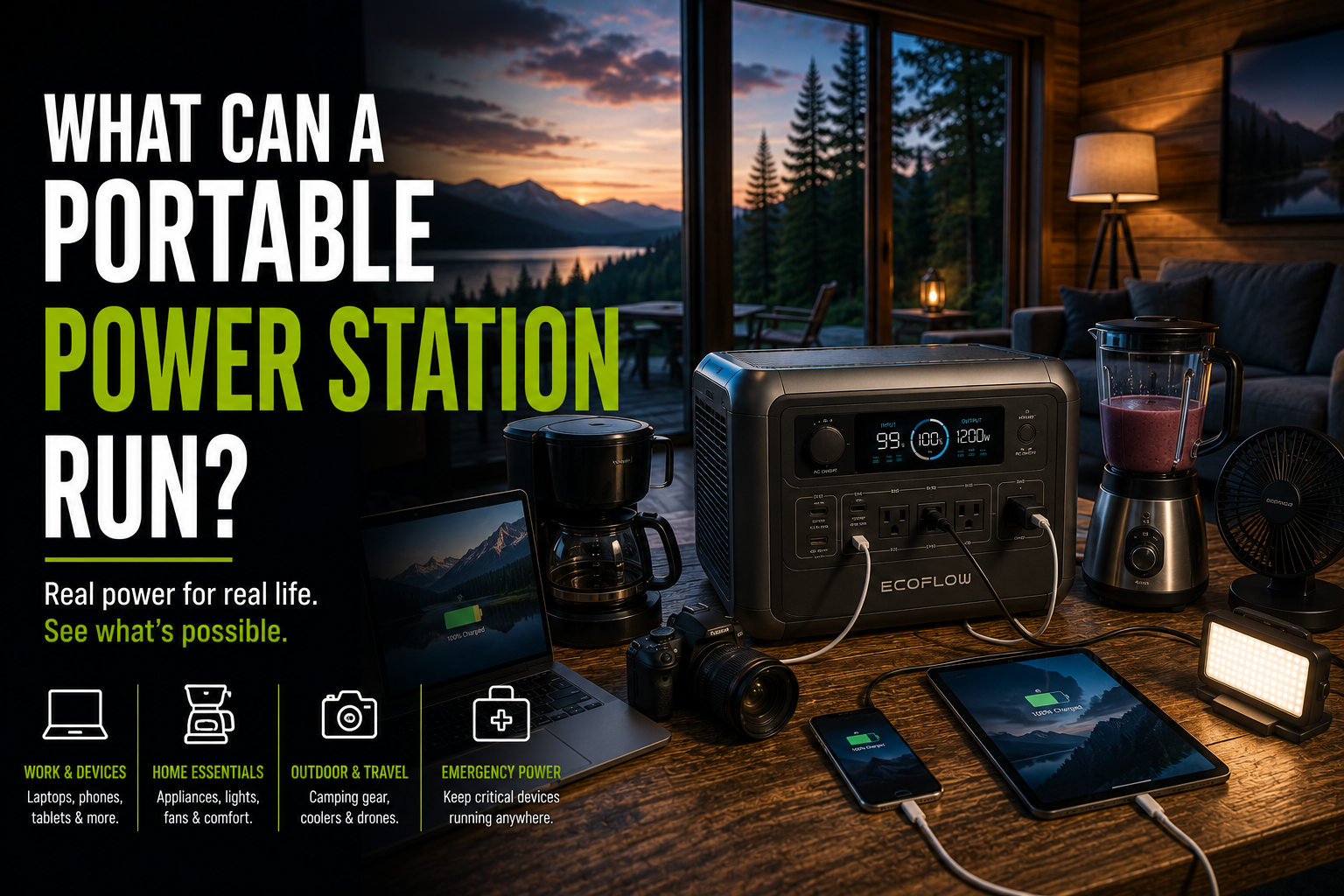
High-capacity stations now overlap with home batteries, offering 3–5kWh base capacity, 120/240V output and expansion for multi-day backup.
At this size, portability usually means wheels and modular components rather than easy lifting.
The best choice depends on heavy-load output, home integration and final system capacity.
Best Overall: Jackery Explorer 5000 Plus
Its 5,040Wh base battery and 7,200W 120/240V output make it one of the most complete all-in-one high-capacity platforms.
Editor's Verdict
Choose a high-capacity station when movable or modular equipment is valuable. For permanent automatic backup, compare professionally installed batteries before buying.
Top Picks
Jackery Explorer 5000 Plus
5,040Wh, 7,200W 120/240V output and large expansion capability.
Anker SOLIX F3800
3,840Wh, 6,000W native 120/240V and large battery expansion.
EcoFlow DELTA Pro Ultra
Large inverter-and-battery platform designed for home backup and solar integration.
BLUETTI AC500 + B300S
5,000W inverter with modular 3,072Wh batteries and high PV input.
Quick Comparison
| Model | Capacity | Output | Best Use |
|---|---|---|---|
| Jackery Explorer 5000 Plus | 5,040Wh | 7,200W | Best overall |
| Anker SOLIX F3800 | 3,840Wh | 6,000W | Best flexible 240V |
| EcoFlow DELTA Pro Ultra | Modular | High-output | Best premium ecosystem |
| BLUETTI AC500+B300S | 3,072Wh+ | 5,000W | Best off-grid modular |
Jackery Explorer 5000 Plus
5,040Wh, 7,200W 120/240V output and large expansion capability.
Explorer 5000 Plus is a high-output wheeled platform designed for home circuits, RVs and heavy 240V loads.
Why It Stands Out
- Native 240V
- Very high output
- Large base battery
- Expandable
- Transfer-switch ecosystem
What to Consider
- Heavy
- High cost
- Large storage footprint
- Panel installation adds cost
Best for: whole-home essentials and extended outages.
Anker SOLIX F3800
3,840Wh, 6,000W native 120/240V and large battery expansion.
F3800 offers strong 240V output from a single wheeled base and supports home-integration accessories.
Why It Stands Out
- Native 240V
- 6,000W output
- Expandable
- Wheels
- Active ecosystem
What to Consider
- Base capacity below 5kWh rivals
- Heavy
- Expansion is expensive
- Panel work needs an electrician
Best for: well pumps, dryers, RVs and home circuits.
EcoFlow DELTA Pro Ultra
Large inverter-and-battery platform designed for home backup and solar integration.
DELTA Pro Ultra is a premium modular platform aimed at automatic home backup, high solar input and large capacity growth.
Why It Stands Out
- Deep ecosystem
- Home-panel integration
- Large expansion
- Advanced app
- High solar support
What to Consider
- Premium price
- Complex system
- Heavy modules
- Professional installation
Best for: smart-home backup and solar-heavy systems.
BLUETTI AC500 + B300S
5,000W inverter with modular 3,072Wh batteries and high PV input.
AC500+B300S is designed for scalable off-grid and home backup with separate battery modules.
Why It Stands Out
- 5,000W output
- Modular batteries
- Strong solar input
- App control
- Stationary expansion
What to Consider
- Multiple heavy boxes
- Accessories add complexity
- Not casual portable use
- Split phase needs additional hardware
Best for: cabins, workshops and extended off-grid backup.
How to Choose
Define High Capacity
3kWh is portable-home class; 10kWh+ is a system.
Separate Energy From Power
kWh determines runtime; kW determines loads.
Plan 240V Loads
Well pumps and dryers need correct voltage.
Include Installation Cost
Panels and transfer equipment matter.
Check Weight and Access
Modules may exceed safe lifting limits.
Compare Installed Batteries
A wall battery may be cleaner.
Frequently Asked Questions
Who should buy a high-capacity portable power station?
Buy it when the system's continuous output, startup capability, usable capacity and charging method match the actual loads you need to protect.
Who should skip a high-capacity portable power station?
Skip it when the product is being chosen from headline watt-hours alone or when installation, medical, electrical or building rules make another solution more appropriate.
How should runtime be estimated?
Multiply rated watt-hours by roughly 0.80 to 0.90 for usable AC energy, then divide by the appliance's average running watts.
Why do starting watts matter?
Compressors, pumps and motors can draw several times their normal running power for a short period, so the inverter must handle both continuous and surge demand.
Is LiFePO4 better for frequent use?
LiFePO4 generally offers longer cycle life and strong thermal stability, making it attractive for systems that will be charged and discharged regularly.
Can solar panels recharge the system during an outage?
Yes when the panel voltage, current, polarity and connector match the power station's input limits and sunlight is adequate.
Can a power station be connected directly to a home panel?
Only through manufacturer-approved transfer equipment and qualified installation. Never backfeed a receptacle.
How much reserve capacity should be planned?
A 20% to 30% reserve helps cover inverter losses, cold weather, battery aging and loads that cycle unpredictably.
Should price be compared per watt-hour?
Cost per watt-hour is useful, but output, charging speed, warranty, battery chemistry and accessory compatibility can matter more.
What is the most common buying mistake?
Buying a unit that has enough stored energy but not enough continuous or surge output for the intended appliance.
Is a 5kWh station portable?
Usually only in the wheeled sense; many systems are too heavy for routine lifting.
Can these systems power an entire house?
They may power many circuits, but whole-house performance depends on output, voltage, panel design and appliance demand.