
Best Expandable Portable Power Stations
Expandable systems let buyers start with a smaller station and add runtime later, but compatibility, final cost and inverter limits must be planned in advance.
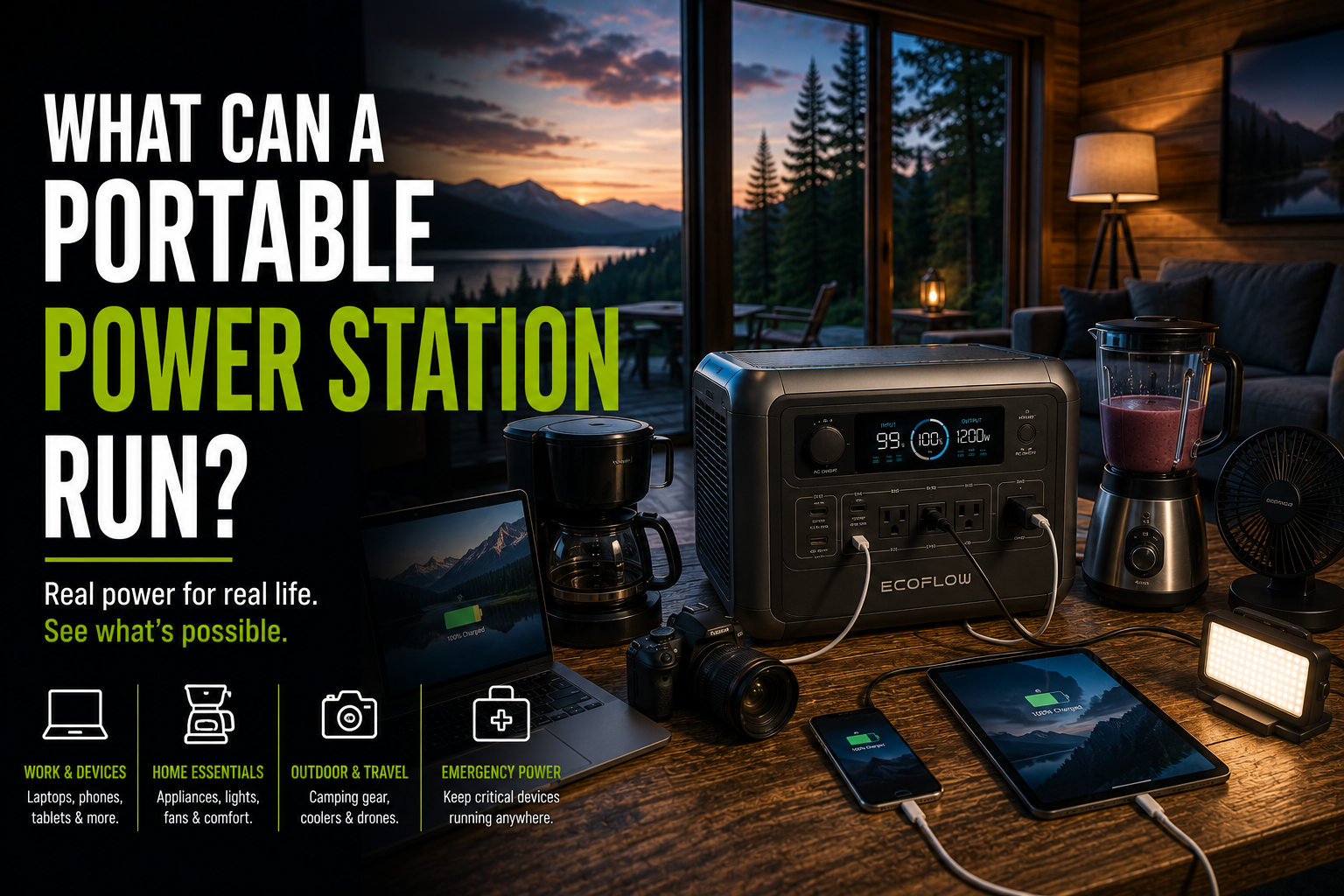
Expandable systems let buyers start with a smaller station and add runtime later, but compatibility, final cost and inverter limits must be planned in advance.
The best expandable station is not simply the one with the largest maximum capacity—it is the one with a practical battery path and suitable output.
Compact, modular and 240V-capable platforms serve very different buyers.
Best Overall Compact Platform: EcoFlow DELTA 3 Plus
It starts at 1,024Wh and supports several compatible expansion routes, while larger buyers should consider Anker F3800 or BLUETTI AC300.
Editor's Verdict
Choose expansion only when you are likely to buy the extra battery. Otherwise, a larger single station may offer better value and simpler storage.
Top Picks
EcoFlow DELTA 3 Plus
1,024Wh, 1,800W output, rapid charging and expandable capacity.
Jackery Explorer 1000 Plus
1,264Wh, 2,000W output and expansion to roughly 5kWh.
Anker SOLIX F3800
3,840Wh, 6,000W output, native 120/240V and expansion to a large home system.
BLUETTI AC300 + B300
3,000W inverter with modular 3,072Wh battery packs and high solar input.
Quick Comparison
| Model | Capacity | Output | Best Use |
|---|---|---|---|
| EcoFlow DELTA 3 Plus | 1,024Wh | 1,800W | Best compact expansion |
| Jackery Explorer 1000 Plus | 1,264Wh | 2,000W | Best portable expansion |
| Anker SOLIX F3800 | 3,840Wh | 6,000W | Best 240V |
| BLUETTI AC300+B300 | 3,072Wh | 3,000W | Best modular |
EcoFlow DELTA 3 Plus
1,024Wh, 1,800W output, rapid charging and expandable capacity.
DELTA 3 Plus balances manageable size, quiet operation, app control and enough inverter output for refrigerators, office equipment and many kitchen appliances.
Why It Stands Out
- Fast charging
- Expandable
- Quiet mode
- 10ms-class backup switching
- Mature app
What to Consider
- Expansion adds cost
- Not lightweight
- Boost modes are not full rated output
- No native 240V
Best for: apartments, home offices and refrigerator backup.
Jackery Explorer 1000 Plus
1,264Wh, 2,000W output and expansion to roughly 5kWh.
Explorer 1000 Plus combines manageable size with a clear extra-battery path for buyers who want to start small.
Why It Stands Out
- Clear expansion path
- 2,000W output
- App control
- LFP chemistry
- Portable base
What to Consider
- Expansion batteries are proprietary
- System cost rises quickly
- Not native 240V
- Extra packs add storage bulk
Best for: camping, RVs and phased home backup.
Anker SOLIX F3800
3,840Wh, 6,000W output, native 120/240V and expansion to a large home system.
F3800 is a heavy-duty expandable platform for 240V appliances, RVs and home-panel integration.
Why It Stands Out
- Native 240V
- High output
- Large expansion
- Wheeled design
- Home integration options
What to Consider
- Heavy
- Expensive
- Large accessories
- Professional wiring for panel use
Best for: whole-home essentials, EV support and 240V loads.
BLUETTI AC300 + B300
3,000W inverter with modular 3,072Wh battery packs and high solar input.
AC300 separates the inverter from the battery, making it highly modular and serviceable for stationary backup.
Why It Stands Out
- Modular batteries
- High solar input
- Expandable
- App control
- Split-phase options with two systems
What to Consider
- Multiple boxes
- Heavy complete setup
- Complex accessories
- Not ideal for frequent moving
Best for: off-grid cabins and stationary home backup.
How to Choose
Plan Final Capacity
Expansion batteries can cost more than the base.
Confirm Generation Compatibility
Battery connectors change.
Check Output Does Not Increase
Extra energy may not add inverter power.
Budget Storage Space
Packs are bulky.
Compare One Large Unit
It may cost less than expansion.
Use Approved Cables
Proprietary high-current connections matter.
Frequently Asked Questions
Who should buy an expandable portable power station?
Buy it when the system's continuous output, startup capability, usable capacity and charging method match the actual loads you need to protect.
Who should skip an expandable portable power station?
Skip it when the product is being chosen from headline watt-hours alone or when installation, medical, electrical or building rules make another solution more appropriate.
How should runtime be estimated?
Multiply rated watt-hours by roughly 0.80 to 0.90 for usable AC energy, then divide by the appliance's average running watts.
Why do starting watts matter?
Compressors, pumps and motors can draw several times their normal running power for a short period, so the inverter must handle both continuous and surge demand.
Is LiFePO4 better for frequent use?
LiFePO4 generally offers longer cycle life and strong thermal stability, making it attractive for systems that will be charged and discharged regularly.
Can solar panels recharge the system during an outage?
Yes when the panel voltage, current, polarity and connector match the power station's input limits and sunlight is adequate.
Can a power station be connected directly to a home panel?
Only through manufacturer-approved transfer equipment and qualified installation. Never backfeed a receptacle.
How much reserve capacity should be planned?
A 20% to 30% reserve helps cover inverter losses, cold weather, battery aging and loads that cycle unpredictably.
Should price be compared per watt-hour?
Cost per watt-hour is useful, but output, charging speed, warranty, battery chemistry and accessory compatibility can matter more.
What is the most common buying mistake?
Buying a unit that has enough stored energy but not enough continuous or surge output for the intended appliance.
Does adding a battery increase AC output?
Usually it increases runtime only; output remains limited by the main inverter unless the manufacturer states otherwise.
Can extra batteries from different generations be mixed?
Only when the manufacturer explicitly lists compatibility.