
Duracell Power Series Comparison
Power 300, 500 and 1000 scale cleanly by portable output; PowerSource 1800 belongs to a separate older AGM generation.
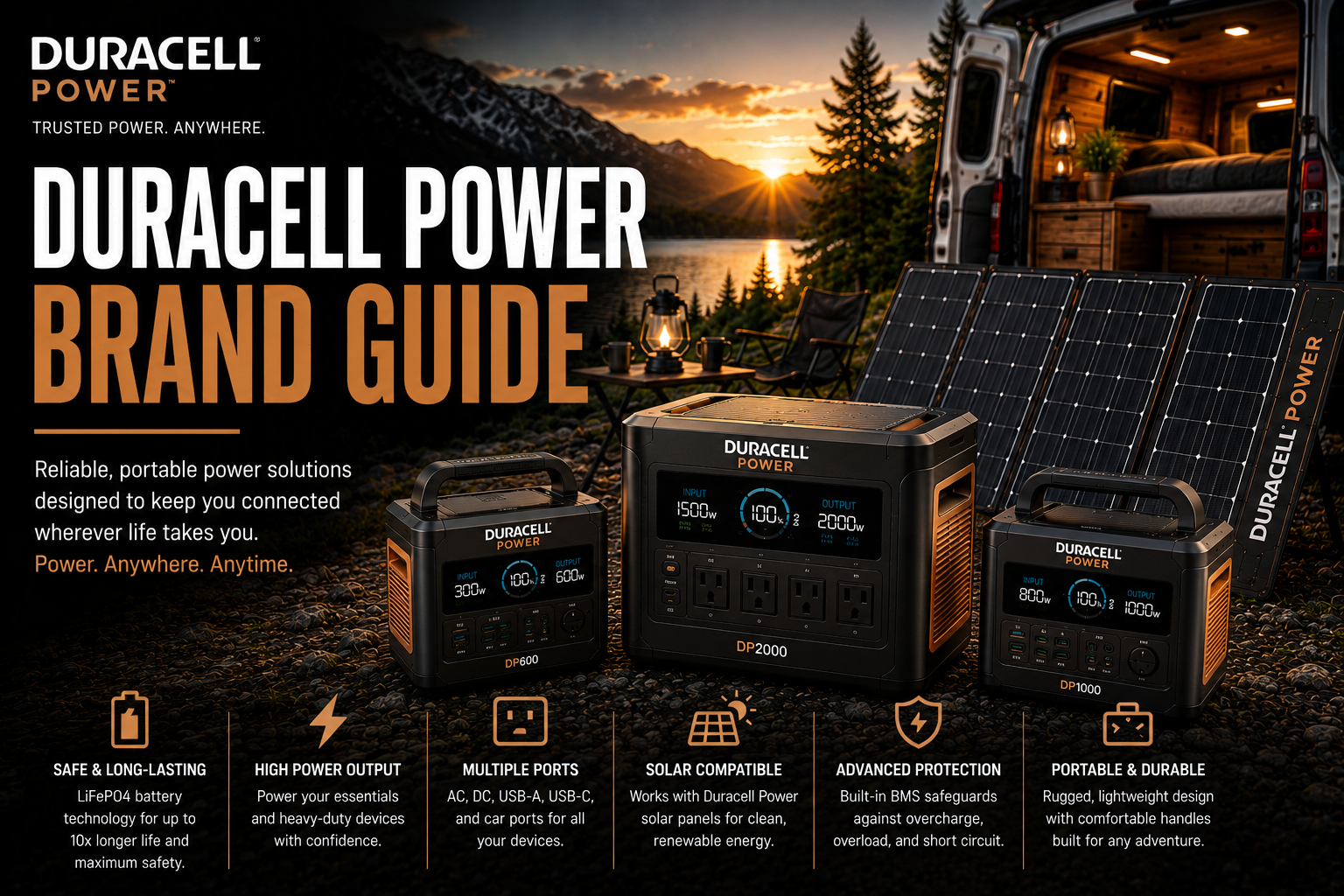
Power 300, 500 and 1000 scale cleanly by portable output; PowerSource 1800 belongs to a separate older AGM generation.
The main decision is not just size—it is whether you want a modern compact station or a heavy legacy backup unit.
This comparison clarifies the product generations.
Power 1000 Is the Best Current Model
PowerSource 1800 has higher inverter output but is not the better modern all-around station.
Series Verdict
Choose among Power 300–1000 based on load and portability; treat PowerSource 1800 as legacy equipment.
Duracell Power Series Comparison
| Model | Continuous Output | Weight | Waveform | Best Use |
|---|---|---|---|---|
| Power 300 | 300W class | 7.5 lb | Pure sine | Electronics |
| Power 500 | 500W class | 13.4 lb | Pure sine | Camping |
| Power 1000 | 1,000W | 24.6 lb | Pure sine | Home essentials |
| PowerSource 1800 | 1,440W | Heavy | Modified sine | Legacy backup |
Generation Difference
Power 300, 500 and 1000 are compact lithium portable stations. PowerSource 1800 is an older AGM backup appliance with a different waveform, weight and maintenance profile.
Best Model by Buyer
Traveler
Power 300.
Camper
Power 500.
Home Backup
Power 1000.
Legacy UPS User
PowerSource 1800.
Daily Cycling User
Choose an LFP rival.
Whole-Home User
Duracell Power Center.
What Matters in Real-World Use
The useful way to evaluate duracell power series comparison is to start with the electrical job rather than the brand name. List the devices that may run together, their continuous wattage, any startup surge and the number of hours of operation required. That tells you whether the system is appropriately sized before price or ecosystem preferences enter the decision.
Output and energy capacity solve different problems. Continuous inverter watts determine what can run at once; watt-hours largely determine how long the battery can support that load. A larger battery does not automatically make a station suitable for a high-draw appliance, and high output does not guarantee useful runtime.
Once the electrical requirement is covered, compare recharge behavior, solar input, expansion options, weight, noise, port selection and warranty support. These ownership differences can matter more than a modest headline-spec advantage, particularly when the equipment will be moved or cycled frequently.
Compare current complete-system cost rather than MSRP. Include any expansion batteries, panels, adapters and proprietary cables needed for the planned setup. Promotions move quickly, so the better value can change even when the technical comparison does not.
A Better Way to Decide
1. Define the load
Add simultaneous continuous watts and identify startup surges from refrigerators, pumps, compressors and tools.
2. Set runtime
Estimate required watt-hours from actual hours of operation and leave margin for conversion losses.
3. Price the full setup
Include expansion batteries, solar panels, adapters and accessories needed for the intended configuration.
4. Weight ownership
Portability, recharge speed, support and accessory availability can outweigh small specification differences.
Long-Term Ownership Considerations
Value changes over the life of the equipment. Replacement cables, compatible panels, expansion batteries, firmware support and warranty handling can matter years after the original specification comparison is forgotten. Check the surrounding ecosystem before treating a lower purchase price as the complete cost.
Battery life also depends on use and storage, not only the advertised cycle figure. Temperature, depth of discharge, storage state of charge and sustained high loads can all affect longevity. Leaving reasonable operating margin and storing the system according to the manufacturer’s guidance can be more useful than chasing the largest theoretical cycle count.
Frequently Asked Questions
Who should buy the Duracell Power series?
Buy it when simple controls, a familiar battery brand and occasional indoor backup matter more than expansion or app features.
Who should skip the Duracell Power series?
Skip it when you need LiFePO4 chemistry, very fast charging, high inverter output or a modular battery ecosystem.
How should Duracell runtime be estimated?
Multiply watt-hours by roughly 0.80 to 0.90 for usable AC energy, then divide by the appliance’s average watts.
Can Duracell Power 1000 run a refrigerator?
It can run many refrigerators when the compressor startup demand remains within its inverter capability.
Can third-party solar panels be used?
Potentially, but voltage, current, polarity and connectors must match the exact station input.
Is PowerSource 1800 the same generation as Power 1000?
No. PowerSource 1800 is an older AGM lead-acid platform with modified-sine output.
Are Duracell portable stations expandable?
The current Power 300, 500 and 1000 do not use a broad plug-in expansion-battery ecosystem.
How should a Duracell station be stored?
Store it cool and dry and recharge it on the interval specified in the manual, commonly every few months.
Does Duracell offer whole-home batteries?
Duracell Power Center is a separate licensed residential storage ecosystem, not an expansion path for the portable Power stations.
What is the biggest Duracell buying mistake?
Assuming the Duracell name means the portable stations share chemistry, charging speed and lifespan with newer LFP competitors.
Which is current?
Power 300, 500 and 1000 are the current portable lineup on Duracell’s site.
Which uses modified sine output?
PowerSource 1800.