Are Power Inverters Worth It?
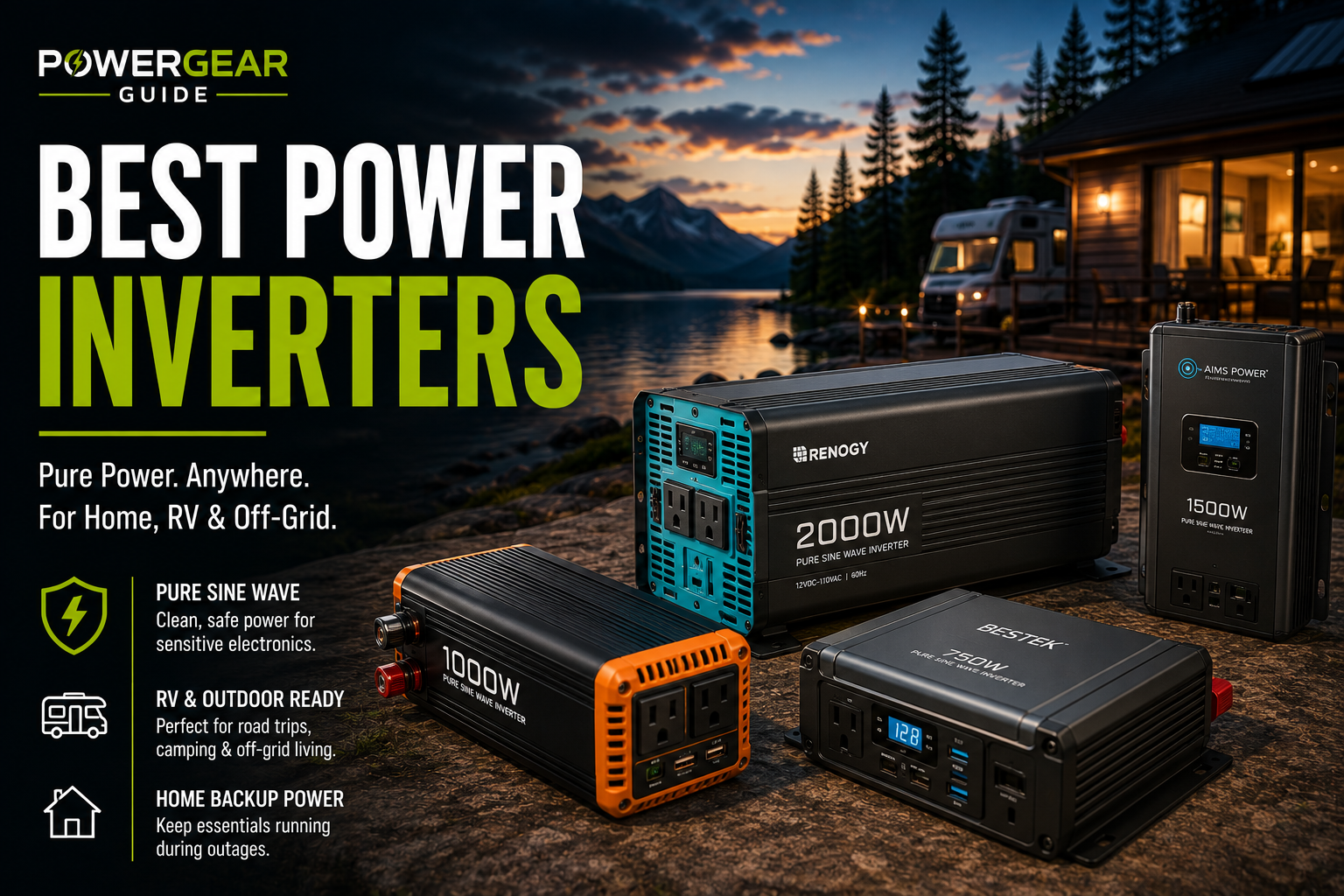
Power inverters are worth it when battery-stored DC power must run household AC devices in an RV, vehicle, cabin or backup system.
Power inverters are worth it when battery-stored DC power must run household AC devices in an RV, vehicle, cabin or backup system.
An inverter does not create energy; it makes battery energy usable by AC devices.
The real question is whether the battery bank, charging system and installation justify the AC loads you need.
Worth It for RVs, Trucks, Cabins and Off-Grid Systems
A pure sine-wave inverter is worth buying when you regularly need AC power away from the grid. It is less compelling for one small device that already supports USB-C or 12V DC.
Editor's Verdict
For repeated off-grid use, a correctly sized pure sine inverter provides strong long-term value. Oversized inverters and weak battery systems are the main sources of disappointment.
When an Inverter Is Worth It
RV and Van Travel
Runs microwaves, laptops and kitchen loads from batteries.
Work Trucks
Provides mobile AC power for tools and chargers.
Cabins and Off-Grid Homes
Supports standard appliances.
Backup Power
Uses battery banks during outages.
Sensitive Electronics
Pure sine models provide broad compatibility.
Shore-Power Systems
Inverter-chargers simplify transfer and charging.
When It May Not Be Worth It
Only USB Devices
Direct DC charging is more efficient.
Weak Starting Battery
Large loads can prevent the vehicle from restarting.
Tiny Battery Bank
Runtime will be disappointing.
High-Heat Loads
Heaters drain batteries rapidly.
No Safe Installation Space
Ventilation and cable routing matter.
Occasional One-Off Use
A portable power station may be simpler.
True Ownership Cost
| Cost | What It Includes |
|---|---|
| Inverter | Pure sine or inverter-charger hardware |
| Battery bank | Often the largest system cost |
| Cable and fuse | Heavy copper and overcurrent protection |
| Charging system | Alternator, solar or shore charger |
| Installation | Mounting, ventilation and AC distribution |
| Monitoring | Battery state and fault visibility |
Efficiency and Runtime
Modern pure sine inverters often exceed 90% conversion efficiency near useful load levels, but idle draw and low-load operation reduce system efficiency.
Long-Term Ownership
Keep terminals tight, airflow clear and batteries healthy. Inverter failures are often caused by heat, low voltage, moisture or poor installation rather than normal age alone.
Alternatives
Direct 12V devices are more efficient for small loads. Portable power stations are easier for temporary use. Inverter-chargers are better for integrated RV or cabin systems.
What Matters in Real-World Use
The case for inverter value comes down to whether you will use the capabilities you are paying for. The strongest reason to buy is turning stored DC battery energy into usable AC power. That can be genuinely valuable, but it is not automatically valuable to every buyer.
The best fit is RVs, trucks, cabins and battery-based backup systems. The weaker fit is buyers who actually need an all-in-one power station rather than a component-level electrical system. Before comparing prices, define the outage, travel or off-grid scenario you are actually solving: which loads must run, how long they need to run, how often the system will be used and where it will be stored.
Ownership cost is broader than the checkout price. Depending on the category, it can include expansion batteries, solar panels, cables, transfer equipment, fuel, maintenance or replacement accessories. A cheaper base unit can become the more expensive system if it requires add-ons to perform the intended job.
Also put a value on convenience. Fast charging matters when turnaround time is short. Low noise matters in campsites and shared spaces. Automatic operation matters during unattended outages. Portability matters only if the equipment will actually be moved. Features should be priced against your use case, not counted as trophies.
A Better Way to Decide
1. Define the load
List what must run simultaneously. Use continuous watts for the base load and account separately for startup surges from motors, pumps and compressors.
2. Set a runtime target
Estimate watt-hours from the loads and hours of use. Add a practical reserve rather than planning around 100% of theoretical capacity.
3. Price the complete system
Compare the equipment you actually need—battery expansion, solar, cables, transfer hardware or fuel—not just the headline unit price.
4. Decide what convenience is worth
Weight, noise, recharge time, automation and app features can matter more than small specification differences when both options meet the electrical requirement.
Common Buying Mistakes to Avoid
Frequently Asked Questions
Do inverters save money?
Not directly; their value is converting stored DC power into usable AC.
Is pure sine wave worth the premium?
Usually yes.
What is the biggest hidden cost?
The battery and charging system.
Do inverters waste power?
Yes, through conversion losses and idle consumption.
Are large inverters better?
Only when loads and batteries justify them.
Is a power station easier?
Often for occasional portable use.