
What Size Power Inverter Do I Need?
Choose inverter wattage from simultaneous running loads, startup surge, battery voltage and practical operating margin.
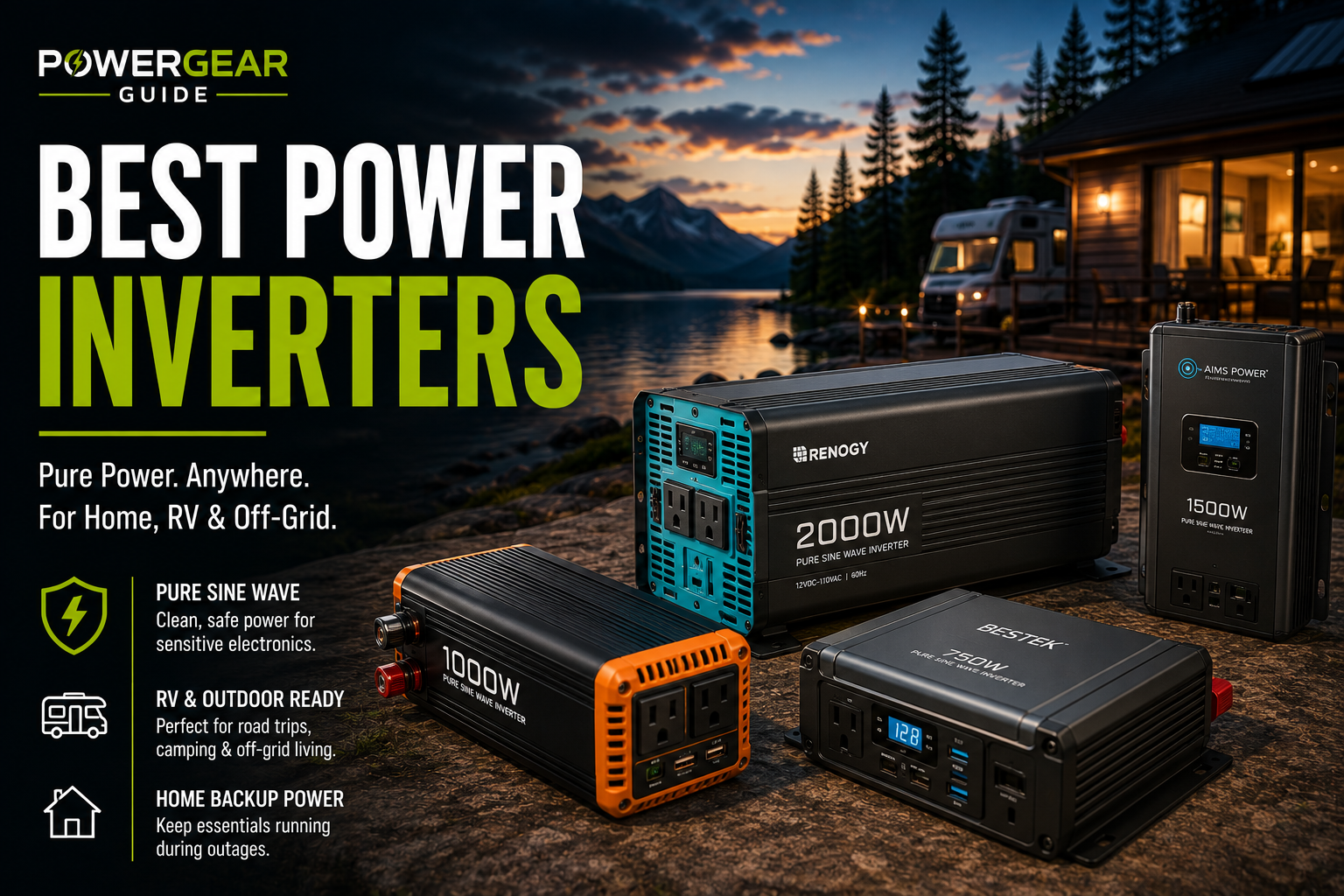
Choose inverter wattage from simultaneous running loads, startup surge, battery voltage and practical operating margin.
The right inverter is large enough to start the load but not so oversized that idle consumption and cost become unnecessary.
This guide separates AC load sizing from battery, cable and runtime requirements.
Add Running Loads, Largest Surge and 20% Margin
Use 300W for electronics, 1,000W for small appliances, 2,000W for RV kitchen loads and 3,000W+ for air conditioners or large systems—after verifying surge.
Sizing Verdict
Choose pure sine wave and size the DC side as carefully as the AC side. Above 2,000W, 24V or 48V is often preferable.
Inverter Sizing Formula
Common Inverter Sizes
| Inverter Size | Typical Loads | 12V Full-Load Current |
|---|---|---|
| 300W | Laptop, camera, TV | About 28–30A |
| 1000W | Small tools, fridge, coffee maker | About 90–100A |
| 2000W | Microwave, RV kitchen, larger tools | About 185–200A |
| 3000W | Air conditioner, large RV, off-grid loads | About 275–300A |
Running vs Surge Power
Motors, compressors and some power supplies draw more power for a brief startup period. The inverter’s surge rating and duration must exceed that startup event.
12V vs 24V vs 48V
12V
Common in cars and small RVs, but current becomes extreme above 2kW.
24V
Cuts current roughly in half versus 12V.
48V
Best for larger off-grid systems.
Match the Battery Bank
Input voltage must match exactly.
Check BMS Limits
Lithium batteries can shut down on overcurrent.
Account for Cable Drop
Low DC voltage makes resistance critical.
Battery Runtime
Inverter wattage determines power capability, not runtime. Runtime depends on battery watt-hours, usable depth of discharge and inverter efficiency.
Sizing Examples
| Load | Running | Startup / Surge | Recommended Class |
|---|---|---|---|
| Laptop + TV | 180W | Low | 300–500W |
| Refrigerator | 150–800W | 1,000–2,200W | 1,500–2,000W |
| Microwave | 1,200–1,500W | Low/moderate | 2,000W |
| Small room AC | 700–1,500W | 1,800–3,500W | 2,000–3,000W |
| RV air conditioner | 1,200–1,800W | 2,500–5,000W | 3,000W+ with soft start |
Final Buying Checklist
Measure Actual Loads
Use nameplates or a watt meter.
Add Only Simultaneous Loads
Do not total everything owned.
Include the Largest Surge
Not every surge unless they overlap.
Choose Pure Sine Wave
Best general-purpose option.
Size the DC System
Battery, cables and fuse must support full load.
Add Margin
Avoid continuous operation at the ceiling.
Practical System Planning
Electrical sizing works best when the entire system is considered together. Load watts, startup surge, battery energy, wiring, charging capability and protective devices all interact; optimizing one number while ignoring the others can create an unreliable setup.
Use manufacturer instructions as the controlling reference for installation, connection and service. Generic calculations are useful for understanding the design, but model-specific voltage limits, cable requirements, grounding instructions and safety procedures take priority.
Leave operating margin. Equipment that spends its life at maximum output has less room for startup events, temperature changes and unexpected loads. Sensible headroom generally improves reliability and makes future changes easier to accommodate.
For backup systems, test before the emergency. Verify the intended loads, charging method, cables and accessories while utility power and replacement parts are available. A documented, practiced setup is far more useful than a theoretically capable system that has never been assembled.
A Useful Design Margin
Avoid sizing a power system to the exact edge of a published rating. Real loads vary, batteries age, wiring introduces voltage drop and environmental conditions change. Leaving headroom in both power and energy capacity makes the system more tolerant of those differences.
For critical backup use, separate essential loads from optional ones. Reducing simultaneous demand can often improve reliability and runtime more effectively than simply buying the largest inverter or battery available.
Sizing Beyond the Headline Wattage
Add the continuous watts of loads that may operate simultaneously rather than simply totaling every device you own. Then identify which loads have motors, compressors or other startup behavior that can temporarily exceed their running consumption.
Do not forget the DC source. A 2,000-watt inverter operating from a 12-volt battery can require very high current, so the battery bank, cables, connections and overcurrent protection must be designed for that demand. An oversized inverter attached to an inadequate battery system does not create usable power.
Choose enough margin for normal variation without extreme oversizing. Very large inverters can have higher idle consumption and require heavier DC hardware, so the best size is one that comfortably covers the intended simultaneous loads and startup events.
Frequently Asked Questions
What size inverter runs a refrigerator?
Usually 1,500–2,000W with adequate surge.
What size runs a microwave?
Commonly 2,000W.
Can 1000W run an air conditioner?
Usually not most household or RV units.
Why is 24V better for large inverters?
It reduces current and cable size.
How much margin should I add?
About 20% is practical.
Does a bigger inverter give longer runtime?
No; battery energy controls runtime.