
Pure Sine Wave vs Modified Sine Wave Inverters
Pure sine wave offers broad compatibility and normal appliance performance; modified sine wave mainly lowers initial cost.
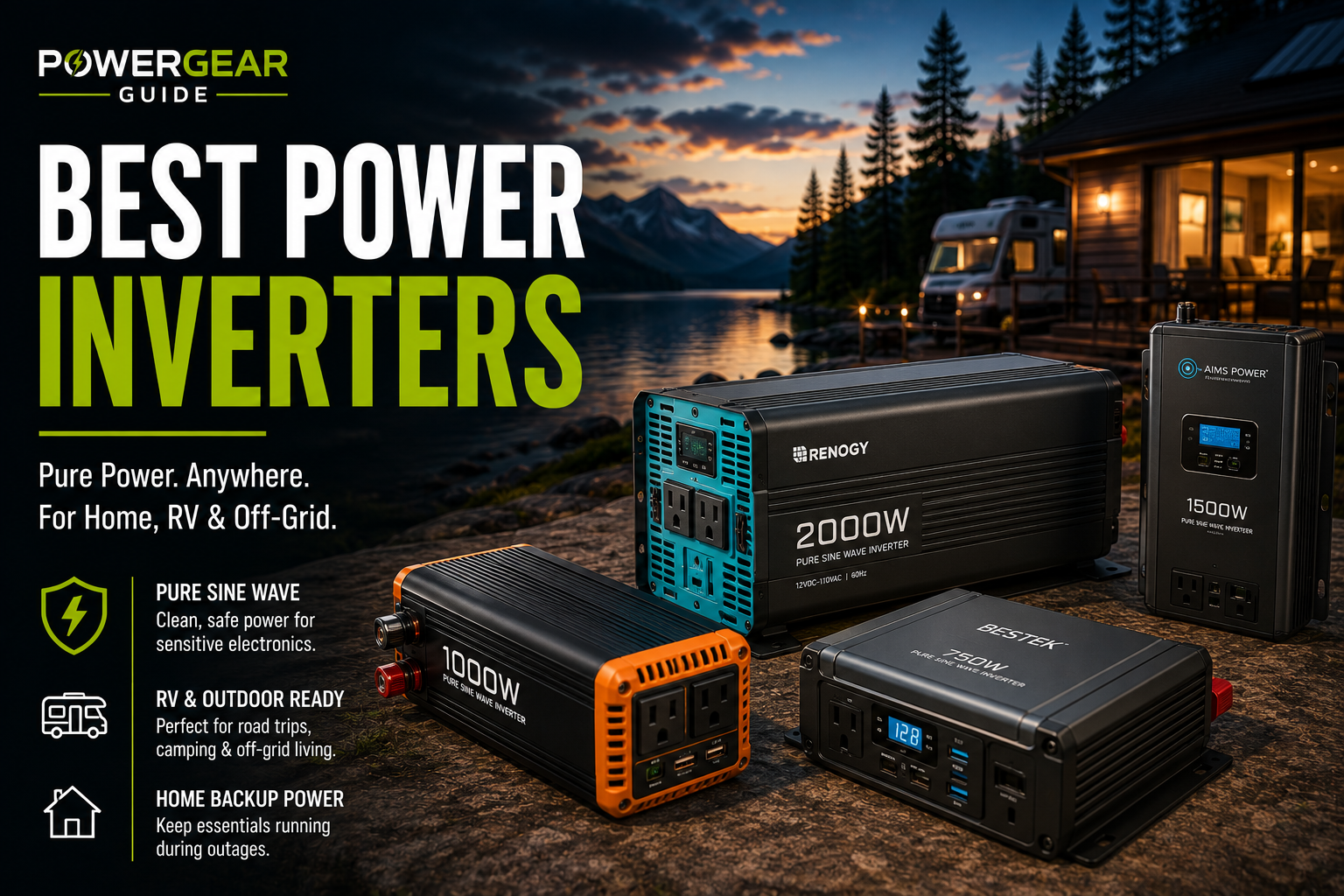
Pure sine wave offers broad compatibility and normal appliance performance; modified sine wave mainly lowers initial cost.
Waveform affects how motors, chargers, audio equipment and electronic controls behave.
For most modern RV, vehicle and off-grid systems, pure sine wave is the safer long-term choice.
Pure Sine Wave Is Better for Most Buyers
Choose pure sine wave for electronics, motors, refrigerators, microwaves and future flexibility. Choose modified sine only for simple known-compatible loads.
Comparison Verdict
The lower cost of modified sine wave rarely outweighs the compatibility advantages of pure sine wave in a general-purpose system.
The Main Difference
Pure sine wave closely replicates utility power. Modified sine wave uses a stepped waveform that is cheaper but less compatible.
Pure vs Modified Sine Wave
| Factor | Pure Sine Wave | Modified Sine Wave |
|---|---|---|
| Waveform | Smooth sinusoid | Stepped |
| Compatibility | Broad | Limited |
| Motor noise/heat | Lower | Can be higher |
| Audio interference | Low | More likely |
| Price | Higher | Lower |
| Best use | Electronics, motors, appliances | Simple resistive loads |
Devices That Prefer Pure Sine Wave
Laptops and Chargers
Complex power supplies.
Refrigerators
Motor and controls.
Microwaves
Timing and transformer performance.
Audio Equipment
Avoids hum and interference.
Medical Equipment
Only with manufacturer approval.
Variable-Speed Motors
Require clean waveform.
When Modified Sine Wave Can Work
Simple incandescent lights, some heaters and basic tools may operate, but the savings are often small compared with the risk of poor compatibility.
Efficiency and Noise
Pure sine wave does not guarantee higher inverter efficiency, but compatible loads often run cooler, quieter and more normally.
Which Should You Buy?
Choose Pure Sine by Default
Best for unknown future loads.
Use Modified Only for Known Loads
Confirm manufacturer compatibility.
Check Surge Rating
Waveform does not replace power sizing.
Match Battery Voltage
Input must match the bank.
Consider Long-Term Value
Pure sine supports more devices.
Avoid Medical Assumptions
Use approved backup equipment.
What Matters in Real-World Use
The useful way to read this pure vs modified sine wave comparison is not to ask which option wins the most specification rows. The better question is which differences change what you can actually power, how long you can power it, and how much inconvenience you accept. In this matchup, the decision centers on power quality and device compatibility versus lower hardware cost.
Start with the load, not the product. Write down the devices you expect to run at the same time, their continuous wattage, and any startup surge. Then estimate how many hours each device needs to operate. That separates output requirements from energy-capacity requirements and prevents a common mistake: paying for a larger battery when the real problem is peak output, or buying high output with too little stored energy.
This comparison is most useful for systems powering electronics, motors, audio gear or sensitive controls. It is less useful for buyers willing to risk compatibility problems to save a modest amount. If both choices comfortably cover the same load and runtime target, portability, recharge speed, expansion options, warranty/support experience and current street price become the deciding factors.
Treat advertised surge modes and power-boost features as secondary tools rather than the foundation of the purchase. Continuous rated output is the safer number for planning. Likewise, expansion capability has value only when you realistically expect to add batteries later; otherwise it can become a feature you paid for but never use.
A Better Way to Decide
1. Define the load
List what must run simultaneously. Use continuous watts for the base load and account separately for startup surges from motors, pumps and compressors.
2. Set a runtime target
Estimate watt-hours from the loads and hours of use. Add a practical reserve rather than planning around 100% of theoretical capacity.
3. Price the complete system
Compare the equipment you actually need—battery expansion, solar, cables, transfer hardware or fuel—not just the headline unit price.
4. Decide what convenience is worth
Weight, noise, recharge time, automation and app features can matter more than small specification differences when both options meet the electrical requirement.
Common Buying Mistakes to Avoid
Frequently Asked Questions
Can modified sine damage electronics?
Some devices may overheat, buzz or malfunction; compatibility varies.
Is pure sine required for refrigerators?
It is strongly preferred.
Do laptops need pure sine?
Many chargers work on modified sine, but pure sine is safer and quieter.
Is modified sine more efficient?
Not necessarily.
Can I run a microwave on modified sine?
Performance may be reduced or abnormal.
Is pure sine worth the cost?
Usually yes for a general-purpose inverter.