
Can a Power Inverter Run a Refrigerator?
Yes—most refrigerators can run from a properly sized pure sine-wave inverter with enough compressor surge and battery capacity.
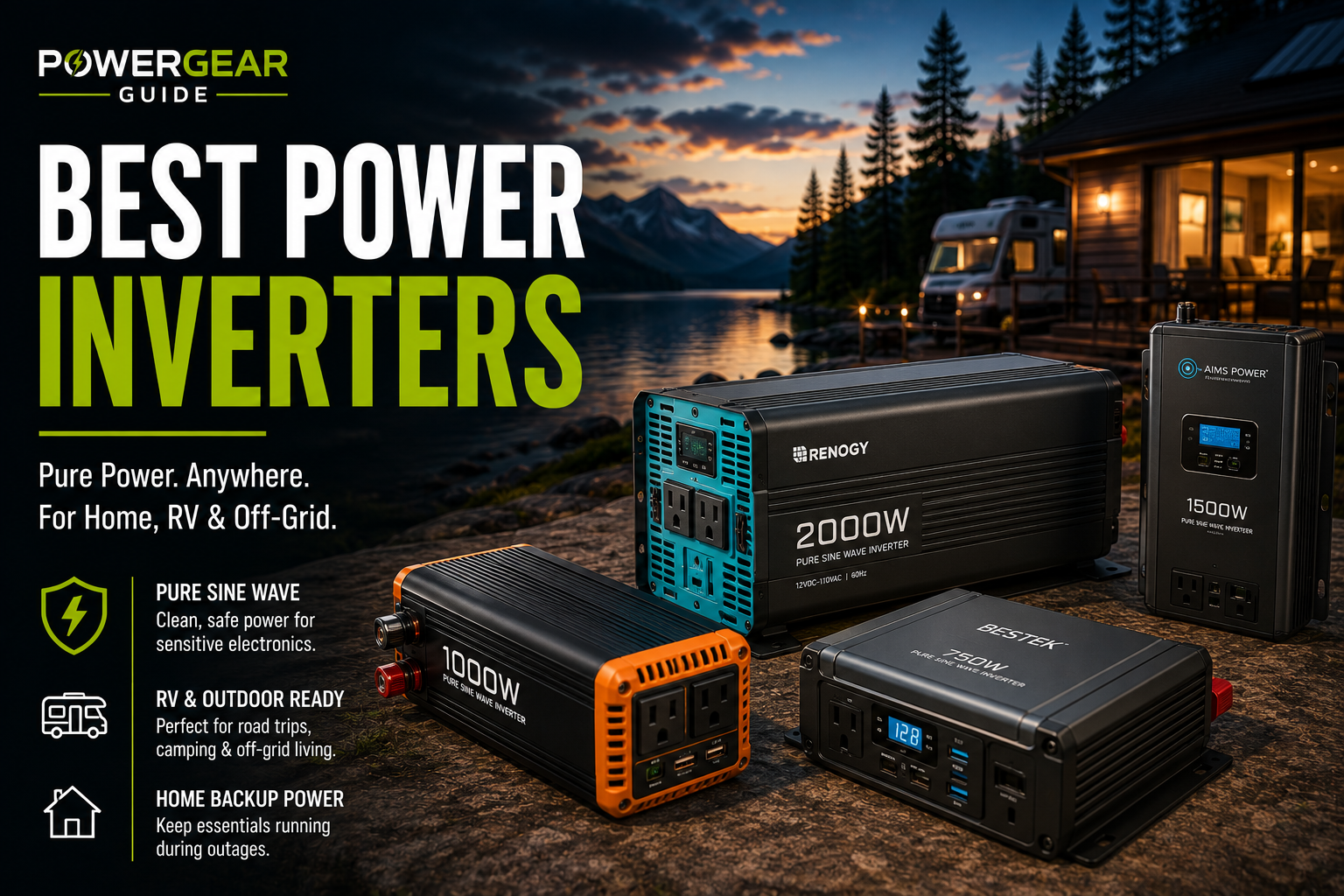
Yes—most refrigerators can run from a properly sized pure sine-wave inverter with enough compressor surge and battery capacity.
The compressor startup surge is the main sizing challenge, not the refrigerator’s average energy use.
Modern efficient refrigerators often use modest running power but still need strong short-duration startup capability.
Use a 1,500–2,000W Pure Sine-Wave Inverter
Many household refrigerators run on 100–800W but may need 800–2,200W or more for startup. Measure the exact model whenever possible.
Bottom Line
A 2,000W pure sine inverter is a safe general target for many household refrigerators, provided the battery and cables support the surge.
Can an Inverter Run a Refrigerator?
Yes, if the inverter provides pure sine-wave output, enough continuous watts and sufficient startup surge for the compressor.
Typical Refrigerator Demand
| Refrigerator Type | Running Watts | Startup Surge | Suggested Inverter |
|---|---|---|---|
| Compact / mini fridge | 60–150W | 300–600W | 600–1000W |
| Modern household refrigerator | 100–400W | 800–1,500W | 1,500W pure sine |
| Large side-by-side | 200–800W | 1,200–2,200W | 2,000W pure sine |
| Older refrigerator | 300–800W | 1,500–3,000W | 2,000–3,000W after testing |
Compressor Startup
The compressor may draw several times its normal running power for a short period. Defrost heaters and ice makers can also increase demand.
Battery Runtime
A refrigerator cycles rather than running continuously. A 100Ah 12V lithium battery stores roughly 1.28kWh before reserve and losses, often enough for several hours to more than a day depending on refrigerator efficiency and ambient temperature.
System Requirements
Pure Sine Wave
Preferred for compressor and controls.
1,500–2,000W Class
Covers many household models.
Adequate Battery Surge
The battery and BMS must support startup current.
Heavy DC Cabling
Prevent voltage drop.
Ventilated Refrigerator
Dirty coils and hot rooms increase runtime.
Temperature Monitoring
Verify safe food temperatures.
Limitations
Large refrigerators, older compressors, simultaneous defrost cycles and weak batteries can cause overload or low-voltage shutdown. A watt meter or manufacturer data provides the best sizing information.
What Determines Whether the Inverter Can Run the Load
The inverter's continuous watt rating must cover normal operation, but motor-driven appliances can also require substantial startup surge. Refrigerators and air conditioners are classic examples: the compressor may briefly demand much more power when starting than it uses once running.
The DC battery side matters too. A high-power inverter can draw very large current from a 12V or 24V battery system. Cable gauge, connection quality, fuse protection and battery discharge capability therefore become part of the system rather than secondary details.
Runtime depends on stored battery energy, not inverter watts alone. Estimate watt-hours from the appliance's average consumption and expected operating time, then allow for inverter losses. For cycling appliances, measured energy over several hours is more useful than multiplying maximum running watts by the entire day.
If reliable operation is important, test the actual combination before depending on it. A system that looks adequate on paper can still reveal startup, voltage-drop or protection-limit problems under a real load.
A Useful Design Margin
Avoid sizing a power system to the exact edge of a published rating. Real loads vary, batteries age, wiring introduces voltage drop and environmental conditions change. Leaving headroom in both power and energy capacity makes the system more tolerant of those differences.
For critical backup use, separate essential loads from optional ones. Reducing simultaneous demand can often improve reliability and runtime more effectively than simply buying the largest inverter or battery available.
Refrigerator-Specific Checks
A refrigerator is a cycling compressor load, so its average energy use can be far below its running wattage multiplied by 24 hours. Ambient temperature, thermostat setting, door openings and defrost cycles all change consumption. For battery sizing, a plug-in energy meter measured over a representative day is much more useful than a single instantaneous watt reading.
Voltage drop on the DC side can also cause trouble during compressor startup. Keep battery-to-inverter wiring appropriately sized and short, use the specified fuse or breaker, and make sure the battery can supply the required current without excessive sag.
Additional Real-World Consideration
For emergency use, keep the refrigerator door closed as much as possible; reducing compressor cycling can preserve battery energy and extend practical runtime.
Frequently Asked Questions
Will a 1000W inverter run a refrigerator?
Some efficient models may, but surge capacity can be insufficient.
Is pure sine wave necessary?
Strongly preferred.
How long will a 100Ah battery run a fridge?
Often several hours to more than a day depending on duty cycle and losses.
Why does the inverter beep at startup?
The compressor surge may exceed inverter or battery capability.
Can a car battery run a refrigerator overnight?
It may deeply discharge the starting battery and is not recommended.
Do defrost cycles matter?
Yes, they can add several hundred watts.