
Best Expandable Portable Power Stations: 5 Systems Compared
Expandable power stations let you start with a base battery and add compatible expansion packs later. The best system is not simply the one with the biggest advertised capacity: charging architecture, battery compatibility, AC output and the total cost of expansion determine whether it works for your home, RV or off-grid setup.
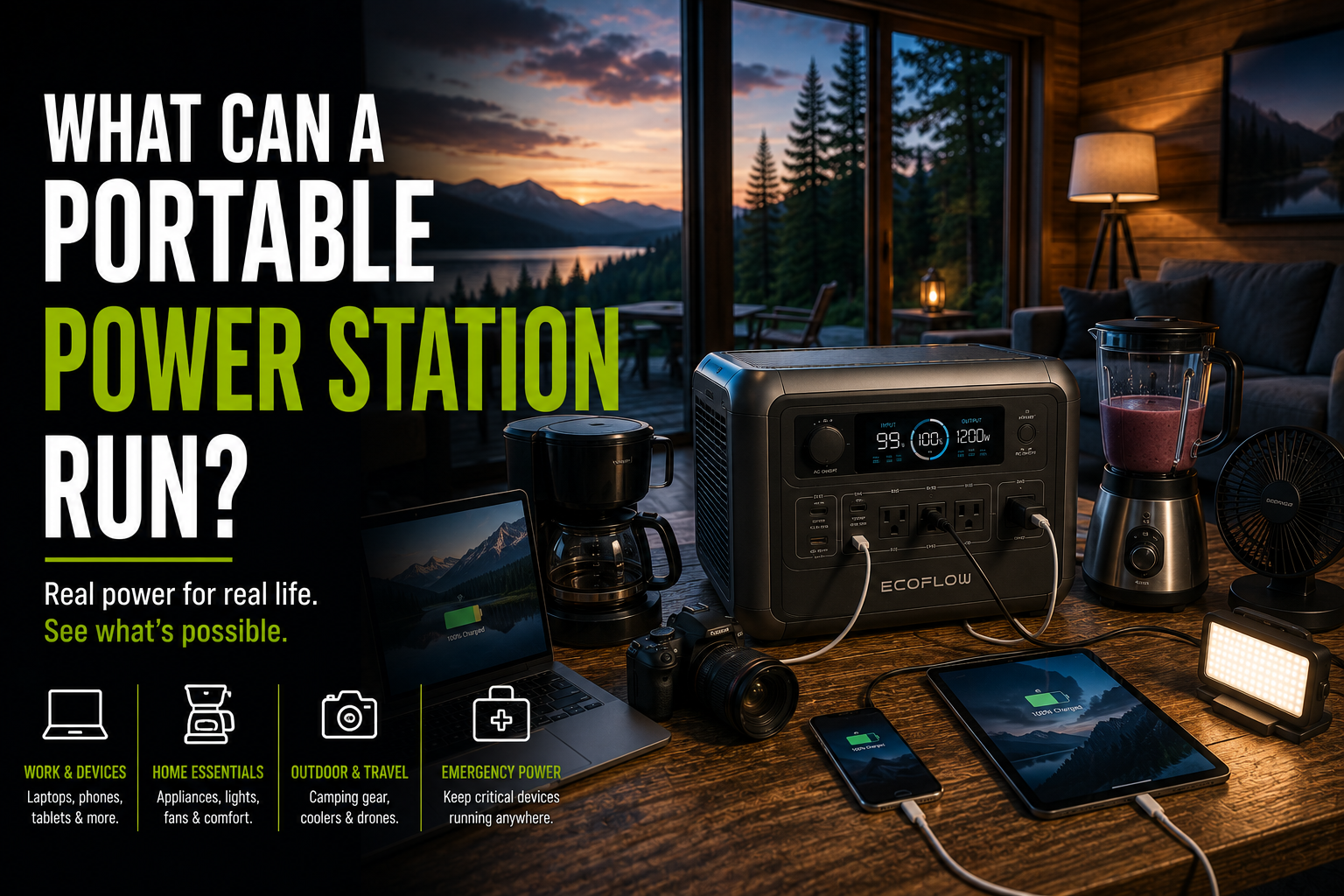
We compared published manufacturer product families, expansion ecosystems, continuous AC output, charging options and practical suitability. This is a specification-based buying guide, not a hands-on runtime test. Exact capacities, firmware support and battery availability can change by model revision.
Choose the expansion ecosystem before the battery size
For home backup, prioritize a system with clearly documented add-on batteries and suitable transfer equipment. For an RV, check weight, physical space and AC output. A compact station that expands is useful only if its compatible packs remain available at a reasonable total cost.
Quick Picks: Best Expandable Power Stations
EcoFlow DELTA 2 Max
Designed to connect with DELTA 2 Max Smart Extra Batteries; a practical middle ground between portable use and extended backup.
BLUETTI AC200L
Supports BLUETTI expansion battery options specified for the AC200L; strong choice when longer-duration backup matters more than low carry weight.
Anker SOLIX F2000 (PowerHouse 767)
Expandable with the compatible Anker SOLIX expansion battery ecosystem; consider when larger appliances and extended outages are priorities.
Jackery Explorer 2000 Plus
Jackery designed this model around compatible add-on battery packs and larger backup configurations.
EcoFlow DELTA Pro
A larger modular ecosystem with compatible extra batteries and home-backup accessories.
Expandable Power Station Comparison
| System | Best use | Expansion consideration |
|---|---|---|
| EcoFlow DELTA 2 Max | Best balanced expandable system | Confirm extra-battery compatibility and total system cost. |
| BLUETTI AC200L | Best for modular home backup | Check which B-series batteries and adapter arrangements apply to the exact region and revision. |
| Anker SOLIX F2000 (PowerHouse 767) | Best for high-demand portable loads | Verify the F2000-specific expansion pack rather than assuming newer SOLIX packs interchange. |
| Jackery Explorer 2000 Plus | Best for scaling into a larger system | Check model-specific pack limits, accessories and total weight as the system grows. |
| EcoFlow DELTA Pro | Best for integrated backup planning | This is not the DELTA Pro 3: expansion batteries and accessories are generation-specific. |
We intentionally do not publish unverified current prices or claim every battery combination works. Capacity limits, port configurations and compatible add-ons should be checked against the manufacturer page for the exact model.
Detailed Reviews: Five Expandable Power Station Systems
1. EcoFlow DELTA 2 Max
Designed to connect with DELTA 2 Max Smart Extra Batteries; a practical middle ground between portable use and extended backup.
Why it stands out: The value is in the documented modular ecosystem, not a vague claim that any battery can be attached. Evaluate base capacity, approved pack count, charge input and the price of each extra battery before purchasing.
- Buy the base station first and expand when your runtime needs are clear.
- Useful for staged backup-power spending.
- Confirm extra-battery compatibility and total system cost.
- Expansion packs add substantial cost and weight.
2. BLUETTI AC200L
Supports BLUETTI expansion battery options specified for the AC200L; strong choice when longer-duration backup matters more than low carry weight.
Why it stands out: The value is in the documented modular ecosystem, not a vague claim that any battery can be attached. Evaluate base capacity, approved pack count, charge input and the price of each extra battery before purchasing.
- Buy the base station first and expand when your runtime needs are clear.
- Useful for staged backup-power spending.
- Check which B-series batteries and adapter arrangements apply to the exact region and revision.
- Expansion packs add substantial cost and weight.
3. Anker SOLIX F2000 (PowerHouse 767)
Expandable with the compatible Anker SOLIX expansion battery ecosystem; consider when larger appliances and extended outages are priorities.
Why it stands out: The value is in the documented modular ecosystem, not a vague claim that any battery can be attached. Evaluate base capacity, approved pack count, charge input and the price of each extra battery before purchasing.
- Buy the base station first and expand when your runtime needs are clear.
- Useful for staged backup-power spending.
- Verify the F2000-specific expansion pack rather than assuming newer SOLIX packs interchange.
- Expansion packs add substantial cost and weight.
4. Jackery Explorer 2000 Plus
Jackery designed this model around compatible add-on battery packs and larger backup configurations.
Why it stands out: The value is in the documented modular ecosystem, not a vague claim that any battery can be attached. Evaluate base capacity, approved pack count, charge input and the price of each extra battery before purchasing.
- Buy the base station first and expand when your runtime needs are clear.
- Useful for staged backup-power spending.
- Check model-specific pack limits, accessories and total weight as the system grows.
- Expansion packs add substantial cost and weight.
5. EcoFlow DELTA Pro
A larger modular ecosystem with compatible extra batteries and home-backup accessories.
Why it stands out: The value is in the documented modular ecosystem, not a vague claim that any battery can be attached. Evaluate base capacity, approved pack count, charge input and the price of each extra battery before purchasing.
- Buy the base station first and expand when your runtime needs are clear.
- Useful for staged backup-power spending.
- This is not the DELTA Pro 3: expansion batteries and accessories are generation-specific.
- Expansion packs add substantial cost and weight.
How to Choose an Expandable Portable Power Station
1. Calculate runtime from usable energy
Start with the appliance watts and hours of use. A 100W average load running for eight hours requires about 800Wh at the appliance; inverter losses and reserve capacity mean the battery must store more than that. For load-planning examples, see running watts versus starting watts.
2. Verify the exact battery compatibility list
Do not assume batteries from adjacent product generations are interchangeable. Look for the manufacturer’s supported expansion battery model numbers, maximum pack count, connector type and firmware requirements. An expandable station without readily available compatible packs may be a poor long-term purchase.
3. Separate AC power from battery capacity
Extra battery capacity generally extends runtime; it does not necessarily increase continuous inverter wattage. Check whether your refrigerator, pump or RV air conditioner can start on the base unit before buying more batteries. See our RV generator guide for fuel-generator alternatives.
4. Budget for the complete system
Compare the price of the base unit plus the number of expansion packs you actually need, rather than base-unit price alone. Include solar charging hardware, cables, storage and any electrician-installed transfer equipment. If you need only modest capacity, compare budget portable power stations before paying for a modular platform.
5. Evaluate backup switchover separately
A portable power station with an EPS or backup mode is not automatically a replacement for a dedicated UPS for sensitive electronics. Transfer time, output behavior and load compatibility vary. See UPS versus portable power station for the distinction.
Final Verdict: The Best Expandable Station Is the One You Can Actually Expand
EcoFlow DELTA 2 Max is a balanced starting point for buyers who want moderate portability and a documented extra-battery path. BLUETTI AC200L and Jackery Explorer 2000 Plus suit buyers who expect to scale backup capacity. Anker SOLIX F2000 and the original EcoFlow DELTA Pro make sense for buyers committed to their respective expansion ecosystems. Before buying, confirm the exact compatible pack, current stock and total installed cost.
Frequently Asked Questions
Can I add any lithium battery to an expandable power station?
No. Use only expansion batteries and cables specifically approved for the exact base model. Electrical connections and battery management protocols differ.
Does an extra battery increase the AC wattage output?
Usually an expansion battery increases stored energy and runtime, not the inverter continuous wattage rating. Check the exact model documentation for exceptions.
Are EcoFlow DELTA Pro and DELTA Pro 3 expansion batteries interchangeable?
Do not assume so. They are different product generations; confirm compatible battery model numbers on the manufacturer documentation.
How many extra batteries can I connect?
The supported number depends on the base station, battery generation and configuration. Follow the published maximum for the exact system.
Is an expandable power station better than buying two smaller units?
It depends on portability, redundancy, cost and whether you need one larger AC output. Two independent units may offer flexibility, while expansion packs can simplify a single backup setup.
Can expandable power stations run an RV air conditioner?
Some can, but compressor startup surge, continuous load and other onboard appliances determine compatibility. More battery capacity alone cannot fix insufficient inverter output.
Can I recharge expansion batteries with solar panels?
Many systems allow solar charging through the base station, but input voltage, current and charging limits vary. Use the approved wiring and solar input specifications.
Are expandable power stations suitable for home backup?
They can support selected loads when properly sized. Connecting home circuits requires appropriate transfer equipment and compliant installation; never backfeed an outlet.
Sources and Editorial Methodology
Verify compatibility, expansion limits and current product specifications with the manufacturer before purchase. This guide compares published ecosystems and does not claim firsthand testing.