
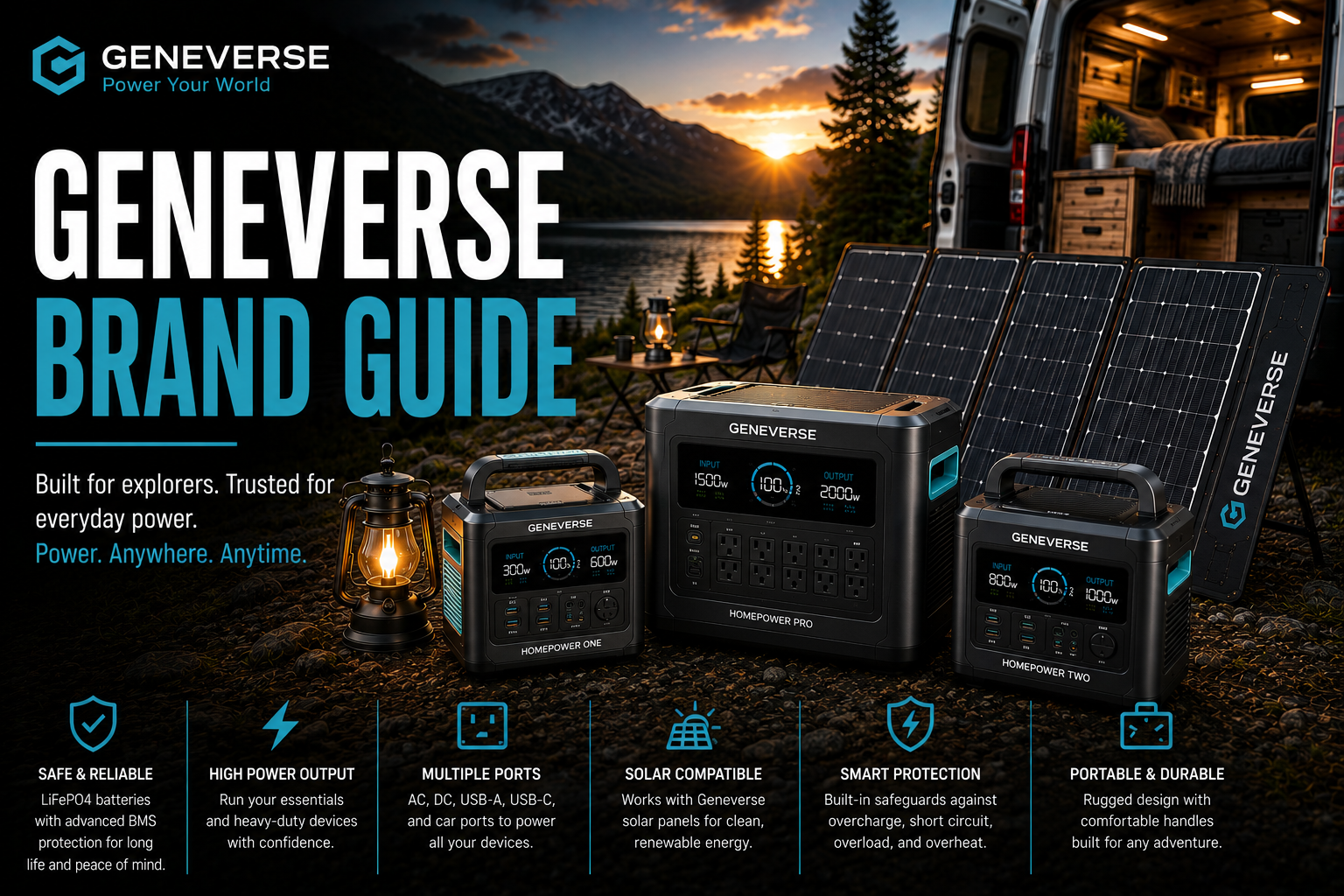
Are Geneverse Power Stations Worth It?
Geneverse can be worth buying for simple indoor backup, especially when ONE PRO or TWO PRO is discounted and fixed capacity is acceptable.
Geneverse is less about cutting-edge ecosystem features and more about straightforward appliance backup.
The value depends on price, output requirements and whether future expansion matters.
Worth It for Simple Fixed-Capacity Backup at the Right Price
TWO PRO is the strongest long-term option; older HomePower models should be purchased mainly for clearance value.
Editor's Verdict
Geneverse is worth considering for simple emergencies, but buyers who want expansion, advanced apps or maximum output should compare newer platforms.
Why Geneverse Can Be Worth It
Simple Controls
Easy emergency operation.
Useful Capacities
1–2.4kWh models.
PRO LiFePO4
Longer-life chemistry.
High PRO Solar Input
Up to 800W.
Indoor Backup Focus
Made for appliances and electronics.
Potential Clearance Value
Older models may be discounted.
Reasons to Consider Alternatives
No Broad Expansion
Fixed-capacity HomePower stations.
Lower Output
Many rivals deliver more watts.
Limited App Ecosystem
Fewer automation features.
No Native 240V
Portable models are 120V.
Overlapping Generations
Naming can confuse buyers.
Variable Availability
Current stock differs by retailer.
When Geneverse Delivers Value
Geneverse delivers value when the station is purchased at a meaningful discount and the buyer wants a self-contained fixed-capacity battery for refrigerators, communication equipment and occasional outages.
Best Buyers
Home Office Users
Simple computer and router backup.
Refrigerator Backup Buyers
ONE PRO or TWO PRO.
Solar Users
Use matched SolarPower panels.
Older Adults
Straightforward controls.
Deal Hunters
Buy discounted bundles.
Not Ecosystem Builders
Choose rivals for expansion.
Frequently Asked Questions
Who should buy a Geneverse station?
Buy it when straightforward indoor backup, simple controls and Geneverse solar compatibility matter more than deep expansion.
Who should skip a Geneverse station?
Skip it when expandable capacity, native 240V, advanced app automation or the highest output per pound matters most.
How should Geneverse runtime be estimated?
Multiply rated watt-hours by about 0.85 for a practical estimate, then divide by the appliance’s average watts.
Can Geneverse run a refrigerator?
Most HomePower models can run common refrigerators when startup surge and continuous draw stay within the inverter limits.
Can third-party solar panels be used?
Potentially, but voltage, current, polarity and connector requirements must match the exact HomePower model.
Does Geneverse support pass-through or UPS operation?
Behavior varies by generation and charging method. Verify the exact model manual before using sensitive equipment.
How long do Geneverse batteries last?
PRO models use LiFePO4 chemistry and are positioned for longer cycle life than the original HomePower ONE generation.
Can Geneverse batteries be expanded?
The mainstream HomePower stations do not use the broad plug-in expansion-battery ecosystems common to some competitors.
How should a Geneverse station be stored?
Store it cool and dry, recharge periodically, and follow Geneverse guidance for long-term battery care.
What is the biggest Geneverse buying mistake?
Choosing by capacity alone without checking the relatively modest inverter output and current accessory availability.
Is Geneverse a good value brand?
It can be when bundled or discounted, especially for basic home backup.
Should I buy an older HomePower ONE?
Only when its 1,000W output is sufficient and the price is substantially lower than current LFP models.