
Generator vs Portable Power Station
Traditional generators provide high output and refuelable runtime, while portable power stations offer quiet, indoor-safe electricity with almost no maintenance. The better choice depends on the loads you need to run, how long you need power and where the equipment will operate.
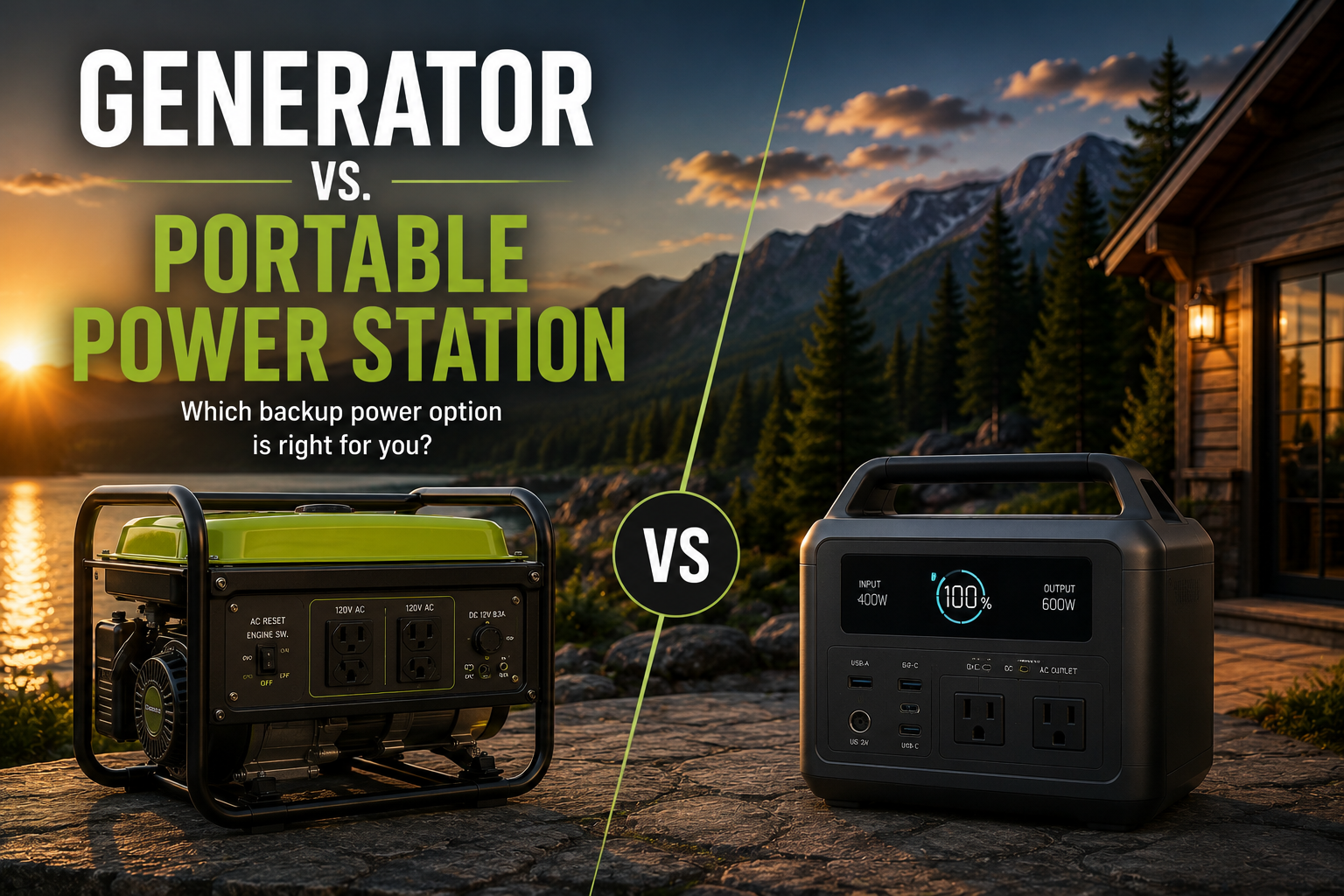
Traditional generators provide high output and refuelable runtime, while portable power stations offer quiet, indoor-safe electricity with almost no maintenance. The better choice depends on the loads you need to run, how long you need power and where the equipment will operate.
PowerGearGuide Editorial Team Home backup, camping and emergency power Updated comparison guidanceGenerators and portable power stations can both keep essential devices running when utility power fails, but they solve the problem in different ways. A generator creates electricity with an engine and fuel. A portable power station stores electricity in a rechargeable battery and delivers it through an inverter.
That difference affects nearly every part of ownership. Generators are usually stronger and easier to keep running during a long outage. Portable power stations are quieter, simpler, safer indoors and more convenient for electronics, apartments, RVs and shorter outages.
Choose the Generator for Long Runtime and the Power Station for Convenience
Buy a portable generator when you need to run heavy appliances for many hours or several days and can safely store fuel and operate the unit outdoors. Buy a portable power station when quiet operation, indoor use, low maintenance and simple charging matter more than unlimited runtime.
Editor's Verdict
A portable generator is the better choice for extended outages, large appliances and maximum watts per dollar. A portable power station is the better choice for quiet indoor backup, camping, apartments, electronics and buyers who want almost no maintenance.
CHECK CURRENT PRICES Portable Generator Buying GuideBest Choice by Need
Portable Generator
High output, fast refueling and continued operation as long as fuel remains available.
Best ForHeavy loads See Generator DetailsPortable Power Station
Silent, indoor-safe battery power with simple charging and almost no maintenance.
Best ForConvenience See Power Station DetailsHybrid Setup
Use a power station for quiet overnight loads and a generator for recharging or heavy appliances.
Best ForMaximum flexibility See Hybrid StrategyGenerator vs Portable Power Station Comparison
| Feature | Portable Generator | Portable Power Station | Better Choice |
|---|---|---|---|
| Power source | Gasoline, propane, diesel or natural gas | Rechargeable lithium battery | Depends on fuel access |
| Typical output | 2,000–15,000+ watts | 300–6,000+ watts | Generator |
| Runtime | Continues with available fuel | Limited by battery capacity | Generator |
| Noise | Moderate to loud | Nearly silent | Power station |
| Indoor use | Never | Yes | Power station |
| Maintenance | Oil, filters, spark plugs and fuel care | Minimal | Power station |
| Refueling or recharging | Fast fuel refill | Wall, vehicle or solar charging | Depends on situation |
| Initial cost per watt | Usually lower | Usually higher | Generator |
| Electronics and indoor comfort | Requires outdoor placement and cords | Simple and quiet | Power station |
| Best use | Long outages and heavy appliances | Short outages, camping and electronics | Depends on need |
Portable Generator
A portable generator is the stronger option when your backup plan includes refrigerators, freezers, pumps, furnaces, power tools, window air conditioners or several household circuits.
Best ForLong outagesPortable generators create electricity continuously while the engine runs. Their biggest advantage is simple: refueling takes minutes, so runtime is limited mainly by fuel availability rather than a fixed battery capacity.
Typical Output2,000–15,000+ W RuntimeRefuel as needed NoiseModerate to high Indoor UseNeverAdvantages
- More output per dollar.
- Fast refueling during extended outages.
- Better for pumps, tools and large appliances.
- Fuel choices may include gasoline, propane and natural gas.
- Can support transfer-switch connections on compatible models.
Limitations
- Must operate outdoors because of carbon monoxide.
- Creates engine noise and exhaust.
- Requires fuel storage and periodic maintenance.
- Heavier models can be difficult to move.
- Unsafe setup can create electrical or fire hazards.
Choose a generator when: your main priority is keeping high-demand appliances running through a long outage at the lowest practical cost per watt.
Portable Power Station
A portable power station is a rechargeable battery system with an inverter, outlets and charging ports. It provides clean, quiet power without fuel, fumes or engine maintenance.
Best ForSimple backupPower stations are especially practical for refrigerators, routers, lights, laptops, televisions, CPAP machines, phones, fans and other essential electronics. Larger systems can also handle microwaves, coffee makers and selected power tools.
Typical Output300–6,000+ W RuntimeBattery limited NoiseNearly silent Indoor UseYesAdvantages
- Safe to operate indoors.
- Quiet enough for bedrooms, apartments and campsites.
- Almost no routine maintenance.
- Simple push-button operation.
- Can recharge from wall outlets, vehicles or compatible solar panels.
Limitations
- Runtime is limited by stored watt-hours.
- Higher upfront cost per watt.
- Recharging can take longer than adding fuel.
- Heavy loads can drain the battery quickly.
- Large-capacity systems can still be expensive and heavy.
Choose a power station when: quiet operation, indoor safety, ease of use and low maintenance matter more than unlimited runtime.
CHECK CURRENT PRICESPower Output and Surge Capacity
Generators generally provide more continuous output for the money. Compact inverter generators often produce around 2,000 to 4,000 running watts, while larger portable units can exceed 10,000 watts. This makes them better suited to pumps, multiple refrigerators, large power tools and selected air-conditioning loads.
Portable power stations have improved substantially, and premium models can now deliver several thousand watts. However, the battery must supply every watt consumed. A high-draw appliance may run successfully but reduce runtime much faster than expected.
Starting Watts
Motors in refrigerators, pumps and air conditioners may require a brief startup surge above their normal running watts.
Continuous Watts
This rating determines how much equipment the unit can operate at the same time after startup.
Battery Watt-Hours
For a power station, watt-hours estimate how long connected loads can run before recharging is required.
Runtime and Recharging
A generator can keep running as long as fuel is available and the unit receives proper service. Refilling gasoline or switching propane cylinders takes only a few minutes, making generators especially useful during multi-day outages.
A power station has a fixed amount of stored energy. Solar panels can extend runtime, but charging speed depends on panel wattage, weather and the system's solar input limit. Wall charging is faster and more predictable when grid power is available.
Simple Runtime Example
A 1,000-watt-hour power station running a steady 100-watt load may provide roughly 8 to 9 hours after normal inverter losses. A 1,500-watt appliance could deplete the same battery in well under one hour.
Noise, Emissions and Indoor Safety
Generator Safety
Every fuel-burning generator produces carbon monoxide and must remain outdoors, away from doors, windows, vents and occupied areas. Never operate one in a garage, basement, shed or enclosed porch.
Power Station Safety
Portable power stations produce no exhaust during operation and can be used indoors. They still require proper ventilation around cooling fans and should be stored within the manufacturer's temperature limits.
Cost, Fuel and Maintenance
| Ownership Factor | Portable Generator | Portable Power Station |
|---|---|---|
| Initial cost per watt | Usually lower | Usually higher |
| Ongoing energy cost | Gasoline, propane or other fuel | Wall charging or solar |
| Routine maintenance | Oil, filters, spark plugs and exercise runs | Keep charged and stored correctly |
| Long-term wear | Engine components and fuel system | Battery capacity gradually declines |
| Storage concerns | Fuel age, fumes and flammability | Temperature and state of charge |
Which Is Better for Your Situation?
Home Blackouts
Choose a generator for long outages and heavy appliances. Choose a power station for quiet overnight use, electronics and shorter interruptions.
Apartments
A portable power station is the practical option because a generator cannot safely operate indoors or near windows and shared spaces.
Camping
A power station is quieter and easier around tents. A generator may be useful for high-draw RV appliances where campground rules permit it.
RV Travel
Power stations handle electronics and quiet hours well. Generators remain useful for air conditioning and extended boondocking.
Medical Devices
A power station provides quiet indoor operation, but capacity and recharge planning must be sufficient for the full expected outage.
Jobsites
Generators usually offer better value for continuous heavy tool use, while power stations work well for light tools and indoor projects.
Why a Hybrid Setup Can Be Better
Many households benefit from owning both. A power station can run quiet essential loads overnight, while a generator handles high-demand appliances during the day or recharges the battery. This reduces fuel consumption, generator noise and unnecessary engine hours.
Practical strategy: use the power station for refrigerators, lights, internet and electronics, then run the generator only when batteries need charging or a large appliance must operate.How to Choose the Right Option
1. List Essential Loads
Write down every appliance and device you need, including running watts and startup requirements.
2. Estimate Outage Length
A short outage favors battery convenience. A multi-day outage increases the value of refuelable generation.
3. Consider Your Location
Apartments and dense neighborhoods favor quiet batteries, while detached homes may support safe generator placement.
Buying Checklist
- Confirm continuous output and startup surge ratings.
- For power stations, calculate required battery watt-hours.
- For generators, decide which fuels you can store and obtain safely.
- Consider noise limits, portability and storage space.
- Plan safe generator placement before an emergency begins.
- Use a qualified electrician for transfer equipment or home-circuit connections.
- Choose LiFePO4 batteries when long cycle life is a priority.
- Leave additional capacity instead of sizing exactly to the calculated load.
Final Recommendation
Buy a portable generator when your priority is maximum power, long runtime and support for heavy household loads. Buy a portable power station when your priority is quiet indoor use, low maintenance, simple operation and clean backup for essential electronics.
For homeowners preparing for both short and extended outages, the most flexible solution is a properly sized power station paired with a fuel-powered generator.
CHECK CURRENT PRICES Read Generator Buying GuideFrequently Asked Questions
Is a portable power station better than a generator?
It is better for quiet indoor power, electronics, apartments, camping and low-maintenance ownership. A generator remains better for long outages and heavy loads.
Can a portable power station replace a generator?
It can replace one for many essential devices, including refrigerators, routers, lights, laptops and medical equipment. Large HVAC systems and extended heavy loads may still require a generator or a much larger battery system.
Can a power station run a refrigerator?
Yes, when the inverter can handle the refrigerator's startup surge and the battery has enough watt-hours for the desired runtime.
Can you use a generator in a garage with the door open?
No. A generator should never run inside a garage or other enclosed structure, even with the door open, because carbon monoxide can accumulate and enter the home.
Can a generator recharge a portable power station?
Yes. This is a useful hybrid strategy during extended outages because the generator can recharge the battery while the power station provides quiet indoor electricity.
Which option is cheaper?
Generators usually cost less per watt at purchase. Power stations typically have lower maintenance and operating costs but require a higher upfront investment for equivalent output and capacity.
Which option lasts longer?
Both can last many years. Generator lifespan depends heavily on maintenance, while power-station lifespan depends on battery chemistry, charge cycles, temperature and storage practices.
Related PowerGearGuide Resources
About PowerGearGuide
PowerGearGuide publishes practical buying guides, comparisons and educational resources covering portable generators, portable power stations, solar generators, home batteries and emergency backup systems.
Safety reminder: always follow the manufacturer's operating instructions. Fuel-powered generators must be used outdoors and positioned away from doors, windows and vents.