
Best Whole-House Battery Backup Systems
Whole-house batteries combine 120/240V output, automatic transfer, solar integration and scalable energy storage, but installer design is as important as the battery brand.
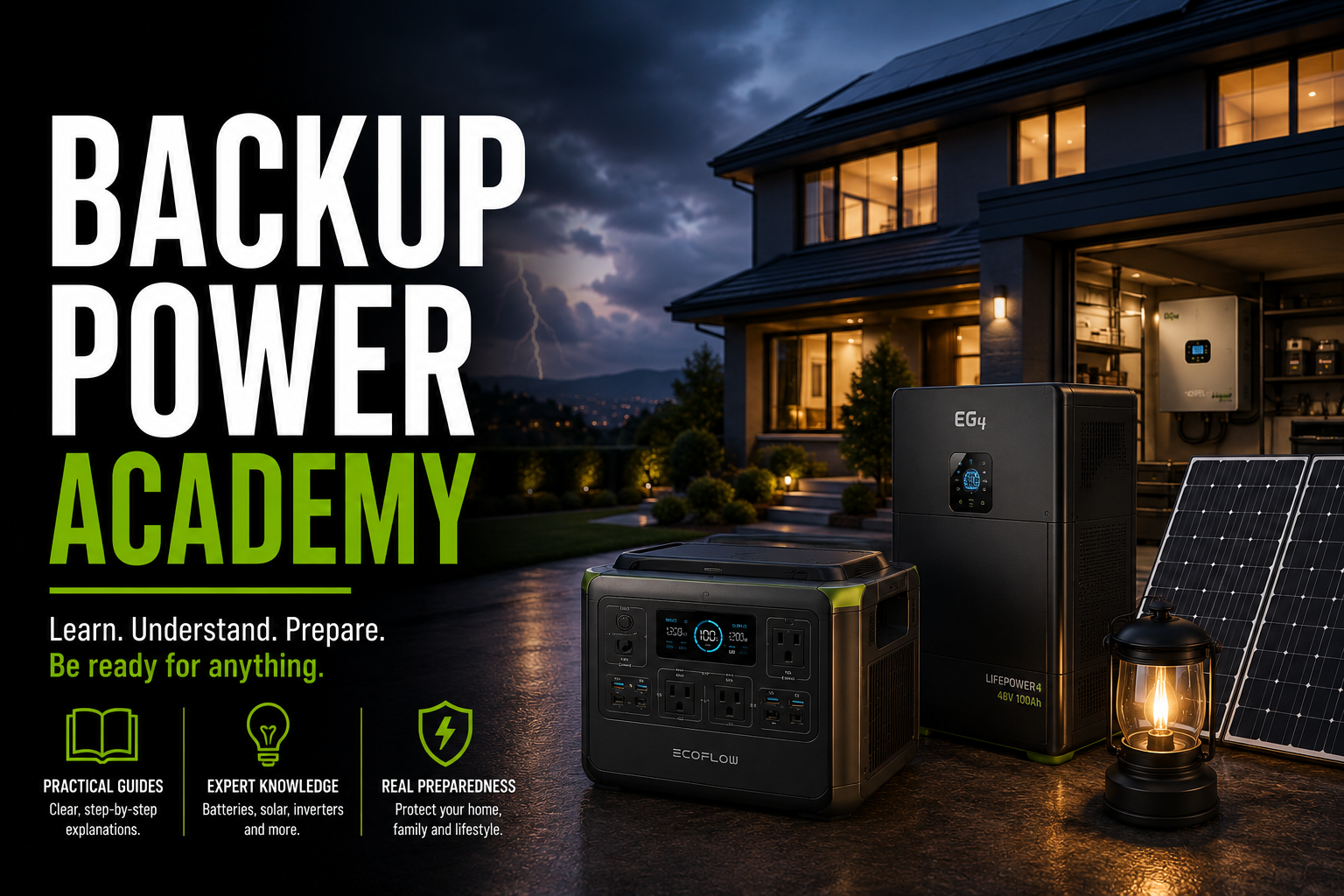
Whole-house batteries combine 120/240V output, automatic transfer, solar integration and scalable energy storage, but installer design is as important as the battery brand.
A whole-house system must be sized for both the largest simultaneous loads and the desired outage duration.
The best platforms serve different solar architectures and installer ecosystems.
Best Integrated System: Tesla Powerwall 3
Its 13.5kWh capacity and up to 11.5kW continuous U.S. output make one unit capable of supporting many homes, subject to load design.
Editor's Verdict
Choose the installer and system design together. Obtain multiple site-specific proposals before comparing final cost.
Top Picks
Tesla Powerwall 3
13.5kWh battery with up to 11.5kW continuous U.S. output and integrated solar inverter.
Enphase IQ Battery 5P
5.0kWh usable AC-coupled battery with 3.84kW continuous output per unit.
FranklinWH aPower System
Installed home battery platform with whole-home controls and generator integration options.
Quick Comparison
| Model | Capacity | Output | Best Use |
|---|---|---|---|
| Tesla Powerwall 3 | 13.5kWh | Up to 11.5kW | Best integrated |
| Enphase IQ Battery 5P | 5.0kWh | 3.84kW | Best modular |
| FranklinWH aPower | Installed system | Project-specific | Best alternative |
Tesla Powerwall 3
13.5kWh battery with up to 11.5kW continuous U.S. output and integrated solar inverter.
Powerwall 3 combines battery storage, high output and solar integration in a widely recognized installed platform.
Why It Stands Out
- High output
- 13.5kWh capacity
- Integrated inverter
- App control
- Expansion modules
What to Consider
- Professional installation
- Installer availability
- Premium project cost
- Proprietary ecosystem
Best for: whole-home solar and backup.
Enphase IQ Battery 5P
5.0kWh usable AC-coupled battery with 3.84kW continuous output per unit.
IQ Battery 5P uses embedded grid-forming microinverters and scales in 5kWh increments.
Why It Stands Out
- Modular
- Strong peak per 5kWh
- Microinverter architecture
- App ecosystem
- Good retrofit fit
What to Consider
- Multiple units for long runtime
- Professional installation
- Enphase ecosystem dependency
- Project cost
Best for: Enphase solar and modular retrofits.
FranklinWH aPower System
Installed home battery platform with whole-home controls and generator integration options.
FranklinWH is commonly considered for whole-home projects that need flexible load management and installer-designed integration.
Why It Stands Out
- Whole-home controls
- Solar and generator integration
- App management
- Expandable project design
- Installer network
What to Consider
- Quote required
- Professional installation
- Regional availability
- Project complexity
Best for: custom whole-home backup projects.
How to Choose
Complete a Load Study
Identify essential and heavy circuits.
Separate kW and kWh
Power and runtime are different.
Get Multiple Installer Quotes
Design quality matters.
Check Incentives
Tax and utility rules change.
Plan Solar and Generator Integration
Not every battery supports both.
Review Warranty Throughput
Years alone are not enough.
Frequently Asked Questions
Who should buy a whole-house battery system?
Buy it when the system's continuous output, startup capability, usable capacity and charging method match the actual loads you need to protect.
Who should skip a whole-house battery system?
Skip it when the product is being chosen from headline watt-hours alone or when installation, medical, electrical or building rules make another solution more appropriate.
How should runtime be estimated?
Multiply rated watt-hours by roughly 0.80 to 0.90 for usable AC energy, then divide by the appliance's average running watts.
Why do starting watts matter?
Compressors, pumps and motors can draw several times their normal running power for a short period, so the inverter must handle both continuous and surge demand.
Is LiFePO4 better for frequent use?
LiFePO4 generally offers longer cycle life and strong thermal stability, making it attractive for systems that will be charged and discharged regularly.
Can solar panels recharge the system during an outage?
Yes when the panel voltage, current, polarity and connector match the power station's input limits and sunlight is adequate.
Can a power station be connected directly to a home panel?
Only through manufacturer-approved transfer equipment and qualified installation. Never backfeed a receptacle.
How much reserve capacity should be planned?
A 20% to 30% reserve helps cover inverter losses, cold weather, battery aging and loads that cycle unpredictably.
Should price be compared per watt-hour?
Cost per watt-hour is useful, but output, charging speed, warranty, battery chemistry and accessory compatibility can matter more.
What is the most common buying mistake?
Buying a unit that has enough stored energy but not enough continuous or surge output for the intended appliance.
How many kilowatt-hours does a house need?
It depends on daily consumption and which circuits are backed up; many projects use 10–30kWh or more.
Can one battery run central air conditioning?
Only when the battery's continuous and motor-starting output match the exact HVAC equipment.
Does a whole-house battery require permits?
Typically yes, along with utility and code-compliant installation requirements.