
Best Solar Panels for Solar Generators
The best panel must match the power station’s voltage, current, connector, input limit and intended travel use.
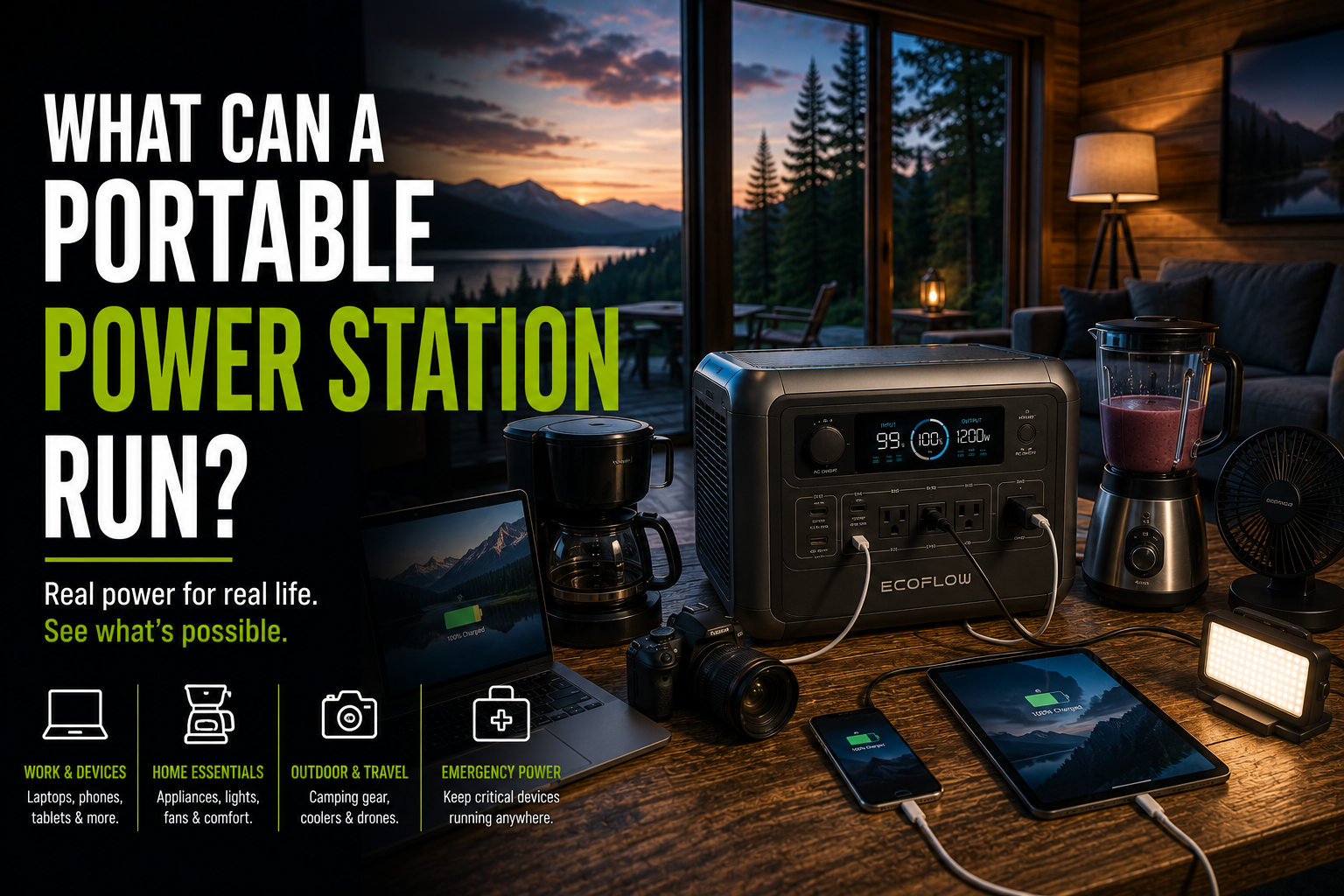
The best panel must match the power station’s voltage, current, connector, input limit and intended travel use.
Rated wattage alone does not determine compatibility or real charging speed.
This guide compares current 200W-class portable panels because they offer the strongest balance of portability and daily energy for most 500–1,500Wh systems.
Jackery SolarSaga 200W Is Best Overall; Anker PS200 Is the Lightest
Choose Jackery for polished portability, Anker for low carried weight and MC4 output, Renogy for value, BLUETTI for ecosystem fit and Goal Zero for rugged folded storage.
Editor's Verdict
Jackery SolarSaga 200W is the best overall portable panel. Anker PS200 Bifacial is the best choice when weight and MC4 flexibility matter most.
Best Solar Panels for Solar Generators
Jackery SolarSaga 200W
200W, IP68 and about 14.3 pounds.
Anker SOLIX PS200 Bifacial
200W, 10.6 pounds and IP68 protection.
Renogy E.Flex 200W
200W portable panel with common off-grid compatibility.
BLUETTI SP200L
200W with up to 23.4% stated conversion efficiency.
Goal Zero Nomad 200
200W folding panel that collapses to one-quarter of full size.
Portable Solar Panel Comparison
| Panel | Rated Power | Weight / Format | Protection | Best For |
|---|---|---|---|---|
| Jackery SolarSaga 200W | 200W | 14.3 lb | IP68 | Best overall |
| Anker PS200 Bifacial | 200W | 10.6 lb | IP68 | Lightweight |
| Renogy E.Flex 200W | 200W | Foldable | Model dependent | Value |
| BLUETTI SP200L | 200W | Foldable | Outdoor portable | BLUETTI systems |
| Goal Zero Nomad 200 | 200W | Quarter-fold | Portable | Goal Zero systems |
1. Jackery SolarSaga 200W
200W, IP68 and about 14.3 pounds.
SolarSaga 200W combines strong portability, current-generation efficiency and direct compatibility with Jackery systems.
Its DC8020 connector makes it most convenient inside the Jackery ecosystem, though adapters may support other stations when voltage and current match.
Why It Stands Out
- Light for 200W
- IP68 rating
- High stated efficiency
- Integrated kickstand
- Strong documentation
What to Consider
- Premium price
- Connector is ecosystem-oriented
- Large unfolded footprint
- Real output below rated power
Best for: portable 1kWh Jackery systems and frequent travel.
2. Anker SOLIX PS200 Bifacial
200W, 10.6 pounds and IP68 protection.
PS200 Bifacial is unusually light for a 200W panel and uses MC4 cabling for broad system flexibility.
The 48V operating point must remain inside the connected station’s solar input range.
Why It Stands Out
- Very light
- Bifacial design
- MC4 output
- IP68 rating
- Compact fold
What to Consider
- Voltage compatibility matters
- Premium cost
- Bifacial gain depends on surface
- Frame can become hot
Best for: camping, RV travel and users who value low panel weight.
3. Renogy E.Flex 200W
200W portable panel with common off-grid compatibility.
Renogy’s E.Flex 200W is a practical value choice for users who want broader connector flexibility rather than a single-brand accessory.
Its actual compatibility depends on open-circuit voltage, operating voltage, current and adapter choice.
Why It Stands Out
- Good value
- Common solar format
- Portable
- Broad off-grid appeal
- Useful 200W class
What to Consider
- Verify connectors
- Less integrated than OEM panels
- Weather rating varies by revision
- Kickstand quality matters
Best for: mixed-brand systems and budget-conscious RV owners.
4. BLUETTI SP200L
200W with up to 23.4% stated conversion efficiency.
SP200L is a natural fit for BLUETTI power stations and provides enough panel power for 500–1,000Wh systems.
Its value is strongest when bundled or purchased during a brand promotion.
Why It Stands Out
- Good ecosystem fit
- Portable
- Strong efficiency claim
- Simple deployment
- Useful wattage
What to Consider
- Price varies
- Heavier than ultralight panels
- Verify input connectors
- Real output depends on sun
Best for: BLUETTI AC-series stations.
5. Goal Zero Nomad 200
200W folding panel that collapses to one-quarter of full size.
Nomad 200 is designed for large portable-power needs where compact folded storage matters.
Its price is high compared with newer 200W competitors, making it most compelling for existing Goal Zero users.
Why It Stands Out
- Compact folded size
- Established ecosystem
- Rugged design
- Portable
- Strong support network
What to Consider
- Expensive
- Heavy relative to newer designs
- Proprietary ecosystem
- Lower value for mixed-brand users
Best for: Goal Zero Yeti owners and rugged travel.
How to Match a Panel to a Solar Generator
Check Open-Circuit Voltage
Voc must stay below the power station’s maximum input voltage.
Check Operating Current
Do not exceed the input current limit.
Match Connector Type
MC4, XT60, DC8020 and proprietary plugs may need adapters.
Size Panel Wattage
Panel power should match battery size and available sun.
Review Weather Rating
Portable does not automatically mean rainproof.
Plan Series or Parallel Carefully
Combined voltage and current must remain inside the input window.
Frequently Asked Questions
Can any solar panel charge any solar generator?
No. Voltage, current, polarity and connector compatibility must all match.
Is 200W enough for a 1kWh battery?
It can work, but full recovery may require most of a good solar day.
Why do panels produce less than rated power?
Sun angle, temperature, shade, clouds and cable loss reduce output.
Are portable panels waterproof?
Ratings vary; follow the exact IP rating and manufacturer instructions.
Can I combine panels?
Yes only when the power station’s voltage and current limits are respected.
Is MC4 more universal?
It is common in solar systems, but the power station may still need an adapter.