
Best Jackery Accessories
The best Jackery accessory depends on the limitation you need to solve: runtime, solar charging, transport protection or connection flexibility.
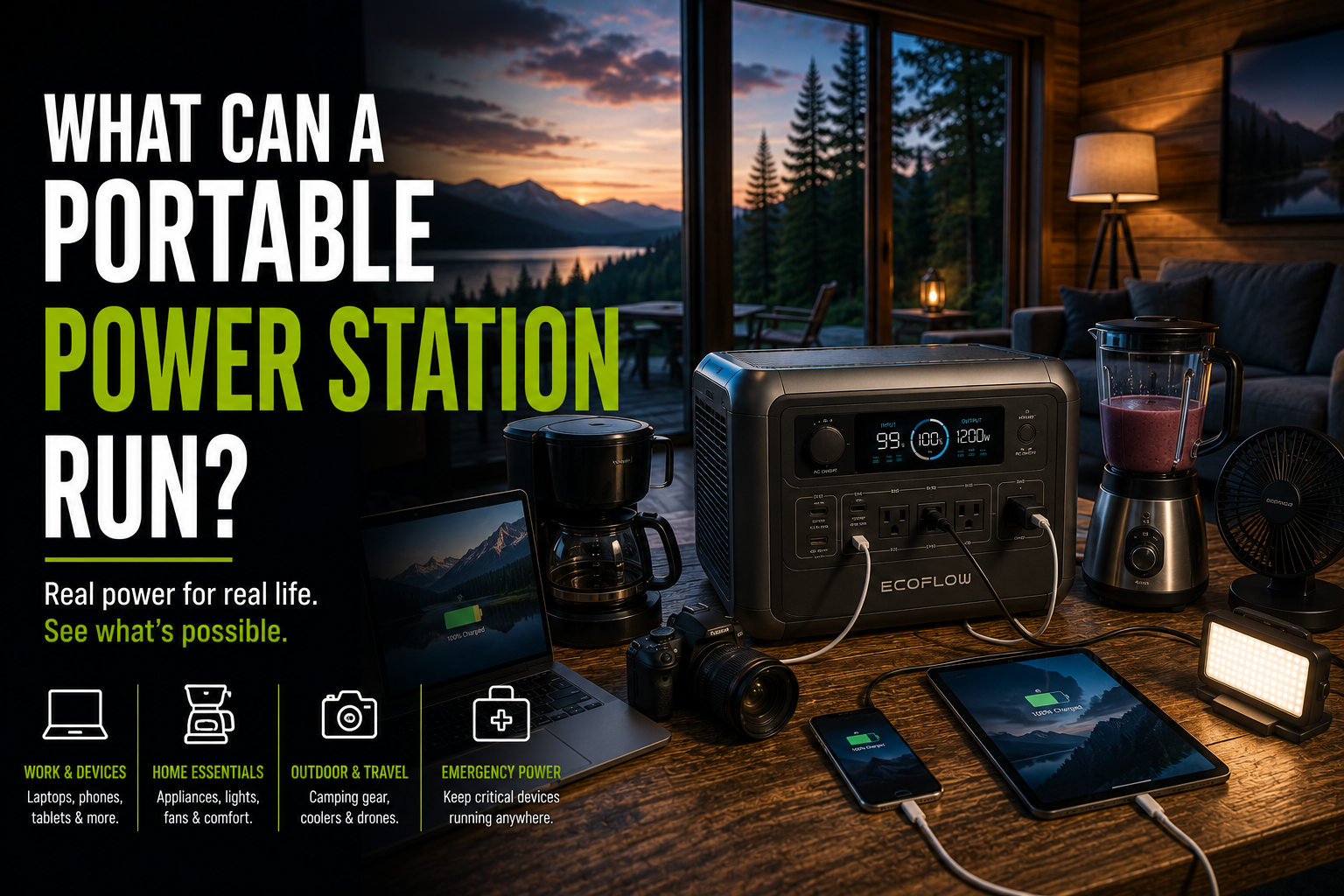
The best Jackery accessory depends on the limitation you need to solve: runtime, solar charging, transport protection or connection flexibility.
Expansion batteries create the largest capability increase, while SolarSaga panels are the most useful off-grid accessory.
Accessory compatibility is highly model-specific, so verify the exact Explorer generation before ordering.
Expansion Batteries Add Runtime; SolarSaga Adds Independence
Buy a compatible extra battery for long outages, a SolarSaga panel for camping or emergencies, and a fitted case for frequent transport.
Editor's Verdict
The best first accessory is a solar panel for off-grid users and an expansion battery for home-backup users. Cases and adapters come afterward.
Best Jackery Accessories
| Accessory | Purpose | Best For |
|---|---|---|
| Battery Pack 1000 Plus | Adds 1264Wh | Explorer 1000 Plus |
| Battery Pack 2000 Plus | Adds 2042.8Wh | Explorer 2000 Plus |
| SolarSaga 100W/200W | Off-grid charging | Camping and outages |
| Carrying Case | Dust and transport protection | Frequent travel |
| DC extension/charging cable | Panel positioning | Solar setups |
| RV and power-conversion accessories | Vehicle integration | RV owners |
Expansion Batteries
Expansion packs add the most runtime but are also the most expensive and least universal accessories. Buy only after confirming model compatibility and expected stationary use.
Solar Panels
SolarSaga panels offer integrated stands and predictable compatibility. Compare folded size, weight, rated power and real solar-input limits.
Cases and Protection
Cases help with dust and transport but should not remain closed around an operating or charging power station because airflow is required.
What to Buy First
Buy Solar First
For multi-day off-grid use.
Buy Expansion First
For long household runtime.
Buy a Case
For frequent transport.
Buy Cables Carefully
Connector generations differ.
Skip Unneeded Adapters
Reduce clutter and compatibility risk.
Compare Bundles
Accessory bundles can save money.
Frequently Asked Questions
Who should buy Jackery accessories?
It is best for buyers whose required runtime, appliance output and portability match its capacity class. Compare actual simultaneous loads rather than buying from capacity alone.
Who should skip Jackery accessories?
Skip it if you need much longer runtime, substantially higher output, 240V service or a lighter unit. A different size class will provide better value.
How should runtime be estimated?
Multiply rated watt-hours by roughly 0.80–0.90 for usable AC energy, then divide by average load watts. Cycling appliances require average duty-cycle estimates.
Can it run a refrigerator?
Usually, provided continuous output and compressor surge are within limits. Runtime varies by refrigerator efficiency, temperature and cycling.
Can it be charged from solar panels?
Yes when panel voltage, current, connector and total wattage remain inside the power station’s solar-input limits.
Does it work as a UPS?
Supported models can switch to battery during an outage, but transfer time and device compatibility should be checked for the exact unit.
How should it be stored?
Store it cool and dry, avoid prolonged extreme temperatures and recharge periodically according to Jackery guidance.
How long will the battery last?
Current LFP models are commonly rated around 4,000 cycles to 70% remaining capacity, but heat, depth of discharge and storage habits affect real aging.
Are Jackery extra batteries universal?
No. Expansion batteries are model-specific, and cables or generations are not automatically interchangeable.
What is the most common buying mistake?
Choosing from advertised capacity without checking appliance surge, charging speed, weight, solar limits and expansion compatibility.
Can the 1000 Plus battery work with 2000 Plus?
No. Expansion packs are designed for specific models.
Can third-party solar panels be used?
Often yes when voltage, current, polarity and connector requirements match, but official panels reduce compatibility uncertainty.