
Are Zendure Power Stations Worth It?
Zendure is worth considering for buyers who need SuperBase V’s large expansion, high solar input, 120/240V capability or unusual semi-solid-state battery option.
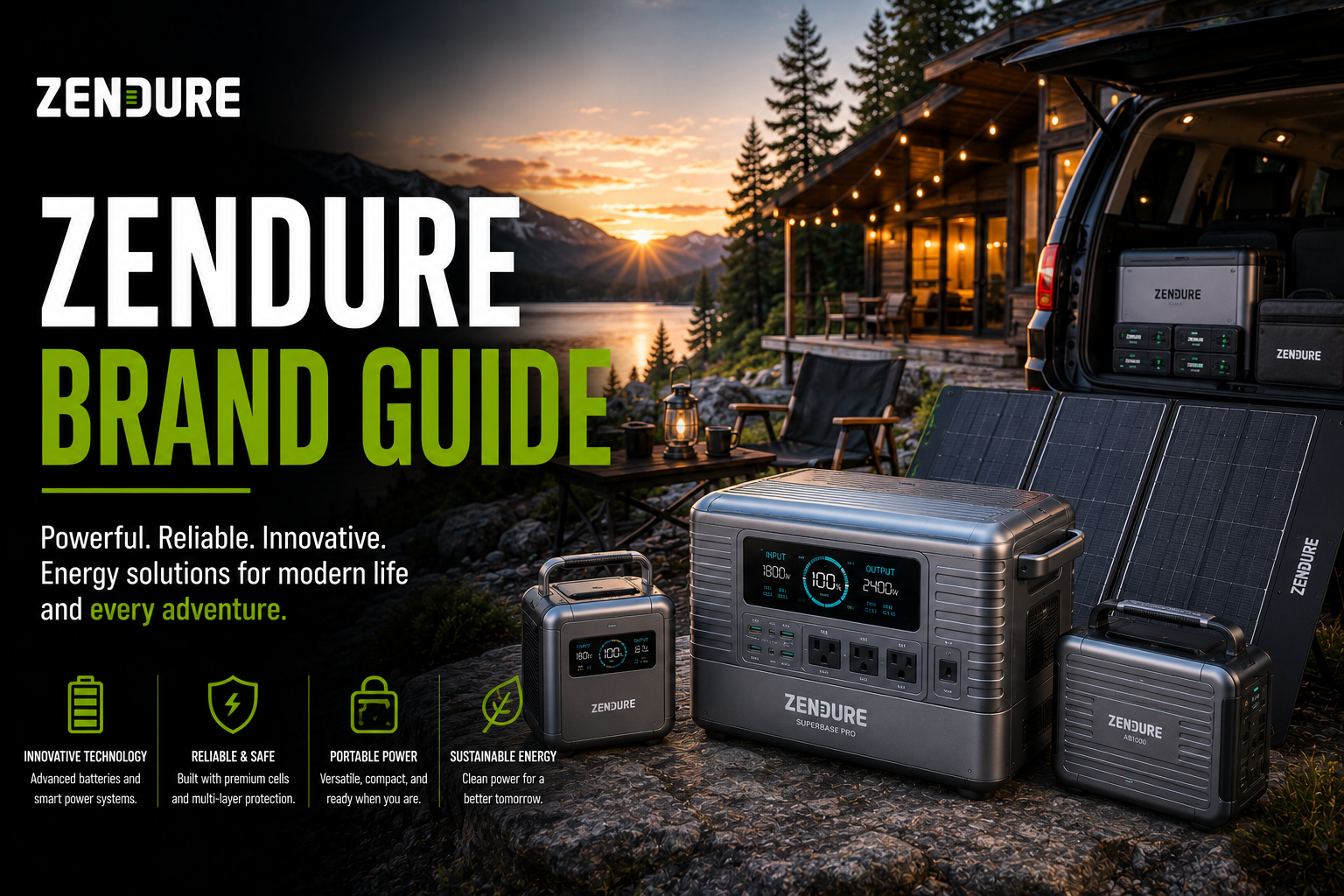
Zendure is worth considering for buyers who need SuperBase V’s large expansion, high solar input, 120/240V capability or unusual semi-solid-state battery option.
Zendure’s value is strongest at the specialized home-energy end of the market, not in routine portable-power shopping.
The brand’s ambitious engineering must be weighed against availability, platform fragmentation and proprietary-system risk.
Worth It for Specialized Home Systems, Less So for Casual Portable Use
SuperBase V can justify its cost for large home or off-grid projects. SuperBase Pro is harder to recommend when newer 2kWh rivals offer more output and easier availability.
Editor's Verdict
Zendure is worth buying when its unique architecture solves a defined need. Mainstream buyers should compare EcoFlow, Jackery and BLUETTI for simpler ownership.
Where Zendure Creates Real Value
SuperBase V Scale
Few rivals advertise up to 64kWh in one modular family.
Battery Choice
LFP longevity or semi-solid-state energy density.
High Solar Input
SuperBase V accepts up to 3,000W.
120/240V Capability
Designed for broader household loads.
Zero-Downtime Claim
US AC output claims 0ms UPS switching.
SolarFlow Innovation
Separate plug-in household-storage ecosystem.
Where Zendure Ownership Becomes Difficult
Availability
Portable stations are frequently sold out.
Regional Product Focus
SolarFlow is more developed in Europe.
Platform Fragmentation
SuperBase and SolarFlow are distinct.
Accessory Commitment
Batteries and home hardware are proprietary.
Installation Cost
Home Panel requires qualified installation.
Support Risk
A smaller installed base can complicate long-term ownership.
When the Premium Makes Sense
Zendure is worth a premium when SuperBase V’s scale, chemistry options and 3,000W solar input solve a specific home-backup problem. Paying that premium for ordinary camping power is harder to justify against widely available rivals.
Best Buyers
Large-Home Backup Planners
Need multi-battery expansion.
Technology Early Adopters
Want semi-solid-state cells.
Off-Grid Users
Can use 3,000W solar input.
Existing Zendure Owners
Already understand the ecosystem.
European SolarFlow Users
Need plug-in storage.
Not Casual Buyers
Simple weekend users have easier options.
What Matters in Real-World Use
The right way to judge whether are zendure power stations worth it are worth it is to compare the features you will actually use against a simpler system that can cover the same loads. Fast charging, expansion support, solar input, app controls and ecosystem accessories can add real value, but only when they solve a recurring problem rather than simply looking impressive on a specification sheet.
Start with the job. List the appliances or electronics that must run at the same time, note their continuous watts and startup surges, and estimate how many hours of runtime you need. That tells you whether the product family is appropriately sized before brand preference enters the decision.
Then price the complete setup. Expansion batteries, solar panels, proprietary cables, transfer hardware and accessories can materially change total ownership cost. A discounted base unit is not automatically the better value if the configuration needed for your use costs substantially more after add-ons.
Convenience should count too. Quiet operation, fast recharge, portability and automatic backup behavior can be worth paying for when they reduce real friction. For occasional emergency use, though, a less feature-rich system that meets the same output and runtime target may be the smarter purchase.
A Better Way to Decide
1. Define simultaneous loads
List the devices that need to run together. Use continuous watts for the base load and allow for motor/compressor startup surges.
2. Set a runtime target
Convert the planned hours of use into a watt-hour requirement, then leave reserve for inverter losses and real-world variation.
3. Compare the complete configuration
Include expansion batteries, solar panels, adapters, cables and other hardware required for the intended job.
4. Price convenience realistically
Weight, noise, recharge time, automation and ecosystem support are worth paying for only when they remove a real inconvenience.
Common Buying Mistakes to Avoid
Frequently Asked Questions
Who should buy a Zendure power station?
Buy it when Zendure’s specific strength—compact portability, connected 2kWh mobile power or modular whole-home expansion—matches the system you actually intend to build.
Who should skip a Zendure power station?
Skip it when broad retail availability, a simpler accessory ecosystem or a lighter mainstream portable station matters more.
How should Zendure runtime be estimated?
Use rated watt-hours multiplied by roughly 0.80 to 0.90 for practical AC energy, then divide by the average load in watts.
Can Zendure power a refrigerator?
SuperBase Pro 2000 and both SuperBase V versions can generally handle refrigerator running and startup power when the appliance remains within inverter limits.
Can Zendure charge from third-party solar panels?
SuperBase V supports third-party panels within its published 12V to 150V input range and current limits; other models require their own manual checks.
Can Zendure work as a UPS?
SuperBase V’s US AC output claims 0ms transfer, while other connections and regions may see under 13ms. SuperBase Pro behavior should be checked by exact model.
How should a Zendure system be stored?
Keep it dry, ventilated and within the manufacturer’s temperature limits. Maintain battery charge according to the exact chemistry and manual.
How long do Zendure batteries last?
Zendure lists 6,000+ cycles for SuperBase V4600 LFP and 3,000+ for V6400 semi-solid-state. Other models have different ratings.
Are Zendure batteries interchangeable?
No. SuperBase V4600 and V6400 chemistries cannot be mixed, and SolarFlow AB batteries are a separate ecosystem.
What is the biggest Zendure buying mistake?
Treating Zendure as one unified accessory platform. SuperBase Pro, SuperBase V and SolarFlow products serve different use cases and use different batteries.
Is SuperBase V worth the cost?
Yes for large expandable home backup; no for buyers who only need portable camping power.
Should I worry about availability?
Yes. Confirm current stock, support region and accessory availability before committing.