
Best Backup Power for Well Pumps: Top Battery Systems and Generator Options
If your home relies on a private well, a power outage can stop your water supply even when the rest of the house seems manageable. Choosing backup power for a well pump is more complicated than buying a large portable battery: the system must supply the correct voltage, handle motor startup and store enough energy for your household's water needs.
We compare four substantial 120/240V battery systems and explain when a properly sized dual-fuel generator may be the better solution.
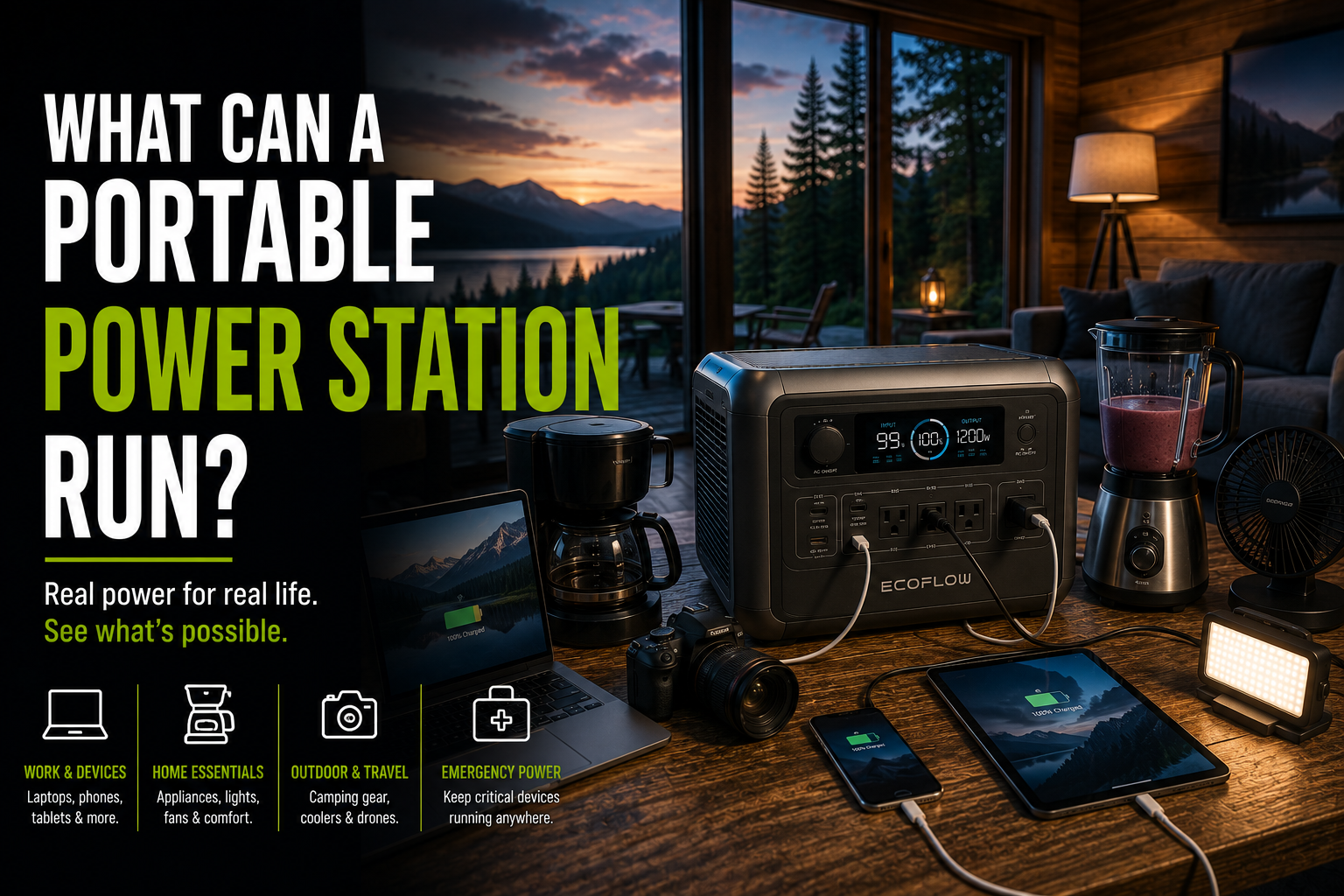
Our recommendation: For a demanding 240V well pump, the EcoFlow DELTA Pro Ultra is a strong overall battery option thanks to its 7,200W continuous output, 120/240V support and expandable storage. The Anker SOLIX F3800 offers another compelling single-unit 240V solution. The Jackery Explorer 5000 Plus deserves consideration for higher-output modular backup, while the EcoFlow DELTA Pro 3 is better suited to smaller, verified motor loads.
For outages lasting several days without reliable solar recharging, a correctly sized dual-fuel generator may provide better endurance per dollar. None of these recommendations guarantees that a particular well pump will start: the pump's actual motor specifications must be checked first.
Quick Verdict: Which Backup System Should You Choose?
Best overall battery platform — EcoFlow DELTA Pro Ultra: A 7,200W, 120/240V system with 6,144Wh starting capacity and modular expansion. Best for homeowners building a substantial backup system around verified electrical loads.
Best single-unit 240V alternative — Anker SOLIX F3800: Delivers 6,000W continuous 120/240V output from one unit, with a 3,840Wh battery and expansion options.
Best high-output modular alternative — Jackery Explorer 5000 Plus: Provides 7,200W continuous output, 5,040Wh battery capacity and a supported home-transfer ecosystem.
Best smaller 240V platform — EcoFlow DELTA Pro 3: Offers 4,000W continuous output and 4,096Wh capacity, but its 240V outlet has a specific 16.7A limit. It should be selected only when the pump's starting requirements are confirmed compatible.
Best for extended outages — Properly sized dual-fuel generator: A practical alternative when refueling is easier than recharging a large battery bank. Generator voltage, running output, motor-starting capability and transfer equipment still require verification.
Why Well Pumps Need Different Backup Power
Well pumps are motor-driven loads. Unlike a phone charger or LED light, a pump can demand substantially more current when its motor starts than when it is already running.
Three electrical characteristics determine whether a backup system is suitable:
Correct Output Voltage
Many residential submersible well pumps operate at approximately 230V, commonly supplied by a nominal 240V residential circuit. Others use 115V or specialized motor controls. A 120V-only power station cannot directly operate a conventional 240V pump.
Enough Starting Capability
A pump motor may briefly demand several times its normal running current. The backup inverter or generator must handle that demand without tripping or allowing excessive voltage sag.
Sufficient Stored Energy
After the pump starts, battery runtime depends on its actual electrical consumption, duty cycle and the capacity available for AC loads.
Safe Circuit Connection
Most permanently wired pumps need an appropriately rated transfer switch, interlock or listed home-integration system installed for the electrical configuration.
Best Well-Pump Backup Power Systems Compared
These specifications are for the North American configurations described in the manufacturers' published documentation. Battery capacity and AC output are different ratings.
| Backup System | Continuous AC Output | 240V Support | Starting Battery | Primary Advantage |
|---|---|---|---|---|
| EcoFlow DELTA Pro Ultra | 7,200W | Yes, up to 30A on specified output | 6,144Wh | High output and expandable home backup |
| Anker SOLIX F3800 | 6,000W | Yes, 120/240V split phase | 3,840Wh | 240V from one power station |
| Jackery Explorer 5000 Plus | 7,200W | Yes, specified 240V outputs | 5,040Wh | High output and modular expansion |
| EcoFlow DELTA Pro 3 | 4,000W total | Yes, 16.7A on 240V output | 4,096Wh | Smaller expandable platform |
| Dual-fuel generator | Model dependent | Only on suitably equipped models | Fuel dependent | Refuelable operation during long outages |
Continuous output ratings are manufacturer specifications, not measured pump-starting results. Expansion requires compatible equipment. Always check individual outlet limits and supported installation configurations.
How to Size Backup Power for Your Well Pump
Start with the pump, not the battery or generator. A system that works for one 1/2-horsepower pump may fail with another because motor design, pump depth, controls and startup behavior differ.
Identify the Pump's Actual Electrical Rating
Find the pump or control-box nameplate, installation manual or original well-system records. Record the rated voltage, horsepower, full-load current, motor type and any specified locked-rotor or starting current.
If the pump is submerged and its nameplate is inaccessible, a well contractor may be able to identify it from service records or control-box markings.
Determine Starting Demand
Use the manufacturer's motor-starting data or have a qualified technician measure the actual starting behavior with suitable instrumentation. Do not rely on horsepower alone or assume every pump starts at the same multiple of running current.
Verify 240V Output and Receptacle Limits
For a 240V pump, check the actual 240V output rating—not the combined total of unrelated 120V receptacles. Confirm available current and whether the backup device supports the intended transfer arrangement.
Calculate Energy Needed Between Recharges
Estimate the pump's actual running watts and total minutes of operation per day. Add energy for any pressure controls, treatment equipment or other loads that must operate with the pump.
Have the Connection Method Reviewed
A qualified electrician should determine whether a listed transfer switch, approved interlock or manufacturer-supported home backup panel is appropriate. The installation must prevent utility backfeeding and respect circuit, grounding and neutral requirements.
Running Watts Are Not Starting Watts
As a simplified example, suppose a pump draws 8A at 240V while running. Multiplying voltage by current gives 1,920 volt-amperes (VA), not necessarily 1,920 real watts. Motor power factor means the actual real power may be lower.
During startup, current can be substantially higher. The backup source must tolerate the motor's starting apparent-power demand and resulting voltage behavior. A battery inverter's advertised surge-watt figure cannot automatically be treated as a guaranteed motor-starting VA rating.
What About 1/2 HP, 3/4 HP and 1 HP Well Pumps?
Horsepower describes mechanical output, not the electrical input needed at the moment of startup. A 1 HP motor represents approximately 746W of mechanical output at rated conditions, but the electrical input is higher because the motor is not 100% efficient.
Two pumps with the same horsepower can have different starting characteristics. A constant-pressure system with a variable-frequency drive may also behave differently from a conventional across-the-line motor.
For that reason, avoid generic claims such as “a 3,000W generator runs any 1 HP well pump.” The pump's voltage, full-load current, locked-rotor data and control system are more useful than a universal wattage chart.
Detailed Reviews: Best Backup Power Options for Well Pumps
1. EcoFlow DELTA Pro Ultra
For substantial 240V well-pump backup and expandable household storage.
The EcoFlow DELTA Pro Ultra combines a high-output inverter with a substantial LiFePO4 battery. Its published specifications identify 7,200W continuous AC output, 10,800W surge output and a 120/240V receptacle rated up to 30A in its supported configuration.
The base system includes a 6,144Wh battery. Additional compatible batteries can expand storage, making the platform relevant for homes where well-pump operation is only one of several essential electrical needs.
Its major advantage is the combination of 240V capability, battery expansion and supported home integration. A properly designed installation can also prioritize other essential circuits, such as refrigeration or selected lighting.
However, the system is heavy, expensive to expand and requires careful electrical planning. Its 7,200W rating does not prove that it can start every deep-well pump. The manufacturer's 240V outlet current limit and the motor's starting requirements still govern compatibility.
- Native 120/240V AC capability
- 7,200W continuous output
- 6,144Wh starting battery capacity
- Expandable energy storage
- Manufacturer-supported home integration options
- Higher initial system cost
- Large, heavy components
- Electrical installation may add substantial cost
- Motor startup must be verified separately
- Not all backup modes have identical outlet behavior
Who should choose it: Homeowners who need substantial 240V backup, want to expand storage and are willing to plan a professionally installed system.
Who should avoid it: Buyers who only need to operate a small 120V pump or who cannot justify the cost of a large modular backup platform.
Check Price2. Anker SOLIX F3800
Strong split-phase output with modular battery expansion.
The Anker SOLIX F3800 is particularly relevant for well-pump backup because the North American model provides 120/240V split-phase output from a single power station. Its published specifications include 6,000W continuous AC output, a 9,000W surge rating and 3,840Wh of LiFePO4 battery storage.
Its 240V outlets include NEMA 14-50 and L14-30 connections. That makes it more suitable for evaluating a conventional 240V pump circuit than a portable station equipped only with 120V outlets.
One limitation deserves special attention: Anker states that the F3800's 240V output cannot be used while the device is charging from a 120V AC source. This could affect a backup design that depends on simultaneous charging and pump operation.
The F3800 supports compatible expansion batteries, so homeowners can increase energy storage without necessarily replacing the inverter platform.
- 6,000W continuous AC output
- Native 120/240V split-phase output
- 3,840Wh LiFePO4 battery
- Compatible battery expansion
- Useful 240V receptacle options
- Smaller starting battery than DELTA Pro Ultra
- Approximately 132 lb
- 240V charging-mode restriction
- Starting surge must match the pump
- Home integration equipment may be required
Who should choose it: Buyers seeking a substantial 240V battery inverter with a smaller starting battery than the largest modular systems.
Who should avoid it: Homeowners whose installation requires uninterrupted 240V output during 120V AC recharging, unless an approved alternative charging configuration resolves that requirement.
Check Price3. Jackery Explorer 5000 Plus
High continuous output with supported 240V home backup accessories.
The Jackery Explorer 5000 Plus is another serious candidate for 240V well-pump backup. Jackery specifies 5,040Wh of LiFePO4 storage, 7,200W continuous output and a 14,400W peak surge rating.
Its North American output configuration includes 120/240V receptacles, and Jackery offers compatible home transfer equipment. The platform also supports expansion batteries for households requiring longer backup periods.
For well-pump owners, the primary benefit is its substantial 240V capability. However, a high published surge rating still does not guarantee that a specific motor will start successfully. The electrical installation and the pump's actual starting behavior must be evaluated.
Jackery's technical documentation also identifies restrictions during simultaneous charging and discharging. In certain split-outlet charging modes, the 240V ports are unavailable. That matters when designing a system expected to operate the pump while recharging.
- 7,200W continuous output
- 5,040Wh starting capacity
- 120/240V support
- Expandable battery system
- Compatible transfer-switch ecosystem
- Large and heavy
- Expansion increases total cost
- 240V output has charging-mode restrictions
- Motor compatibility is not automatic
- Transfer equipment may require professional installation
Who should choose it: Homeowners comparing substantial 240V battery backup systems and prioritizing a modular home integration platform.
Who should avoid it: Buyers seeking a small, inexpensive backup for a basic low-wattage pump.
Check Price4. EcoFlow DELTA Pro 3
A more compact alternative when the pump's electrical demand is verified.
The EcoFlow DELTA Pro 3 provides 4,000W total continuous output and 4,096Wh of LiFePO4 storage. Its North American specifications include 120/240V AC capability, with a 240V output rating of 16.7A.
That 240V current limit is crucial. Although 4,000W is a substantial continuous output rating, a well pump with demanding startup current may still exceed the inverter's supported behavior.
The DELTA Pro 3 is therefore a better candidate for smaller pumps with documented compatible starting requirements than for an unknown deep-well installation.
Its modular expansion capability also makes it attractive for users who want to begin with a smaller system and increase energy storage later. Expansion improves runtime but does not automatically increase a single unit's inverter starting capability.
- 4,096Wh LiFePO4 battery
- 120/240V AC output
- Expandable storage
- Smaller than many high-output home systems
- Useful for verified moderate loads
- 240V output limited to 16.7A
- Less inverter headroom than larger systems
- Not suitable for every motor-starting load
- Requires compatible electrical integration
Who should choose it: Homeowners with a documented lower-demand pump and a desire for expandable battery backup.
Who should avoid it: Anyone with an unknown or high-starting-current well pump who has not verified the electrical requirements.
Check Price5. Properly Sized Dual-Fuel Generator
Refuelable backup for homes where extended water access is essential.
A dual-fuel generator can be the more practical choice for homeowners who regularly experience multi-day outages and cannot reliably recharge a large battery system.
Instead of relying on a fixed battery reserve, a generator can continue operating while adequate fuel is available and the equipment is maintained. Propane storage may also be useful for emergency planning, although fuel consumption, available output and cold-weather performance vary by generator.
For a conventional 240V well pump, select a generator with a genuine 120/240V output configuration, adequate continuous capacity and sufficient motor-starting performance. Many smaller portable generators provide only 120V.
Generator ratings also change with fuel type. A dual-fuel unit may produce less continuous and starting power on propane than on gasoline, so sizing must use the rating for the fuel you actually intend to use.
- Refuelable during extended outages
- Potentially lower cost for long-duration energy needs
- Many models offer 120/240V output
- Can support additional household loads when correctly sized
- Carbon monoxide hazard
- Outdoor placement is mandatory
- Noise, maintenance and fuel storage
- Output varies by model and fuel
- Safe transfer equipment is still required
Who should choose it: Homeowners planning for extended outages where reliable fuel supplies are available and outdoor generator operation is feasible.
Who should avoid it: Buyers who cannot safely operate a generator outdoors or who require silent, emissions-free indoor energy storage.
Compare Current OptionsHow Long Can a Battery Run a Well Pump?
A well pump typically operates intermittently. It fills the pressure tank until the pressure switch reaches its cut-out setting, then stops until household water use causes pressure to fall.
This makes daily energy use more relevant than simply dividing battery capacity by the pump's running watts and assuming it operates continuously.
Illustrative Runtime Calculation
Suppose a pump consumes an average of 1,500 real watts while running and operates for a total of 45 minutes per day.
1,500W × 0.75 hours = 1,125Wh per day.
Estimated battery energy required:
1,125Wh ÷ 0.85 = approximately 1,324Wh of nominal battery capacity per day.
The 85% assumption is an illustrative allowance for conversion losses and usable energy. Actual results vary by inverter efficiency, standby consumption, battery operating conditions and pump behavior.
Under those assumptions, the following estimates illustrate battery endurance if the pump is the only significant connected load:
| System | Nominal Battery | Illustrative Pump-Only Runtime |
|---|---|---|
| EcoFlow DELTA Pro Ultra | 6,144Wh | Approximately 4.6 days |
| Anker SOLIX F3800 | 3,840Wh | Approximately 2.9 days |
| Jackery Explorer 5000 Plus | 5,040Wh | Approximately 3.8 days |
| EcoFlow DELTA Pro 3 | 4,096Wh | Approximately 3.1 days |
These are mathematical examples, not tested product runtimes or promises of pump compatibility. They assume the pump successfully starts, draws 1,500W while operating for 45 minutes daily, and uses 85% of nominal battery energy. Standby losses, other loads and actual usage may reduce endurance.
What Changes Runtime Most?
Household Demand
Showers, laundry, irrigation and leaks can greatly increase pump operating time. Restricting nonessential water use can extend backup endurance.
Tank and Controls
Pressure tank condition, cut-in and cut-out settings, and constant-pressure controls affect cycling. A waterlogged tank can cause excessive starts and should be serviced.
Inverter Overhead
Power stations consume some energy while their AC inverter is enabled. Leaving the inverter active around the clock can reduce available runtime.
Solar or Generator Input
Compatible solar panels or a separate generator may replenish batteries, but charging power depends on the model, weather, fuel and supported operating modes.
Battery Backup vs Generator: Which Makes More Sense?
| Factor | Battery Backup | Fuel Generator |
|---|---|---|
| Indoor equipment operation | Generally possible when installed and operated as specified | Never operate indoors |
| Noise | Usually quieter; fans may operate | Engine noise during operation |
| Long outages | Requires enough storage or recharging | Can be refueled |
| Maintenance | Battery care and system checks | Engine, fuel and periodic exercise |
| 240V capability | Only on suitable models and configurations | Only on suitable models and configurations |
| Automatic operation | Possible with compatible transfer equipment | Possible with appropriately designed standby systems |
| Motor starting | Must match inverter surge and voltage behavior | Must match generator starting capability |
A battery system is attractive when quiet operation, reduced maintenance and convenient short-outage backup matter most. A generator may be preferable when outages last several days and the homeowner can safely store and replenish fuel.
A hybrid approach can also make sense: batteries handle shorter interruptions while a properly configured generator recharges the system or powers selected loads during extended outages. Compatibility must be confirmed because not every battery station supports every generator-charging arrangement.
How to Connect Backup Power to a Well Pump Safely
Most residential submersible well pumps are permanently wired through a dedicated circuit and pressure-control equipment. They are not normally connected by simply plugging a cord into a portable power station.
For a permanently wired pump, a qualified electrician should evaluate the following:
Identify the Pump Circuit
Confirm the circuit voltage, breaker rating, conductor requirements, motor controls and any connected equipment. A 240V pump circuit may not require a neutral, but the selected backup system and transfer equipment may have separate neutral and grounding requirements.
Choose Approved Transfer Equipment
Use an appropriately rated transfer switch, listed interlock where permitted, or a manufacturer-supported home backup panel. The design must isolate the backup source from utility power as required.
Verify Receptacle and Connection Ratings
A 240V connector must have the appropriate configuration and rating. Do not assume that a receptacle's physical shape establishes the inverter's full available output or the pump's compatibility.
Test Under Real Operating Conditions
After professional installation, verify that the pump starts and stops correctly, pressure controls function normally and the backup system remains within its electrical limits. Test any automatic transfer behavior separately.
Establish a Maintenance Schedule
Periodically check battery state of charge, system firmware, transfer equipment, generator condition where applicable and the well pressure system. Follow the equipment manufacturers' maintenance instructions.
Can a Portable Battery Power a Well Pump Without an Electrician?
Sometimes, but only when the pump is specifically designed for a compatible plug-and-cord connection and the entire setup complies with its instructions and applicable electrical requirements.
For a permanently wired 240V submersible pump, professional electrical integration is normally the appropriate approach. Do not modify pump wiring or bypass motor controls to create a makeshift connection.
Common Well-Pump Backup Mistakes
Buying a 120V-Only Station
A large 120V battery station cannot directly replace a 240V supply merely because it has enough advertised watts.
Ignoring Startup Current
A pump can run comfortably at a lower wattage yet trip the backup system every time its motor starts.
Confusing Watts and Watt-Hours
A 6,000W inverter rating describes output capability. A 3,840Wh battery describes energy storage. Neither number replaces the other.
Assuming Expansion Fixes Starting Problems
Adding batteries generally increases energy storage. It does not necessarily increase the inverter's 240V current limit or motor-starting capability.
Overlooking Charging Restrictions
Some power stations disable or limit 240V output during particular AC charging modes. This can change how a backup system behaves in practice.
Planning Around Ideal Solar Output
Cloud cover, short winter days, shading and panel orientation can sharply reduce energy production. Solar recharge should not be assumed during every outage.
Frequently Asked Questions
What size generator do I need for a well pump?
It depends on the pump's voltage, full-load current, starting current and motor controls. A generator must have adequate continuous output and starting capability at the required voltage. Use the pump manufacturer's specifications or obtain a qualified electrical assessment rather than choosing solely by horsepower.
Can a portable power station run a 240V well pump?
Yes, if the power station provides a suitable 240V output, has enough continuous and starting capability, and is connected through an approved electrical arrangement. A 120V-only model cannot directly power a conventional 240V pump.
Will a 2,000W inverter run a well pump?
Possibly for some smaller pumps, but not reliably as a general rule. The inverter must provide the correct voltage and tolerate motor starting. Its continuous wattage alone does not establish compatibility.
How many watt-hours does a well pump use per day?
Multiply the pump's actual running watts by its total daily operating hours. For example, a pump drawing 1,500W for 45 minutes uses approximately 1,125Wh per day before accounting for backup-system losses. Real consumption varies substantially.
Can solar panels power a well pump during an outage?
They can contribute energy through a compatible inverter and battery system. The equipment must support the pump's electrical requirements, and solar production must be sufficient for the intended use. Most conventional residential well pumps cannot be connected directly to ordinary portable solar panels.
Is a battery backup better than a generator for a well?
Battery systems are quieter and convenient for shorter outages, while refuelable generators often make more sense for extended interruptions. The better choice depends on pump demand, expected outage duration, installation costs and available recharge or fuel sources.
Does a 240V well pump require a split-phase inverter?
For a typical North American 120/240V residential system, a compatible split-phase backup source is commonly used. However, pump motor configurations vary, so the electrical requirements and transfer design must be verified.
Can I connect a power station directly to my breaker panel?
Only through appropriate, approved transfer equipment and a connection method supported by the equipment manufacturers and applicable electrical requirements. Never connect a backup source to household wiring through an improvised backfeed arrangement.
Will a larger battery help my pump start?
Not necessarily. More watt-hours extend potential runtime. Starting capability depends on the inverter's electrical output characteristics, the pump's motor requirements and the specific system configuration.
What happens if the pump has a variable-frequency drive?
A variable-frequency drive can change starting behavior, but it also introduces input power-quality, voltage and control requirements. Verify compatibility with the pump controller manufacturer and the backup-power supplier rather than assuming a soft-start arrangement guarantees operation.
Final Verdict: Choose Backup Power Around the Pump, Not the Advertised Watts
EcoFlow DELTA Pro Ultra is our preferred starting point for a substantial, expandable 240V battery backup installation. Its 7,200W continuous output and 6,144Wh base capacity make it a strong platform for evaluating demanding household loads.
Anker SOLIX F3800 is a compelling alternative when native 240V output from one unit and modular storage are priorities. Jackery Explorer 5000 Plus provides another high-output home-backup option, while EcoFlow DELTA Pro 3 may suit smaller, electrically verified pumps.
For prolonged outages without dependable recharging, consider a correctly sized 120/240V dual-fuel generator instead of assuming batteries alone will provide sufficient endurance.
The most important purchase step: Confirm your pump's voltage, running current, starting requirements and control-system compatibility before choosing any backup source. Then calculate how much energy you need and arrange a safe electrical connection.
Compare Current OptionsSources and Editorial Methodology
Recommendations are based on published North American product specifications, system capabilities and well-pump electrical requirements. The comparisons distinguish manufacturer-rated output and battery capacity from pump-specific starting performance. Runtime examples are calculated estimates, not firsthand testing.
- EcoFlow — DELTA Pro Ultra Specifications : 7,200W output, 6,144Wh battery, 120/240V connections, expansion and charging details.
- Anker SOLIX — F3800 Product Specifications : 6,000W output, 3,840Wh capacity, split-phase connections, surge rating and expansion.
- Anker Support — F3800 Technical Specifications : North American output ratings and equipment information.
- Jackery — Explorer 5000 Plus Specifications : capacity, rated output, 240V connections and expansion.
- Jackery Support — Explorer 5000 Plus Basic Information : electrical output, charging behavior, battery chemistry and solar input.
- EcoFlow — DELTA Pro 3 Specifications : 4,096Wh capacity, 4,000W output, 240V current limit and battery expansion.
- U.S. Consumer Product Safety Commission — Carbon Monoxide Safety : generator-related carbon monoxide risks and prevention.
- OSHA — Portable Generator Electrical Safety : electrical hazards, grounding considerations and safe generator use.
Product specifications can change with generation, region and configuration. Published surge ratings do not establish compatibility with every motor. Consult the pump manufacturer, backup-equipment manufacturer and a qualified electrician for installation-specific decisions.