
Best Portable Power Stations for CPAP Machines
CPAP backup power is less about maximum wattage and more about efficient overnight energy use, quiet operation, reliable low-load output and enough reserve for the humidifier or heated tubing settings you actually use.
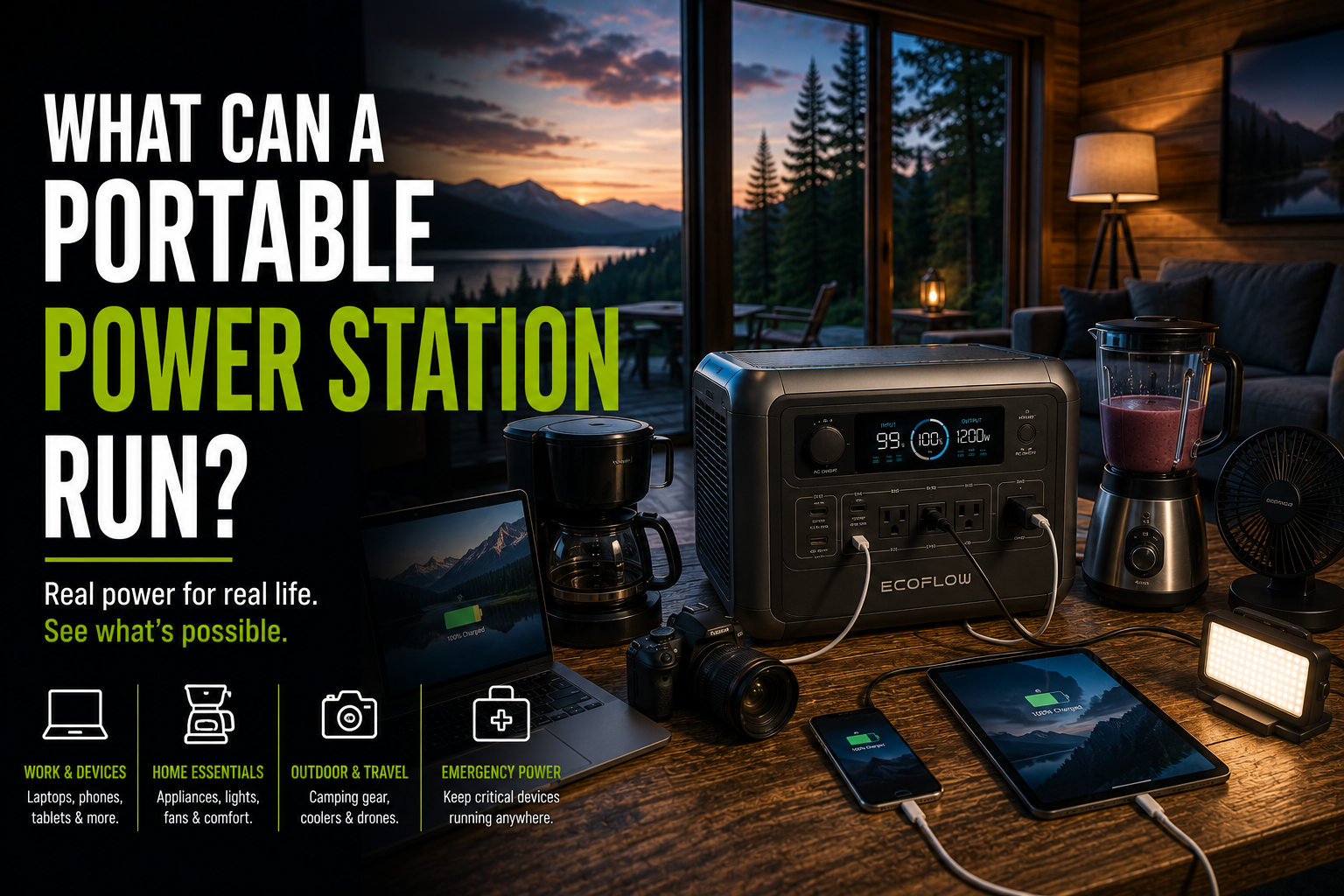
CPAP backup power is less about maximum wattage and more about efficient overnight energy use, quiet operation, reliable low-load output and enough reserve for the humidifier or heated tubing settings you actually use.
CPAP backup power is less about maximum wattage and more about efficient overnight energy use, quiet operation, reliable low-load output and enough reserve for the humidifier or heated tubing settings you actually use.
We compared current LFP portable power stations using manufacturer-published capacity, continuous output, charging options, portability and application fit. Rankings emphasize practical use rather than temporary sale prices.
Match Capacity to Daily Energy and Output to the Largest Load
For one night, a 250Wh to 300Wh power station may be enough for many CPAP setups when heated humidification is reduced or disabled. For two or more nights, 500Wh to 1,000Wh provides a more comfortable margin. Confirm your machine’s actual wattage and approved DC adapter before relying on any estimate.
Editor's Verdict
For one night, a 250Wh to 300Wh power station may be enough for many CPAP setups when heated humidification is reduced or disabled. For two or more nights, 500Wh to 1,000Wh provides a more comfortable margin. Confirm your machine’s actual wattage and approved DC adapter before relying on any estimate.
Best Options at a Glance
EcoFlow RIVER 3 Plus
A compact, quiet power station with UPS-style switching and expandable battery options for overnight electronics.
Jackery Explorer 600 v2
A 640Wh LFP station aimed at longer low-wattage runtimes without the bulk of a 1kWh model.
BLUETTI AC70
A compact LFP station with unusually strong solar input for its capacity and straightforward app control.
Jackery Explorer 1000 v2
A lightweight 1kWh station with a folding handle, fast charging and enough output for most travel essentials.
Anker SOLIX C1000
A compact 1kWh LFP station with rapid wall charging, many ports and optional capacity expansion.
Portable Power Station Comparison
| Model | Capacity | AC Output | Solar Input | Approx. Weight | Best For |
|---|---|---|---|---|---|
| EcoFlow RIVER 3 Plus | 286Wh | 600W | Up to 220W | About 10.4 lb | Best for CPAP and Electronics |
| Jackery Explorer 600 v2 | 640Wh | 500W | Up to 200W class | Compact mid-size | Best Multi-Night CPAP Capacity |
| BLUETTI AC70 | 768Wh | 1,000W | Up to 500W | About 22.5 lb | Best Compact Value |
| Jackery Explorer 1000 v2 | 1,070Wh | 1,500W | Up to 400W class | About 23.8 lb | Best Lightweight 1kWh Pick |
| Anker SOLIX C1000 | 1,056Wh | 1,800W | Up to 600W | About 28 lb | Best Fast Charging |
What Matters Most
Usable watt-hours
Runtime depends on usable battery energy after conversion losses.
DC compatibility
A manufacturer-approved DC cable can reduce inverter losses.
Low-load efficiency
Some stations consume meaningful power just keeping AC outlets active.
Noise
Fan behavior matters beside a bed or inside a tent.
UPS behavior
A fast transfer mode may help during brief outages, but it is not medical-grade equipment.
Reserve margin
Keep extra energy for cold weather, battery aging and humidifier use.
1. EcoFlow RIVER 3 Plus
A compact, quiet power station with UPS-style switching and expandable battery options for overnight electronics.
A compact, quiet power station with UPS-style switching and expandable battery options for overnight electronics. Its fit depends on the user’s real load profile, charging access and tolerance for weight.
Why It Stands Out
- Low weight and compact footprint
- Quiet at light loads
- Expandable with compatible extra batteries
- Fast switchover for electronics
What to Consider
- Base capacity may not cover multiple CPAP nights
- Humidifier use can sharply reduce runtime
- Fewer watt-hours per dollar than larger stations
PowerGearGuide view: A strong option when its capacity, output and charging profile match the intended use rather than simply chasing the largest specification.
2. Jackery Explorer 600 v2
A 640Wh LFP station aimed at longer low-wattage runtimes without the bulk of a 1kWh model.
A 640Wh LFP station aimed at longer low-wattage runtimes without the bulk of a 1kWh model. Its fit depends on the user’s real load profile, charging access and tolerance for weight.
Why It Stands Out
- Large capacity for CPAP-class loads
- Long-life LFP battery
- Simple controls
- Reasonable portability
What to Consider
- 500W output is not for large appliances
- No expansion
- Solar charging may be slow with small panels
PowerGearGuide view: A strong option when its capacity, output and charging profile match the intended use rather than simply chasing the largest specification.
3. BLUETTI AC70
A compact LFP station with unusually strong solar input for its capacity and straightforward app control.
A compact LFP station with unusually strong solar input for its capacity and straightforward app control. Its fit depends on the user’s real load profile, charging access and tolerance for weight.
Why It Stands Out
- Strong solar input for a 768Wh station
- Compact dimensions
- Fast AC charging
- Good for electronics and compact appliances
What to Consider
- 1,000W output limits larger cooking gear
- Only two AC receptacles
- Not expandable
PowerGearGuide view: A strong option when its capacity, output and charging profile match the intended use rather than simply chasing the largest specification.
4. Jackery Explorer 1000 v2
A lightweight 1kWh station with a folding handle, fast charging and enough output for most travel essentials.
A lightweight 1kWh station with a folding handle, fast charging and enough output for most travel essentials. Its fit depends on the user’s real load profile, charging access and tolerance for weight.
Why It Stands Out
- Excellent portability for 1kWh capacity
- Simple interface and fast AC charging
- Dual 100W USB-C ports
- Long-life LFP chemistry
What to Consider
- Not expandable
- Lower inverter output than some 1kWh rivals
- Solar intake is not the fastest in class
PowerGearGuide view: A strong option when its capacity, output and charging profile match the intended use rather than simply chasing the largest specification.
5. Anker SOLIX C1000
A compact 1kWh LFP station with rapid wall charging, many ports and optional capacity expansion.
A compact 1kWh LFP station with rapid wall charging, many ports and optional capacity expansion. Its fit depends on the user’s real load profile, charging access and tolerance for weight.
Why It Stands Out
- Very fast AC recharge
- Eleven output ports
- App monitoring over Bluetooth and Wi-Fi
- Optional expansion battery
What to Consider
- Base capacity is modest for multi-day RV stays
- Solar input trails some rivals
- Fan noise rises during fast charging
PowerGearGuide view: A strong option when its capacity, output and charging profile match the intended use rather than simply chasing the largest specification.
How to Choose
Start with the equipment you actually expect to operate. Record running watts, startup surge and hours of use, then add a practical reserve. Capacity determines how long loads run; inverter output determines whether they run at all.
Single-night backup
Compact 250Wh to 400Wh stations are easy to store and carry.
Multi-night camping
A 500Wh to 1,000Wh LFP station provides more margin.
Home outage readiness
A larger station can support CPAP plus phones, lights and a router.
Travel
Check airline battery limits; most power stations are too large for passenger aircraft.
Estimate Real-World Runtime
Loads that cycle, such as refrigerators and CPAP humidifiers, are better estimated with a plug-in watt meter over several hours. Heating appliances and power tools can consume the same energy in minutes that electronics use over many hours.
Charging and Solar Planning
Fast wall charging is useful before departure or severe weather. Solar performance depends on panel angle, temperature, cloud cover and the station’s input voltage and current limits. A panel’s nameplate rating is rarely sustained all day.
Safety and Limitations
Use the manufacturer-supplied or approved charging cables, keep connectors clean and dry, and stop using a unit that is swollen, damaged, unusually hot or emitting odor. Never open or modify the battery enclosure.
Final Recommendation
For one night, a 250Wh to 300Wh power station may be enough for many CPAP setups when heated humidification is reduced or disabled. For two or more nights, 500Wh to 1,000Wh provides a more comfortable margin. Confirm your machine’s actual wattage and approved DC adapter before relying on any estimate. Choose the model whose real capacity, output and charging system match your use instead of selecting by the largest headline number.
Frequently Asked Questions
How many watt-hours does a CPAP use overnight?
Many CPAP machines use roughly 30W to 60W without heated humidification and more with humidifier or heated tubing enabled. Actual use varies by machine, pressure and settings.
What size power station do I need for two CPAP nights?
A 500Wh to 700Wh station is a common starting range, but calculate from measured wattage and include conversion losses and a reserve margin.
Should I use AC or DC power for a CPAP?
An approved DC adapter can be more efficient because it avoids AC inverter losses. Use only accessories approved for your CPAP model.
Can a portable power station work as a UPS for CPAP?
Some models offer fast transfer modes, but they are generally not certified medical UPS devices. Verify the manufacturer’s limitations and maintain a separate emergency plan.
Does the humidifier reduce runtime?
Yes. Heated humidification and heated tubing can substantially increase energy consumption and shorten runtime.
Can I use a power station with oxygen equipment?
Do not assume compatibility. Oxygen concentrators and other medical devices may have higher or safety-critical requirements. Consult the device manufacturer and a qualified clinician.