
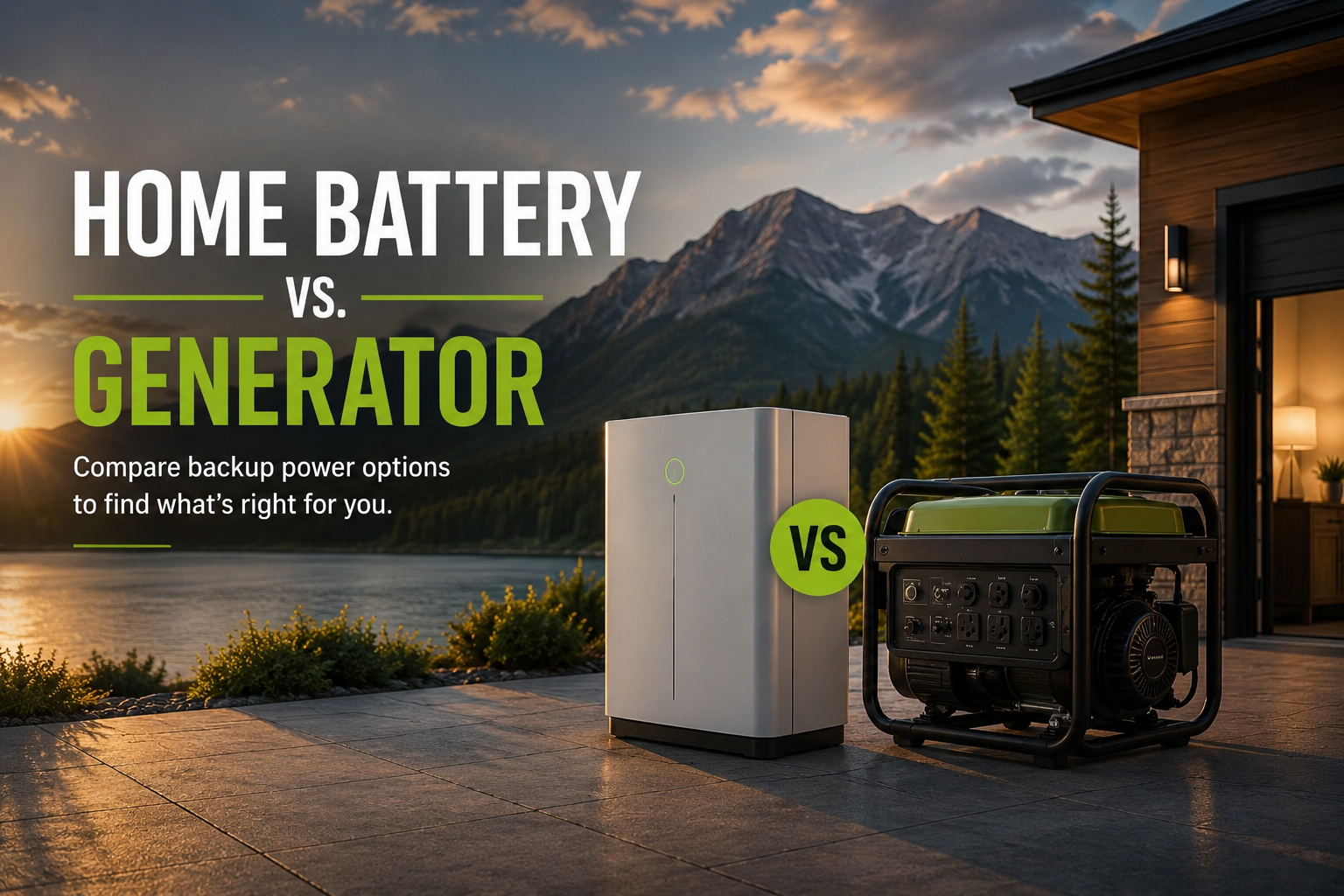
Home Battery vs Generator: Which Backup Power Solution Is Better?
Home batteries deliver quiet, automatic power with almost no routine maintenance, while generators can support larger loads for much longer when fuel remains available.
A backup power system must do more than switch on during a blackout. It needs to support the appliances that matter, operate safely on your property, remain dependable after months of inactivity and provide enough runtime for the outages you actually experience.
A home battery and a generator can both keep essential circuits running, but they solve the problem differently. A battery stores electricity in advance and delivers it without combustion. A generator creates electricity as needed by burning gasoline, propane, diesel or natural gas.
Battery for Convenience; Generator for Long Runtime
Choose a home battery for quiet, automatic, low-maintenance backup during short and moderate outages. Choose a generator when multi-day runtime, heavy appliance support and refueling matter more than silence. A professionally designed hybrid system offers the strongest overall resilience.
Editor's Verdict
Best for most short outages: home battery. Best for long outages and heavy whole-home demand: standby generator. Best overall resilience: a battery-plus-generator or solar-plus-storage system designed around critical loads.
Home Battery vs Generator at a Glance
| Category | Home Battery | Generator | Edge |
|---|---|---|---|
| Startup | Near-instant and automatic when integrated correctly | Automatic with standby units; often manual with portable units | Battery |
| Noise | Nearly silent | Engine noise varies by size and load | Battery |
| Maintenance | Low routine maintenance | Oil, filters, plugs and engine service | Battery |
| Runtime | Limited by stored energy unless recharged | Can continue while fuel remains available | Generator |
| Heavy loads | Depends on inverter output and battery count | Large standby units can support substantial loads | Generator |
| Fuel dependence | No combustion fuel | Requires gasoline, propane, diesel or natural gas | Battery |
| Multi-day outages | May need solar, multiple batteries or load reduction | Strong when fuel supply is dependable | Generator |
| Daily value | Can support solar use and rate optimization | Normally reserved for outages | Battery |
Home Battery
Best for: quiet automatic backup, essential circuits, solar integration, frequent short outages and minimal maintenance.
Generator
Best for: multi-day outages, high-demand homes, large HVAC loads, well pumps and dependable fuel access.
How Each System Works
Home Battery Backup
A home battery stores electricity from the grid, solar panels or both. During an outage, an inverter converts stored direct-current energy into alternating-current electricity for selected circuits or the entire home, depending on system design. Usable capacity determines runtime, while inverter output determines which appliances can operate together.
Generators
A generator uses an engine to turn fuel into electricity. Portable models usually require manual setup, while permanently installed standby generators monitor utility power and can start automatically through a transfer switch. Runtime depends primarily on fuel supply, engine limits and maintenance.
Installation Requirements
Home Battery Installation
Permanently installed batteries normally require a qualified installer, permits, code-compliant placement, disconnect equipment and integration with the main service panel. Whole-home configurations may also require load management or a critical-load panel.
Generator Installation
A portable generator can be inexpensive to purchase, but safe home integration still requires an approved transfer switch or interlock. A standby generator generally needs a pad, electrical work, fuel connection, permits, clearances and professional commissioning.
Upfront Cost and Long-Term Ownership
A small portable generator has the lowest entry price. Permanently installed batteries and standby generators can both become major home projects once electrical upgrades, transfer equipment, permits, trenching or fuel work are included.
| Expense | Home Battery | Generator |
|---|---|---|
| Equipment | Battery, inverter, gateway and controls | Generator, transfer equipment and fuel components |
| Installation | Electrical integration and possible panel work | Electrical work, pad, fuel line or tank and clearances |
| Operating energy | Grid electricity or solar charging | Gasoline, propane, diesel or natural gas |
| Routine service | Generally limited | Engine service, oil, filters and inspections |
| Use outside outages | Solar self-consumption and rate shifting | Usually limited to exercise and emergencies |
Runtime During a Blackout
Battery Runtime
Battery runtime depends on usable capacity and average load. A 13.5-kWh battery could theoretically support a steady 1-kW load for roughly half a day before accounting for conversion losses, reserve settings and changing demand. Air conditioning, electric heat, water heating and cooking can drain it far faster.
Solar panels can extend runtime when the system is designed to recharge during an outage, but weather, daylight and household demand determine whether solar production keeps up.
Generator Runtime
A generator can run longer because fuel can be replenished. Portable models are limited by tank size and safe refueling. Standby units connected to natural gas or a large propane tank can support extended outages, but they still require oil checks and scheduled service.
Power Output and Appliance Support
A backup system must supply both continuous wattage and short startup surges. Refrigerators, pumps and air conditioners can briefly draw much more power when motors start.
Batteries Are Strong For
- Lights and electronics
- Internet and security
- Refrigerators and freezers
- Medical devices within rated output
- Selected efficient HVAC equipment
Generators Often Lead For
- Large central air conditioners
- Electric resistance heat
- High-output well pumps
- Electric water heaters and ranges
- Several heavy loads at once
Maintenance and Readiness
Home Battery Maintenance
Battery systems generally need little routine homeowner attention beyond checking system status, keeping the installation area clear and arranging service if a fault appears. Capacity gradually declines with age and use.
Generator Maintenance
Generators contain engines and therefore need more upkeep. Tasks can include oil changes, filter replacement, spark plug service, starter-battery checks, valve inspections, fuel care and exercise runs. Follow the exact schedule in the owner's manual.
Home Battery Advantages
- Quiet operation
- Automatic transition
- No combustion fuel
- Low maintenance
- Solar compatibility
Home Battery Drawbacks
- Finite stored energy
- Capacity becomes expensive at scale
- Heavy loads may require multiple units
- Runtime depends on load management
Generator Advantages
- Long runtime with fuel
- Strong whole-home output
- Good motor-starting capability
- Lower-cost portable options
Generator Drawbacks
- Noise and exhaust
- Routine engine maintenance
- Fuel dependence
- Carbon monoxide risk if misused
Reliability in Real Emergencies
A charged battery is exceptionally convenient because it responds without fuel handling or engine startup. Its main weakness is depletion. Once stored energy is gone, backup ends unless solar, a generator or the grid can recharge it.
A maintained generator can support long outages, but reliability depends on mechanical condition and fuel. Gasoline may become scarce, propane deliveries can be delayed and natural-gas service may be interrupted in some disasters.
The strongest plan avoids a single point of failure. Some homeowners use a battery for instant, quiet backup and a generator for extended recharging or sustained heavy loads.
Safety, Noise and Placement
Battery Safety
Home batteries must be installed according to manufacturer instructions, electrical code, fire code and local permitting requirements. Clearances, temperature limits, mounting, protection from impact and disconnects all matter.
Generator Safety
Fuel-burning generators create carbon monoxide. Portable generators must never run inside a home, basement, garage, carport or other enclosed or partially enclosed space.
Which System Wins in Common Outage Scenarios?
Two-Hour Utility Outage
Winner: home battery. It switches over quietly and may cover the entire interruption without any action.
Three-Day Hurricane Outage
Winner: standby generator or hybrid system. A single battery may be depleted quickly when cooling, pumps and refrigeration run for days.
Frequent Brief Outages
Winner: home battery. Silent automatic operation and low maintenance are especially valuable.
Rural Home With a Well Pump
Winner: depends on pump startup requirements. A properly sized battery may work, but a generator can be more economical for a large pump and long outages.
Home With Rooftop Solar
Winner: battery. Storage can save daytime solar energy for use after sunset, provided the system supports islanded operation.
Whole-Home Backup vs Essential Loads
Many buying mistakes happen because homeowners compare technologies before deciding what must stay powered. Essential-load backup focuses on refrigeration, lights, communications, medical devices, pumps and selected outlets. Whole-home backup tries to preserve normal household operation.
When a Hybrid System Makes Sense
A hybrid setup uses a battery for brief outages, overnight operation and sensitive electronics, while a generator supports extended outages or recharges the battery when solar is insufficient. It can reduce generator runtime, fuel use and nighttime noise, but compatibility must be engineered correctly.
Who Should Choose a Home Battery?
- Homeowners who prioritize quiet operation
- People with frequent short or moderate outages
- Homes with rooftop solar
- Properties with fuel-storage or noise limitations
- Users who want automatic backup with little maintenance
Who Should Choose a Generator?
- Homes exposed to multi-day outages
- Properties with large HVAC, pump or heating loads
- Households with reliable natural-gas or propane access
- Buyers seeking lower-cost portable emergency power
- Users prepared for engine maintenance and safe outdoor operation
Home Battery or Generator: Which Is Better?
A home battery is the better everyday backup solution for quiet operation, automatic transfer, low maintenance and solar integration. A generator is the better long-duration emergency solution when the priority is running major appliances for days at a time.
For the highest resilience, consider a professionally designed hybrid system. Otherwise, size the system around critical loads and the longest realistic outage—not just your average outage.
Frequently Asked Questions
Can a home battery power an entire house?
Yes, when battery capacity, inverter output and electrical design are large enough. Many installations back up selected essential circuits instead.
How long will a home battery run during an outage?
Runtime depends on usable capacity and household load. Essential devices may run for many hours, while HVAC, electric heat and water heating can shorten runtime dramatically.
Can a generator run continuously for several days?
Many standby generators can support extended operation, but fuel supply, oil checks, maintenance intervals and manufacturer instructions still apply.
Is a home battery safer than a generator?
A battery avoids combustion exhaust and carbon monoxide, but still requires code-compliant installation. Generators require strict outdoor placement and safe fuel handling.
Does solar work during a power outage?
Ordinary grid-tied solar usually shuts down during an outage. Solar can continue when compatible islanding, inverter and backup equipment are installed, often with a battery.
Can I combine a battery with a generator?
Yes, certain systems support both, but transfer logic, charging behavior and equipment compatibility must be designed by qualified professionals.