
Generator Accessories Buying Guide
The right generator accessories make operation safer, simplify household connection and keep the machine ready for long outages.
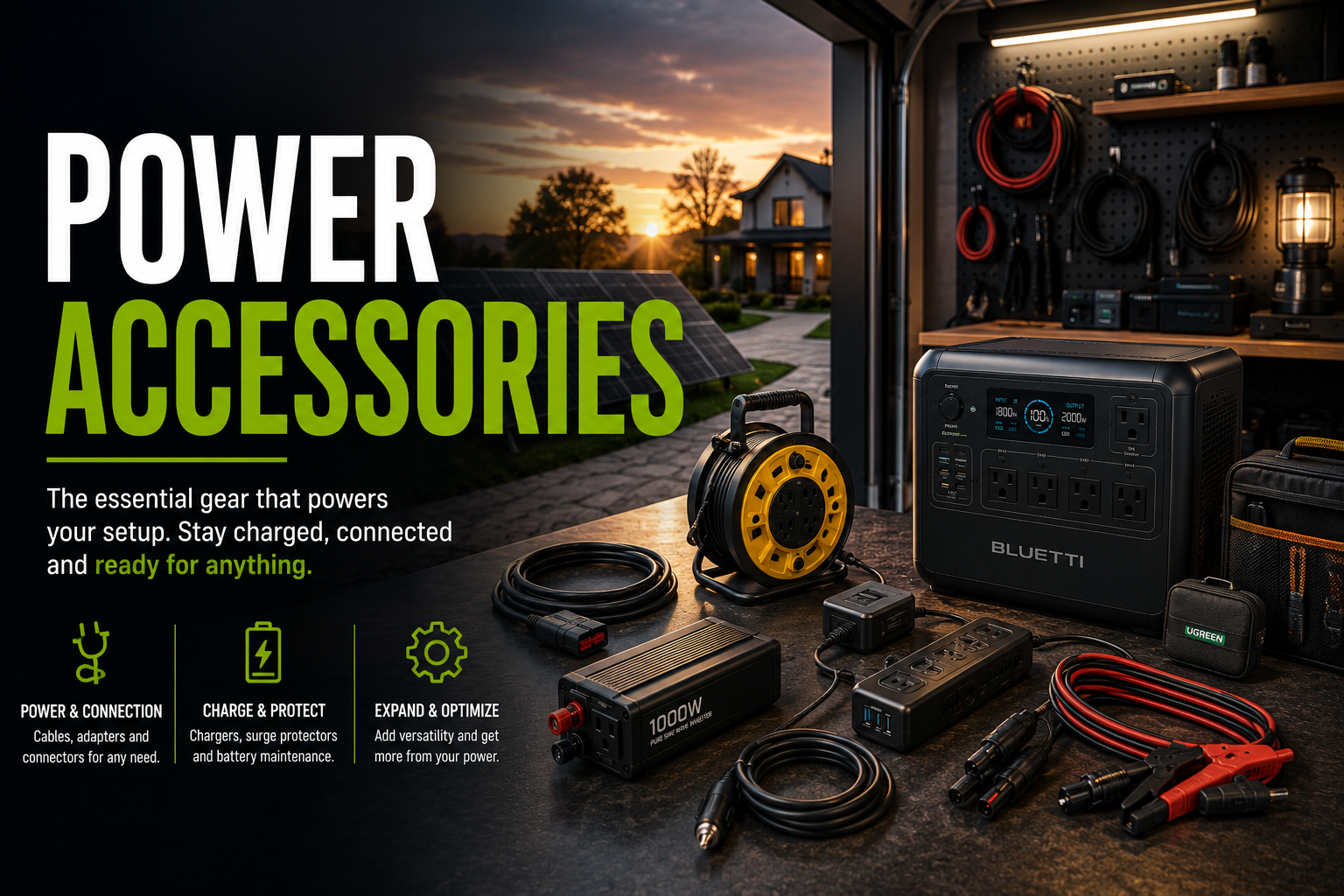
The right generator accessories make operation safer, simplify household connection and keep the machine ready for long outages.
Connection and carbon-monoxide safety accessories matter more than convenience upgrades.
This guide organizes generator accessories by priority and explains where exact electrical compatibility is critical.
Start With the Cord, Inlet and Transfer Method
Choose the safe electrical connection first, then add fuel storage, CO alarms, weather protection and maintenance supplies.
Buying Priority
A correct transfer setup and cord are essential. Covers, remote accessories and convenience items come only after electrical and CO safety are solved.
Essential Generator Accessories
| Accessory | Why It Matters | Priority |
|---|---|---|
| Generator cord | Connects generator to inlet or load safely | Essential |
| Power inlet box | Creates outdoor connection point | High |
| Transfer switch/interlock | Prevents backfeeding | Essential for panel use |
| CO alarms | Protects occupants from exhaust infiltration | Essential |
| Running cover | Allows safer wet-weather operation | Use-case dependent |
| Storage cover | Protects cooled generator between uses | Medium |
| Fuel containers | Supports outage runtime | High |
| Maintenance kit | Oil, filters, plug and tools | High |
Connection Accessories
Match NEMA Types
L14-30, SS2-50, TT-30 and 14-50 serve different systems.
Use a Listed Inlet
Avoid cords through doors or windows where possible.
Choose Transfer Equipment
Panel connections require source isolation.
Size Conductors Correctly
Current, length and voltage determine gauge.
Label Circuits
Load priorities should be clear.
Test Before an Outage
Verify the full connection chain.
Weather and Storage Accessories
Use only purpose-built operational covers while running. Fitted storage covers go on after shutdown and cooling. Keep the generator in a dry, secure place with fuel stored separately according to local code.
Fuel Accessories
Approved Gas Cans
Use listed containers.
Propane Hoses and Regulators
Use only model-approved components.
Fuel Stabilizer
Use according to label and manual.
Siphon or Transfer Pump
Choose equipment rated for fuel.
Fuel Gauge or Scale
Track propane and gasoline supply.
Spill Supplies
Keep absorbent material available.
Maintenance Accessories
Correct Engine Oil
Use specified viscosity.
Air Filter and Spark Plug
Keep model-specific spares.
Battery Maintainer
Useful for electric-start models.
Funnel and Drain Pan
Reduce spills.
Hour Meter
Track service intervals.
Load Tester or Watt Meter
Confirm readiness.
How to Build the Right Kit
Start With Connection Safety
Cord, inlet and transfer method come first.
Plan Fuel by Runtime
Calculate gallons or cylinders needed.
Add Weather Protection
Prepare for rain without creating a CO hazard.
Stock Maintenance Parts
Outages can exceed one oil interval.
Keep Printed Instructions
Apps and internet may be unavailable.
Store Everything Together
Label cords, adapters and tools.
Frequently Asked Questions
What generator accessory should I buy first?
The correct cord and safe connection equipment.
Do I need a transfer switch?
Yes for a household panel connection unless an approved interlock is used.
Can I run under a storage cover?
No.
What maintenance parts should I keep?
Oil, filter, spark plug and starter-battery support as applicable.
Do I need CO alarms?
Yes, on every level and outside sleeping areas.
Are adapters safe?
Only when voltage, current, connector and equipment ratings all match.