
Best Portable Power Stations for Power Tools
Power tools place unusually demanding loads on portable power stations. Circular saws, air compressors, shop vacuums and grinders can have high startup surges, while chargers and smaller cordless tools need far less power.
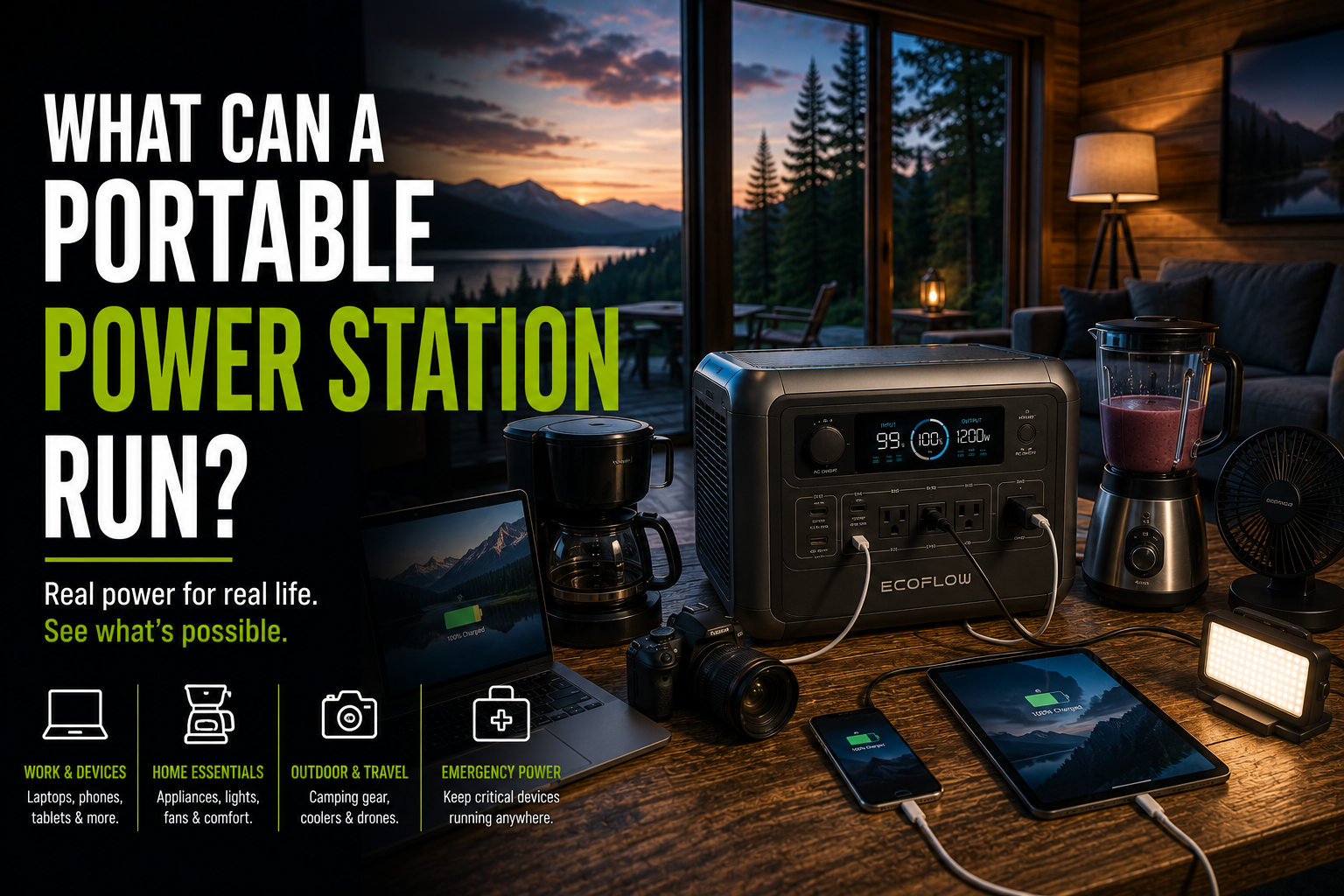
Power tools place unusually demanding loads on portable power stations. Circular saws, air compressors, shop vacuums and grinders can have high startup surges, while chargers and smaller cordless tools need far less power.
Power tools place unusually demanding loads on portable power stations. Circular saws, air compressors, shop vacuums and grinders can have high startup surges, while chargers and smaller cordless tools need far less power.
We compared current LFP portable power stations using manufacturer-published capacity, continuous output, charging options, portability and application fit. Rankings emphasize practical use rather than temporary sale prices.
Match Capacity to Daily Energy and Output to the Largest Load
For corded power tools, prioritize at least 1,800W of pure sine wave output and strong surge capability. For charging cordless batteries, a 700Wh to 1,000Wh station is usually sufficient. Heavy compressors, table saws and welders may exceed what portable stations can reliably support.
Editor's Verdict
For corded power tools, prioritize at least 1,800W of pure sine wave output and strong surge capability. For charging cordless batteries, a 700Wh to 1,000Wh station is usually sufficient. Heavy compressors, table saws and welders may exceed what portable stations can reliably support.
Best Options at a Glance
DJI Power 1000 V2
A high-output 1kWh station that is particularly attractive for power tools, production gear and fast charging.
Jackery Explorer 2000 v2
A relatively portable 2kWh station for longer off-grid stays, larger refrigerators and heavier daily loads.
EcoFlow DELTA 3 Plus
A balanced 1kWh-class station with fast charging, RV-friendly output and optional expansion.
Anker SOLIX C1000
A compact 1kWh LFP station with rapid wall charging, many ports and optional capacity expansion.
BLUETTI AC180
A capable LFP power station with practical output, broad ports and a straightforward feature set.
Portable Power Station Comparison
| Model | Capacity | AC Output | Solar Input | Approx. Weight | Best For |
|---|---|---|---|---|---|
| DJI Power 1000 V2 | 1,024Wh | 2,600W | Accessory-dependent | About 31.3 lb | Best for High-Draw Gear |
| Jackery Explorer 2000 v2 | 2,042Wh | 2,200W | High-input solar support | About 39.5 lb | Best High-Capacity Travel Pick |
| EcoFlow DELTA 3 Plus | 1,024Wh | 1,800W | Up to 1,000W | About 27.6 lb | Best All-Around |
| Anker SOLIX C1000 | 1,056Wh | 1,800W | Up to 600W | About 28 lb | Best Fast Charging |
| BLUETTI AC180 | 1,152Wh | 1,800W | Up to 500W | About 35.3 lb | Best Value 1kWh Class |
What Matters Most
Continuous output
This determines whether the tool can keep running after startup.
Surge capability
Motors and compressors may demand several times normal power briefly.
Battery capacity
High-wattage tools can drain 1kWh in well under an hour of continuous operation.
Recharge speed
Fast AC or solar recharge reduces downtime.
Outlet layout
Spacing should accommodate tool plugs and charger bricks.
Dust protection
Keep the station away from sawdust, metal filings and moisture.
1. DJI Power 1000 V2
A high-output 1kWh station that is particularly attractive for power tools, production gear and fast charging.
A high-output 1kWh station that is particularly attractive for power tools, production gear and fast charging. Its fit depends on the user’s real load profile, charging access and tolerance for weight.
Why It Stands Out
- Exceptional continuous output for its size
- Quiet operation under lighter loads
- High-power USB-C ports
- Long-cycle LFP battery
What to Consider
- Solar setup may require DJI-specific accessories
- Only two AC outlets on some regional versions
- Capacity can drain quickly at full output
PowerGearGuide view: A strong option when its capacity, output and charging profile match the intended use rather than simply chasing the largest specification.
2. Jackery Explorer 2000 v2
A relatively portable 2kWh station for longer off-grid stays, larger refrigerators and heavier daily loads.
A relatively portable 2kWh station for longer off-grid stays, larger refrigerators and heavier daily loads. Its fit depends on the user’s real load profile, charging access and tolerance for weight.
Why It Stands Out
- Large usable capacity class
- Strong 2,200W AC output
- LFP battery designed for long service life
- Good capacity-to-weight balance
What to Consider
- Heavier than 1kWh options
- Not expandable
- Large loads still require energy planning
PowerGearGuide view: A strong option when its capacity, output and charging profile match the intended use rather than simply chasing the largest specification.
3. EcoFlow DELTA 3 Plus
A balanced 1kWh-class station with fast charging, RV-friendly output and optional expansion.
A balanced 1kWh-class station with fast charging, RV-friendly output and optional expansion. Its fit depends on the user’s real load profile, charging access and tolerance for weight.
Why It Stands Out
- Expandable capacity for longer trips
- Fast AC and strong solar charging options
- Useful app controls and UPS-style switching
- Good balance of output and portability
What to Consider
- Expansion raises total cost and storage needs
- Not a 240V RV solution
- High-load cooking shortens runtime quickly
PowerGearGuide view: A strong option when its capacity, output and charging profile match the intended use rather than simply chasing the largest specification.
4. Anker SOLIX C1000
A compact 1kWh LFP station with rapid wall charging, many ports and optional capacity expansion.
A compact 1kWh LFP station with rapid wall charging, many ports and optional capacity expansion. Its fit depends on the user’s real load profile, charging access and tolerance for weight.
Why It Stands Out
- Very fast AC recharge
- Eleven output ports
- App monitoring over Bluetooth and Wi-Fi
- Optional expansion battery
What to Consider
- Base capacity is modest for multi-day RV stays
- Solar input trails some rivals
- Fan noise rises during fast charging
PowerGearGuide view: A strong option when its capacity, output and charging profile match the intended use rather than simply chasing the largest specification.
5. BLUETTI AC180
A capable LFP power station with practical output, broad ports and a straightforward feature set.
A capable LFP power station with practical output, broad ports and a straightforward feature set. Its fit depends on the user’s real load profile, charging access and tolerance for weight.
Why It Stands Out
- Strong 1,800W inverter
- Good capacity for the class
- Multiple recharge methods
- UPS functionality and app control
What to Consider
- Heavier than several 1kWh rivals
- No native capacity expansion
- Solar input is moderate rather than class-leading
PowerGearGuide view: A strong option when its capacity, output and charging profile match the intended use rather than simply chasing the largest specification.
How to Choose
Start with the equipment you actually expect to operate. Record running watts, startup surge and hours of use, then add a practical reserve. Capacity determines how long loads run; inverter output determines whether they run at all.
Cordless tool charging
Even compact stations can recharge many battery packs.
Saws and grinders
Use high-output models and verify tool nameplate watts.
Air compressors
Startup current is challenging; test compatibility before relying on it.
Remote jobsites
Pair the station with sufficient solar or vehicle charging for repeated use.
Estimate Real-World Runtime
Loads that cycle, such as refrigerators and CPAP humidifiers, are better estimated with a plug-in watt meter over several hours. Heating appliances and power tools can consume the same energy in minutes that electronics use over many hours.
Charging and Solar Planning
Fast wall charging is useful before departure or severe weather. Solar performance depends on panel angle, temperature, cloud cover and the station’s input voltage and current limits. A panel’s nameplate rating is rarely sustained all day.
Safety and Limitations
Use the manufacturer-supplied or approved charging cables, keep connectors clean and dry, and stop using a unit that is swollen, damaged, unusually hot or emitting odor. Never open or modify the battery enclosure.
Final Recommendation
For corded power tools, prioritize at least 1,800W of pure sine wave output and strong surge capability. For charging cordless batteries, a 700Wh to 1,000Wh station is usually sufficient. Heavy compressors, table saws and welders may exceed what portable stations can reliably support. Choose the model whose real capacity, output and charging system match your use instead of selecting by the largest headline number.
Frequently Asked Questions
How many watts do I need for power tools?
Battery chargers may use under 300W, while saws, grinders and vacuums often require 1,000W to 2,000W or more. Check the nameplate and startup demand.
Can a power station run a circular saw?
Many 1,800W or higher stations can run common circular saws, but startup surge and blade load matter. Confirm the station’s surge rating.
Can a power station run an air compressor?
Some can run small compressors, but startup current is often difficult. Large compressors may exceed inverter surge limits.
How long will a 1,000Wh station run a 1,500W tool?
Under ideal math it is less than 40 minutes, and real runtime is shorter after inverter losses. Most tools cycle rather than run continuously.
Is pure sine wave important for power tools?
Pure sine wave output is preferred for modern chargers, variable-speed electronics and predictable motor operation.
Can I use a power station in rain?
No unless the manufacturer explicitly rates the unit and connection setup for those conditions. Most portable stations must remain dry.