
Anker SOLIX Portable Power Station Buying Guide
Choose Anker SOLIX by capacity, inverter output, solar input, charging speed, expansion, software and carrying weight.
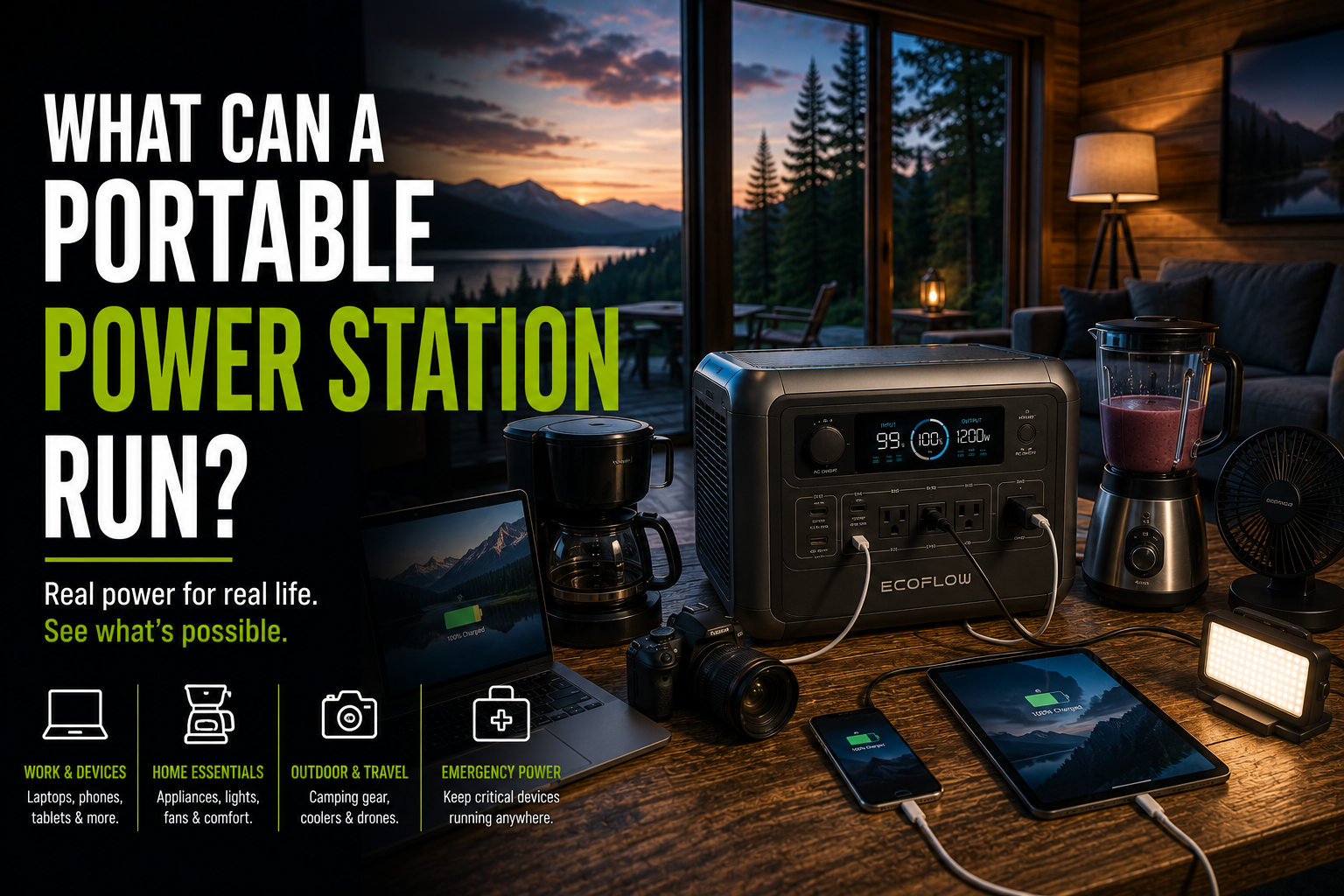
Choose Anker SOLIX by capacity, inverter output, solar input, charging speed, expansion, software and carrying weight.
Anker SOLIX uses the C series for compact portable power and the F series for longer-runtime and home-backup systems.
The best model is the smallest one that reliably handles your loads while preserving a realistic upgrade path.
Choose C Series for Portability and F Series for Backup
C1000 is the safest default. F2000 and F2600 are better for multi-day use, while F3800 Plus serves 240V and home-integration buyers.
Buying Guidance
Most portable buyers should begin with C1000. The F series becomes worthwhile when larger batteries, higher solar input or home-backup capability are used regularly.
Current Anker SOLIX Lineup
| Family | Models | Main Strength | Best Buyer |
|---|---|---|---|
| C Series | C300, C800 Plus, C1000 | Compact portable power | Camping and essentials |
| F Series | F1500, F2000, F2600 | More runtime and solar input | RVs and home backup |
| F3800 Platform | F3800 and F3800 Plus | 120/240V and home integration | Serious backup |
| Expansion | BP2000, BP2600 and platform packs | Longer runtime | System builders |
Who Should Buy Which?
C300
Phones, laptops, routers and short trips.
C800 Plus
Camping lights, coolers and small cooking loads.
C1000
The best general-purpose 1kWh choice.
F1500
Longer runtime without moving to 2kWh.
F2000/F2600
RVs and household essentials.
F3800 Plus
240V loads and integrated backup.
Charging and Solar
C1000 emphasizes fast wall charging and 600W solar. F2000 and F2600 accept up to 1000W solar, while F3800-class systems support much larger arrays.
Long-Term Ownership
Budget for expansion batteries, solar panels, alternator charging, protective storage and any home-integration equipment. Accessory cost can rival the power station itself.
Common Buying Mistakes
Buying Too Large
Capacity adds weight and cost.
Ignoring Output
Runtime and appliance compatibility are different.
Assuming Universal Expansion
Battery packs are model-specific.
Overestimating Solar
Rated watts are not all-day production.
Skipping UPS Details
Sensitive equipment may require fast transfer.
Ignoring Charging Infrastructure
Large stations need substantial wall, solar or vehicle input.
Frequently Asked Questions
Who should buy an Anker SOLIX power station?
Buy it when its capacity, inverter output, charging speed, weight and expansion path match your main use rather than simply choosing the largest model.
Who should skip an Anker SOLIX power station?
Skip it when you need substantially more runtime, lower weight, 240V output or a simpler non-expandable system.
How should runtime be estimated?
Multiply rated watt-hours by roughly 0.80 to 0.90 for usable AC energy, then divide by average load watts. Refrigerators and pumps require duty-cycle estimates.
Can it run a refrigerator?
Most 1kWh and larger Anker SOLIX models can run a refrigerator if compressor startup remains within the inverter surge limit.
Can it charge from solar panels?
Yes, provided panel open-circuit voltage, current, connector type and total wattage remain inside the model’s solar-input limits.
Can it work as a UPS?
Many Anker SOLIX models support backup switching, but transfer time and compatibility with sensitive equipment should be checked for the exact model.
How should it be stored?
Store it cool and dry, avoid prolonged extreme heat and recharge periodically according to Anker guidance.
How long will the battery last?
Anker positions current SOLIX LFP platforms for thousands of cycles. Real aging depends on temperature, charge level and cycling depth.
Are Anker expansion batteries universal?
No. Expansion batteries and cables are model-specific, so compatibility must be confirmed before purchase.
What is the most common buying mistake?
Buying from capacity alone without checking inverter output, surge, solar input, carrying weight, UPS behavior and accessory costs.
Is C1000 expandable?
Yes, to 2112Wh with the compatible expansion battery.
Which model is best for an RV?
F2000 for 2kWh capacity and stronger solar; C1000 for lighter travel.