
Home Battery vs Portable Power Station: Which Backup System Fits?
Compare installed home batteries and portable power stations by backup coverage, runtime, installation, transfer safety and total system cost.
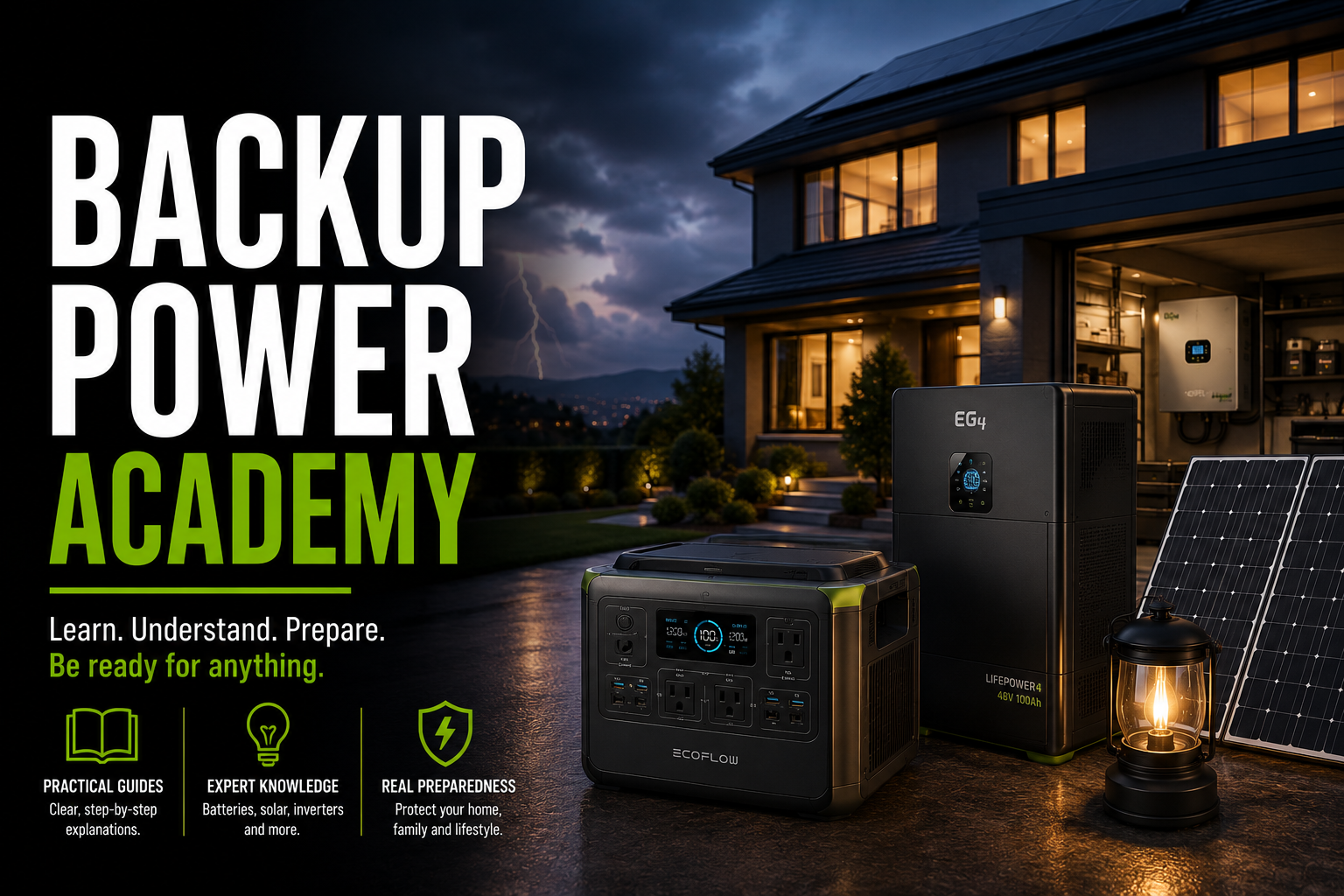
Manufacturer documentation provides battery and inverter ratings. We compare system categories and illustrative examples, not hands-on runtime tests or installed price quotes. Tesla Powerwall 3 is a fixed home battery, while the EcoFlow and Anker examples are portable stations. Their electrical integration is not interchangeable.
Choose a Home Battery for Integrated Backup; Choose Portable for Flexibility
A professionally installed home battery is usually the stronger fit when you want automatic backup of selected household circuits and solar integration. A portable power station is simpler for plug-in essentials, travel and staged expansion. Do not equate a 6,000W inverter with 13.5kWh of energy: power determines what can run, while energy determines how long.
Home Battery vs Portable Station: Quick Picks
Tesla Powerwall 3
Powerwall 3 is a permanently installed home energy-storage system. Its integration with a gateway and home circuits makes it fundamentally different from a battery with plug-in AC outlets. Tesla lists 13.5kWh energy capacity and up to 11.5kW continuous output, subject to configured power rating and system design. Backup coverage depends on protected circuits, equipment, local rules and installer design.
EcoFlow DELTA Pro 3
The DELTA Pro 3 is a movable battery power station with a roughly 4kWh base capacity, 4,000W rated AC output and 120V/240V capability. It can run compatible devices from its outlets, while home-circuit integration requires appropriate transfer equipment or a supported smart panel. Optional expansion and accessory costs must be counted before comparing it with a fixed battery.
Anker SOLIX F3800
The US F3800 provides 3,840Wh of stored energy and 6,000W continuous AC output, including 120V/240V capability. The high wattage does not make the base battery equivalent to a 13.5kWh home battery: a large sustained load can drain it quickly. Anker offers expansion and home-connection accessories; verify the precise configuration and transfer arrangement.
Home Backup System Comparison
| Attribute | Tesla Powerwall 3 | EcoFlow DELTA Pro 3 | Anker SOLIX F3800 |
|---|---|---|---|
| System type | Installed home battery | Portable station | Portable station |
| Base energy | 13.5kWh | 4kWh | 3.84kWh |
| Rated continuous output | Up to 11.5kW | 4,000W | 6,000W (US) |
| Connection | Installed gateway and circuits | Plug-in or compatible home hardware | Plug-in or compatible transfer hardware |
| Portability | Permanently installed | Movable, heavy | Wheeled, about 132 lb |
| Automatic home backup | Configured installed system | Requires appropriate integrated setup | Requires appropriate integrated setup |
Representative Backup Systems
Tesla Powerwall 3
Manufacturer-documented example; actual installation and runtime depend on configuration.
Powerwall 3 is a permanently installed home energy-storage system. Its integration with a gateway and home circuits makes it fundamentally different from a battery with plug-in AC outlets. Tesla lists 13.5kWh energy capacity and up to 11.5kW continuous output, subject to configured power rating and system design. Backup coverage depends on protected circuits, equipment, local rules and installer design.
Illustrative 500W constant AC load at 85% usable energy: approximately 22.9 hours. This is not a measured result and ignores changing appliance duty cycles.
- Automatic home-backup integration when correctly configured.
- Larger base energy reserve than the two portable examples.
- Designed for solar and home-energy management.
- Professional design, permitting and installation required.
- Not portable or suitable for temporary travel use.
- Installed cost depends on electrical work and backup scope.
Best for: Homeowners seeking integrated automatic backup and long-term energy management. Not ideal for: Renters or buyers needing a battery they can carry between locations.
Official DetailsEcoFlow DELTA Pro 3
Manufacturer-documented example; actual installation and runtime depend on configuration.
The DELTA Pro 3 is a movable battery power station with a roughly 4kWh base capacity, 4,000W rated AC output and 120V/240V capability. It can run compatible devices from its outlets, while home-circuit integration requires appropriate transfer equipment or a supported smart panel. Optional expansion and accessory costs must be counted before comparing it with a fixed battery.
Illustrative 500W constant AC load at 85% usable energy: approximately 6.8 hours. This is not a measured result and ignores changing appliance duty cycles.
- Can operate selected appliances without permanent wiring.
- Expandable system and several charging methods.
- Portable relative to permanently mounted batteries.
- Base capacity is much smaller than Powerwall 3.
- Whole-home connection is not automatic with a standalone unit.
- Heavy; high-output and transfer accessories add cost.
Best for: Users needing a flexible battery for outages and other locations. Not ideal for: Anyone expecting full-home automatic backup from the base station alone.
Check PriceAnker SOLIX F3800
Manufacturer-documented example; actual installation and runtime depend on configuration.
The US F3800 provides 3,840Wh of stored energy and 6,000W continuous AC output, including 120V/240V capability. The high wattage does not make the base battery equivalent to a 13.5kWh home battery: a large sustained load can drain it quickly. Anker offers expansion and home-connection accessories; verify the precise configuration and transfer arrangement.
Illustrative 500W constant AC load at 85% usable energy: approximately 6.5 hours. This is not a measured result and ignores changing appliance duty cycles.
- High documented 6,000W continuous output.
- 120V/240V outputs can support compatible loads.
- Modular capacity and home-backup accessory options.
- 3.84kWh base capacity limits long-duration heavy loads.
- At about 132 lb it is movable, not lightweight.
- Home circuit use requires correct approved connection hardware.
Best for: High-output backup needs with modular expansion flexibility. Not ideal for: Buyers assuming a high inverter rating guarantees multi-day runtime.
Check PriceWhich Loads and Circuits Can Each System Protect?
Outage backup and time-of-use energy management are different objectives. A grid-tied home battery may provide automated dispatch and solar integration; a portable station's features depend on the model and installed accessories.
| Load | Key question | Practical implication |
|---|---|---|
| Refrigerator | Running and compressor-start watts? | Check inverter surge rating and actual daily kWh. |
| Wi-Fi and lights | How many hours? | Usually good candidates for portable outlets. |
| Well pump / HVAC | 120V or 240V and startup demand? | Requires compatible output and safe transfer design. |
| Entire home | Which circuits and peak simultaneous loads? | Needs a designed home-backup system, not just a large battery. |
A permanently installed battery can protect circuits selected during installation; a standalone portable station normally powers appliances connected to its outlets. An approved transfer switch, inlet or compatible home panel is required for a portable system to supply household wiring. A licensed electrician should evaluate panel capacity, neutral/ground configuration and local permits.
How Long Will a Backup Battery Last?
Installed systems can be designed for automatic backup. Some portable systems support transfer accessories or home panels; an ordinary standalone outlet does not automatically power household circuits. Confirm the exact system design rather than relying on generic UPS marketing.
What about automatic switchover?
A fixed home battery may integrate with rooftop solar through its installed inverter and control equipment. Portable stations can accept compatible solar panels, but panel voltage, solar-input ceilings, weather and seasonal sun hours limit recharge. A solar panel does not guarantee uninterrupted power.
How does solar charging differ between home batteries and portable stations?
All estimates assume 85% of nominal capacity is available for the example AC load. They are not manufacturer runtime promises; actual home loads fluctuate. Solar recharging, battery expansion and protected-circuit selection can substantially change outcomes.
| Base system | At constant 200W | At constant 500W |
|---|---|---|
| Powerwall 3 (13.5kWh) | 57.4 hours | 23.0 hours |
| DELTA Pro 3 (4kWh) | 17.0 hours | 6.8 hours |
| F3800 (3.84kWh) | 16.3 hours | 6.5 hours |
Energy capacity determines approximate duration. Calculate daily consumption in kWh for essential devices and compare that with usable battery energy, allowing for inverter losses, temperature, reserve settings and battery aging.
Installation, Transfer Switch and Safety Checklist
- Get an electrician to assess home wiring and transfer equipment.
- Confirm 120V/240V loads, surge demand and circuit priorities.
- Verify warranty, local service and battery expansion compatibility.
- Never backfeed through a household receptacle.
- Do not compare inverter watts as though they were kWh.
- Do not assume a portable station includes transfer hardware.
Final Verdict: Match the Backup Architecture to the Job
Choose an installed home battery when automatic circuit-level backup, solar integration and household energy management justify professional installation. Choose a portable power station when you primarily need plug-in essentials, mobility or gradual expansion. Compare usable kWh, continuous watts and the complete connection cost before deciding. A portable unit is not a drop-in replacement for a permitted home battery installation.
Frequently Asked Questions
When is a portable power station more practical than a home battery?
No. Both store electricity, but an installed home battery is integrated into household electrical systems, while a portable station generally supplies built-in outlets unless connected through approved equipment.
Can a portable power station power an entire house?
Some high-output modular systems can supply selected home circuits with approved transfer equipment. Whole-house coverage depends on peak load, energy storage and system design.
Does a home battery need solar panels?
Not necessarily. Some home batteries can charge from the grid subject to system configuration and local utility rules. Solar integration is an option, not a universal requirement.
How long does a 4kWh power station last?
At a constant 500W AC load and illustrative 85% usable energy, about 6.8 hours. Actual runtime varies with load cycles and losses.
Can I plug a portable station into a wall outlet to power my home?
No. Backfeeding through a receptacle is dangerous. Household wiring requires approved transfer equipment and qualified installation.
Is Powerwall 3 more powerful than an F3800?
Powerwall 3 has a larger base energy reserve; maximum continuous output also differs. Compare capacity and output separately and account for installed-system design.
What should I compare besides battery price?
Compare usable energy, continuous output, surge capability, backup circuits, transfer equipment, expansion batteries, solar compatibility, installation and warranty.
Sources and Editorial Methodology
Researched November 10, 2026 using official manufacturer specifications. This comparison is not a hands-on performance test, electrical installation quote or assurance of real-world backup duration. Runtime calculations are illustrative. Confirm current regional specifications, permits, availability and equipment compatibility before purchase.